 86-0513-68903288
 13906298796@139.com
 русский
 Español
 عربى
عربىContent
- 1 The Working Cycle, Step by Step
- 2 Key Components and What Happens When They Wear
- 3 Oil-Lubricated vs Dry-Running Designs
- 4 Where the Technology Fits, and Where It Hits Its Limits
- 5 How Rotary Vane and Roots Vacuum Pumps Work Together
- 6 The Same Vane Principle, Running as a Blower
- 7 Specifying and Running One: A Practical Checklist
Pull a food-packaging chamber down to a few millibar in under a minute, hold a sheet of plywood flat on a CNC table for a full shift, or evacuate a refrigeration circuit deeply enough to boil moisture out of it: that is routine work for a rotary vane vacuum pump. So how does a rotary vane vacuum pump work? The short answer: an eccentric rotor spins inside a cylindrical housing, spring- or centrifugally-loaded vanes slide in and out of slots in the rotor, and the sealed chambers between those vanes trap gas at the inlet, compress it as they rotate, and force it out through an exhaust valve. It is a positive displacement machine, the same family of mechanics as a piston compressor, simply packaged in a compact, continuously rotating form. Every other feature, from the oil to the gas ballast to the second stage, exists to make that basic cycle deeper, drier, and more durable.
The Working Cycle, Step by Step
The geometry does the work. The rotor sits eccentrically inside the stator, its axis offset from the housing centerline so that it grazes the wall along a single line. Vanes, usually between two and eight, ride in radial slots and are pressed outward against that wall by centrifugal force, sometimes with springs behind them. At typical drive speeds of roughly 1,400 to 3,000 rpm, each chamber between adjacent vanes grows and shrinks once per revolution, and the sequence runs like this:
- Intake. As a vane passes the inlet port, the chamber behind it is expanding, so pressure inside drops and gas flows in from the vessel being evacuated.
- Trapping. Once the chamber clears the inlet, the vanes on either side seal a fixed slug of gas inside.
- Compression. Rotation carries the sealed chamber toward the discharge side, where the housing geometry shrinks the volume and raises the gas pressure.
- Exhaust. When pressure slightly exceeds that on the discharge side, the exhaust valve opens, gas leaves, and an oil mist separator catches lubricant droplets before they escape.
How Deep It Reaches
Depth depends on stages. A single-stage oil-sealed machine typically bottoms out near 0.1 mbar absolute, while a two-stage design, which feeds the exhaust of the first stage into the inlet of the second, commonly reaches about 0.01 mbar. Both figures climb when the gas ballast is open. Pumping speeds for industrial sizes run from roughly 10 to 1,500 m³/h, which covers the rough and lower medium vacuum range where most industrial processes actually operate.
Why the Oil Matters So Much
In oil-sealed designs, metered oil performs three jobs at once. It seals the micrometer-scale clearances between vane tips and housing, without which the pump could never build a deep vacuum. It lubricates the continuous sliding contact that would otherwise destroy the vanes. And it shields internal surfaces against corrosion from moisture arriving with the gas. The oil is formulated for low vapor pressure, because a generic lubricant would evaporate at deep vacuum and ruin the ultimate pressure. That sensitivity is also why oil condition is the best quick health check on the machine: milky oil points to water ingress, and dark gritty oil points to wear debris.
Gas Ballast: Clearing Vapors Before They Condense
When the process carries water or solvents, those vapors can condense during compression, mix into the oil, and quietly degrade both lubrication and vacuum depth. The gas ballast valve addresses this by admitting a controlled amount of air into the compression chamber before exhaust, which keeps the vapor partial pressure below its condensation point so vapors leave the pump as gas. The trade-off is a higher ultimate pressure while the ballast stays open, so many operators run it closed on dry duty and open it during wet cycles.
Key Components and What Happens When They Wear
Because the whole design depends on tight clearances and clean oil, the component list doubles as a maintenance map.
| Component | Function | What typically goes wrong |
|---|---|---|
| Eccentric rotor | Separates inlet from discharge and defines the chamber volumes | Bearing wear lets it rub the housing, adding heat and debris |
| Sliding vanes | Seal against the wall and vary chamber volume | Tip wear widens clearances, and ultimate pressure creeps up |
| Stator housing | Defines the cylinder and often carries the cooling jacket | Scoring from dust or broken vane fragments |
| Exhaust valve | Opens at discharge pressure and blocks backflow | Sticking or fatigue cuts compression efficiency |
| Oil circuit | Seals clearances, lubricates, protects against corrosion | Degraded or contaminated oil causes wear and weak vacuum |
| Gas ballast valve | Admits air to keep vapors from condensing | A blocked or leaking ballast lets moisture accumulate in the oil |
Oil-Lubricated vs Dry-Running Designs
The same mechanism ships in two lubrication philosophies, and the choice drives both price and process fit. Oil-lubricated pumps seal better, reach deeper, and protect their vanes with a continuous oil film. Dry-running pumps swap oil for self-lubricating vane materials such as PTFE or graphite composites, accepting a shallower vacuum in exchange for a clean gas stream.
| Aspect | Oil-Lubricated | Dry-Running |
|---|---|---|
| Ultimate pressure | About 0.01 to 0.1 mbar | Usually in the tens of mbar |
| Sealing method | Oil film across the clearances | Vane material and geometry only |
| Gas cleanliness | Trace oil vapor possible; mist separator required | Essentially oil-free at the exhaust |
| Main maintenance | Oil and filter changes on schedule | Vane replacement intervals |
| Natural territory | Deep evacuation, backing duty, laboratory work | Food, medical, printing, packaging |
One caution applies to both families. Oil-lubricated machines can pass trace oil vapor back toward the vessel under aggressive duty, so sensitive applications add a trap or filter on the inlet side. Dry machines trade that risk for more frequent vane service, which is usually a fair bargain wherever oil itself would be the contaminant.
Where the Technology Fits, and Where It Hits Its Limits
The strengths and the boundaries both come straight from the mechanics, which is why the application map looks the way it does:
- Food packaging: pulling chambers down for meat, cheese, and coffee under vacuum or modified atmosphere
- Woodworking and CNC hold-down: clamping sheet goods on vacuum tables shift after shift
- Thermoforming: drawing heated plastic sheet against molds in fast cycles
- HVAC and refrigeration service: evacuating circuits deeply enough to drive out moisture before charging
- Laboratory work: degassing, desiccation, and backing duty behind high-vacuum pumps
The limits are equally mechanical. Dust-laden gas scours vane tips and housing, so inlet filtration is mandatory in woodworking and similar trades. Heavy vapor loads demand either a working gas ballast or a condenser upstream, or the oil degrades early. Vane friction rejects heat continuously, so ambient temperature and cooling capacity set the ceiling for sustained operation. And below roughly 0.01 mbar, the clearances and the oil's own vapor pressure start to dominate, which is where other technologies take over.
How Rotary Vane and Roots Vacuum Pumps Work Together
Rotary vane and Roots pumps are complements more than competitors. A Roots vacuum pump turns two figure-eight lobes against each other, synchronized by timing gears, with no internal compression and no oil in the pumping chamber. It moves large volumes quickly in the medium vacuum range but needs a backing pump behind it, which is very often exactly where a rotary vane machine earns its keep. Paired, the vane pump supplies depth while the Roots pump supplies speed, and the combination reaches working points that neither machine would reach efficiently alone. For a head-to-head breakdown, see how the performance of a Roots vacuum pump compares with a rotary vane pump.
This pairing is familiar territory for manufacturers that build both technologies. Nantong Rongheng Environmental Equipment produces Roots vacuum pump units for continuous-duty applications, including supply for high-end tissue paper production lines, where vacuum dewaters the paper sheet around the clock.
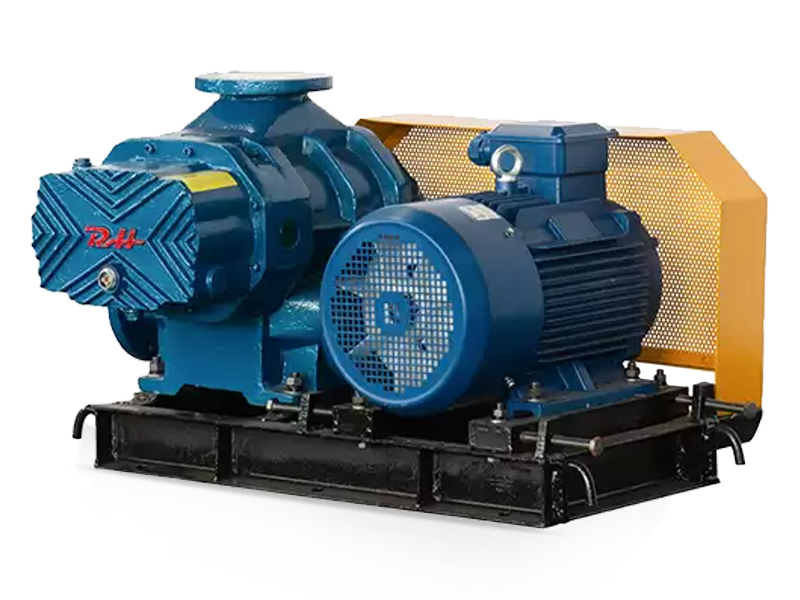
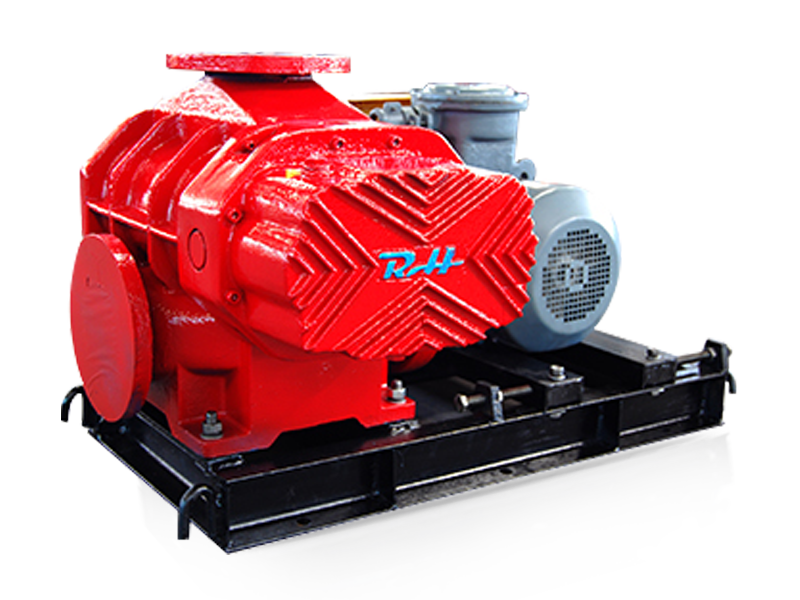
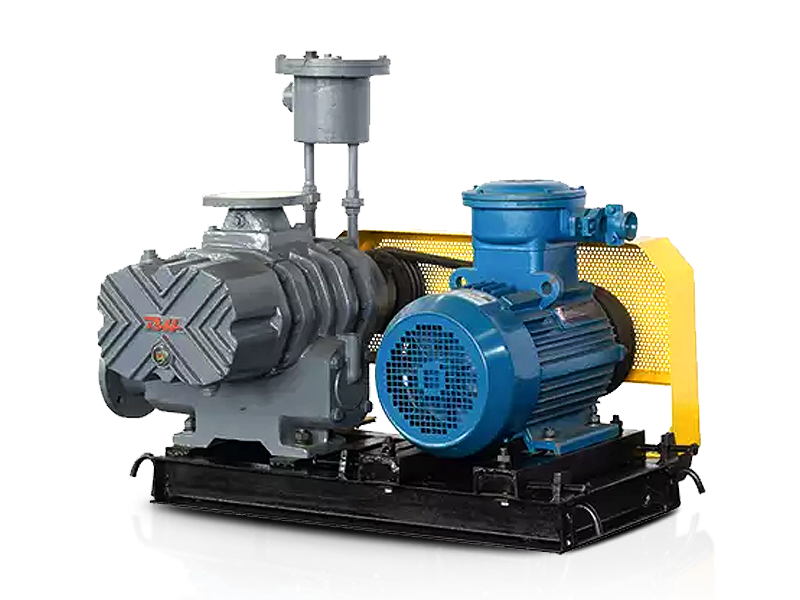
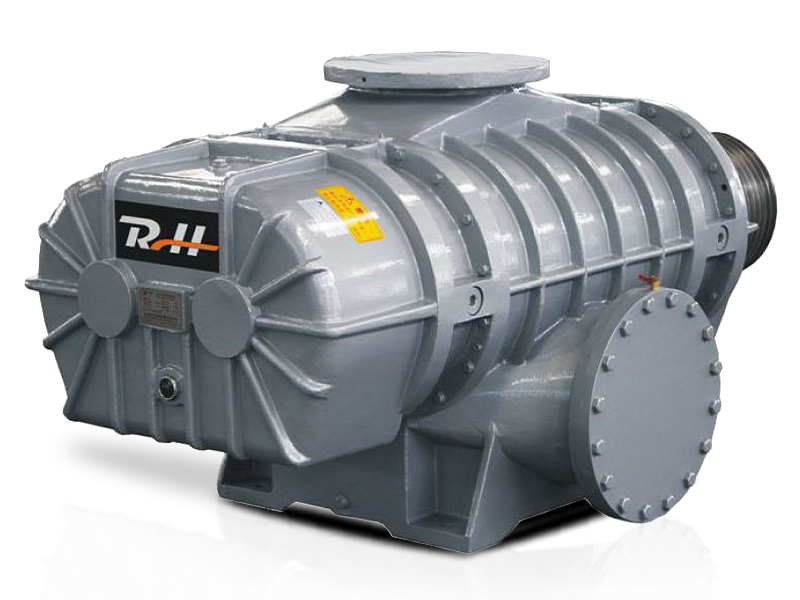 Roots Vacuum Pump for Continuous-Duty Vacuum ApplicationsThis dry Roots vacuum pump offers flow rates from 0.6 to 713.8 m³/min and vacuum levels of dry -49kPa or wet -68kPa. It suits continuous-duty uses like tissue paper production, where the preceding section notes round-the-clock vacuum dewatering of the paper sheet.View Product →
The Same Vane Principle, Running as a Blower
The sliding-vane mechanism also runs in the opposite direction: pressure duty instead of vacuum. In a rotary sliding vane blower, the same eccentric rotor and sliding vanes compress air to modest gauge pressures and deliver it steadily, with low pulsation and comparatively low noise. That profile suits wastewater treatment aeration and low-pressure pneumatic conveying, and it contrasts with Roots blowers, which favor higher flow with more pulsation. If you want the mechanics spelled out, our article on how a rotary sliding vane blower generates airflow walks through it step by step.
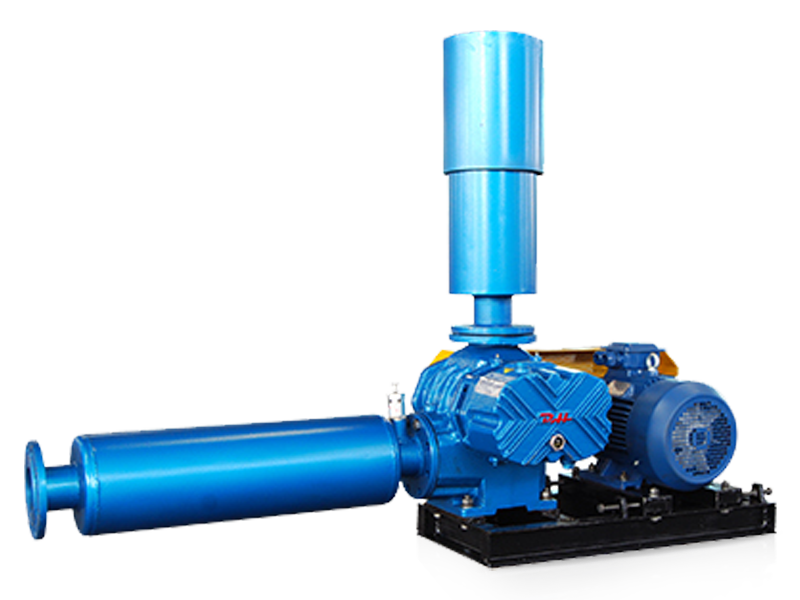
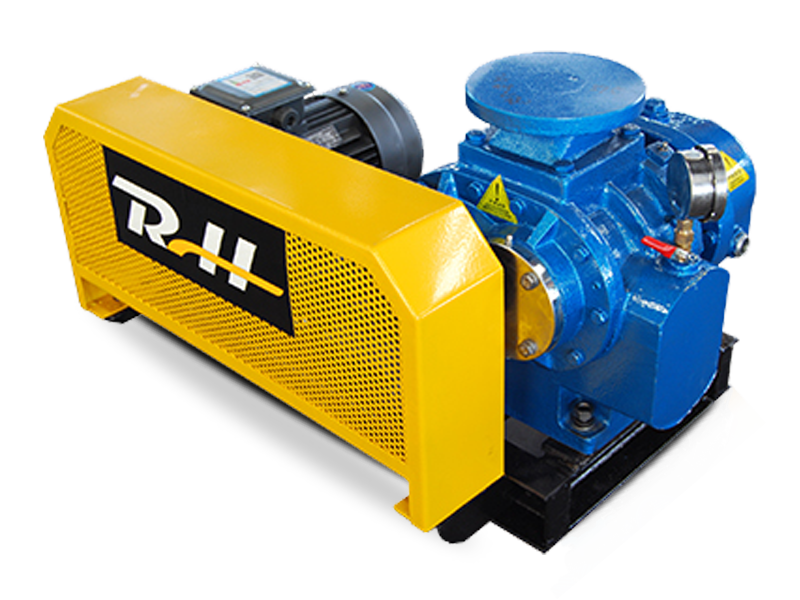
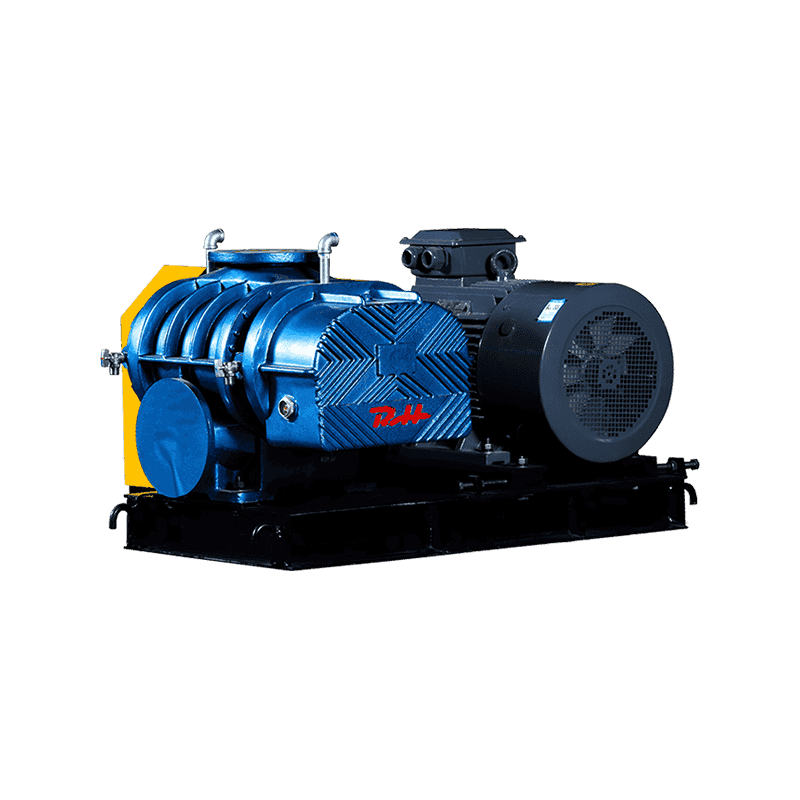 Rotary Sliding Vane Blower for Low-Pressure AerationFollowing the discussion of sliding-vane pressure duty, this blower delivers steady, low-pulsation airflow up to 49kPa with noise below 60dB. Its 500rpm operation and modest flow capacity make it well suited to wastewater treatment aeration and similar low-pressure conveying tasks.View Product →
Specifying and Running One: A Practical Checklist
Whether you are buying a first pump or auditing an installed base, a handful of points decides most of the satisfaction:
- Size pumping speed to chamber volume and target pump-down time. Pump-down follows an exponential curve, so the final decade of pressure takes disproportionately longer than the first. Size against the whole curve, not the average.
- Judge the working point, not the datasheet ultimate pressure. A pump rated to 0.1 mbar will not hold that figure with the gas ballast open or a real process gas load present.
- Protect the pump from the process. Plan inlet filtration against dust, and either a working gas ballast or an upstream condenser against vapors.
- Budget for consumables. Oil and mist separator changes typically fall anywhere from a few hundred to several thousand operating hours, set by vapor and contaminant load, and stretching them is the fastest route to worn vanes.
- Check the cooling path. Vane friction rejects heat continuously, so ambient temperature, ventilation, and water-cooled jackets all influence oil life and achievable pressure.
That, in essence, is how a rotary vane vacuum pump works: a simple mechanical idea, sliding vanes riding an eccentric rotor, converts rotation into compression with remarkably few moving parts. The simplicity explains both its longevity in packaging plants, workshops, and laboratories, and its habit of serving quietly as the backing stage of much larger vacuum systems. When a duty outgrows it toward deeper vacuum, higher throughput, or strictly oil-free gas, neighboring technologies such as Roots vacuum pumps and vane-type blowers cover the adjacent ranges, and matching the machine to the real working pressure remains the decision that determines everything else.