 86-0513-68903288
 13906298796@139.com
 русский
 Español
 عربى
عربىContent
A 1.2 m wide air knife on a canning line needs roughly 600 CFM at 2 psi to strip rinse water before the date coder. Buy that air from a plant compressor and you are running a 75 kW machine to do work a 15 kW blower can do.
That gap is the reason blower-driven air knives have taken over continuous blow-off, drying and debris removal. It is also the reason the blower deserves more attention than the knife. The knife sets the pressure and the flow. The blower sets the energy bill, the sound level and the maintenance calendar for the next ten years.
A blower for an air knife is a low-pressure, high-volume air source that feeds a narrow slot or drilled orifice to create a flat, high-velocity sheet of air. Typical duty is 0.7 to 3.5 psi (20 to 100 inH2O) at the knife inlet and 100 to 4,000 CFM, which is enough to reach 10,000 to 20,000 ft/min at the exit.
Why a Blower Beats Compressed Air for Blow-Off Duty
A blower-driven air knife is cheaper to run than a compressed-air knife for almost any blow-off task that runs more than a few minutes an hour.
The reason is arithmetic. Compressed air is generated at 90 to 110 psi and then regulated down to the 1 to 3 psi the knife actually uses. Every psi thrown away was already paid for at the compressor. A blower generates air at the pressure the knife needs, so the same blow-off duty is met with a fraction of the installed horsepower and a much smaller electricity bill.
Where the two approaches divide in practice:
Compressed-air knife
- No separate machine, ducting or foundation
- Fastest route for pilot lines and intermittent duty
- Practical below roughly 50 CFM of continuous flow
- Highest energy cost per cubic foot of air delivered
- Amplifier knives often exceed 90 dB(A) at the point of use
Blower-driven knife
- Five to ten times less energy per CFM at low pressure
- Steady, pulseless flow across the full knife length
- Needs its own package, discharge ducting and controls
- Higher capital cost, but a predictable service interval
- Can be enclosed down to 70-75 dB(A) at 1 m
Rule of thumb: if a blow-off point runs more than 2,000 hours a year and needs more than 100 CFM, a blower will usually repay its capital cost inside 12 to 24 months on energy alone.
Compressed air still wins in a few places. Machines that move between stations, blow-off points that fire for two seconds per cycle, and anything below about 50 CFM of steady demand. Above that line, a compressor becomes the most expensive way to move air you can buy.
Matching the Blower Type to Knife Pressure and Flow
Blower type follows from two numbers: the pressure required at the knife inlet and the total flow the knife demands.
| Blower type | Pressure at knife | Practical flow | Where it fits |
| Regenerative (ring) | 2-6 psi | 50-600 CFM | Short knives, intermittent duty, lowest capital cost |
| Multistage centrifugal | 1-4 psi | 200-4,000 CFM | Wide webs and long knives needing oil-free discharge |
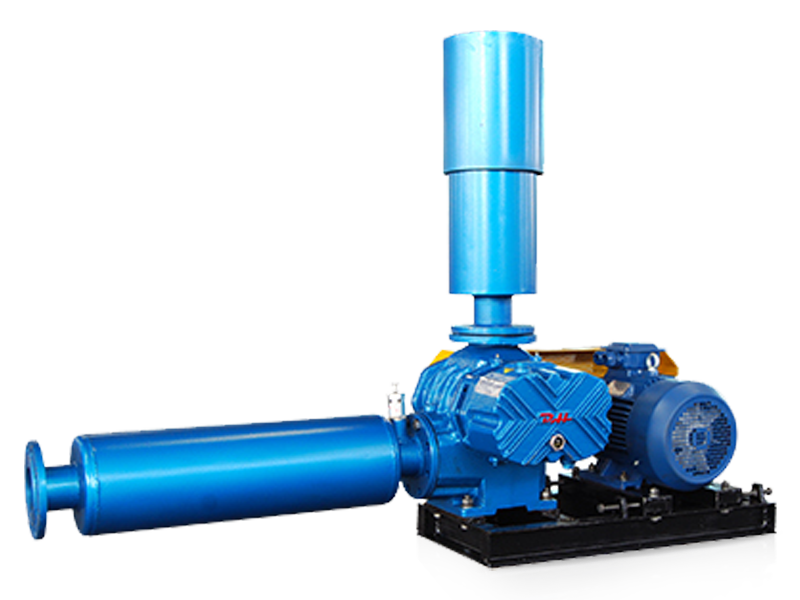
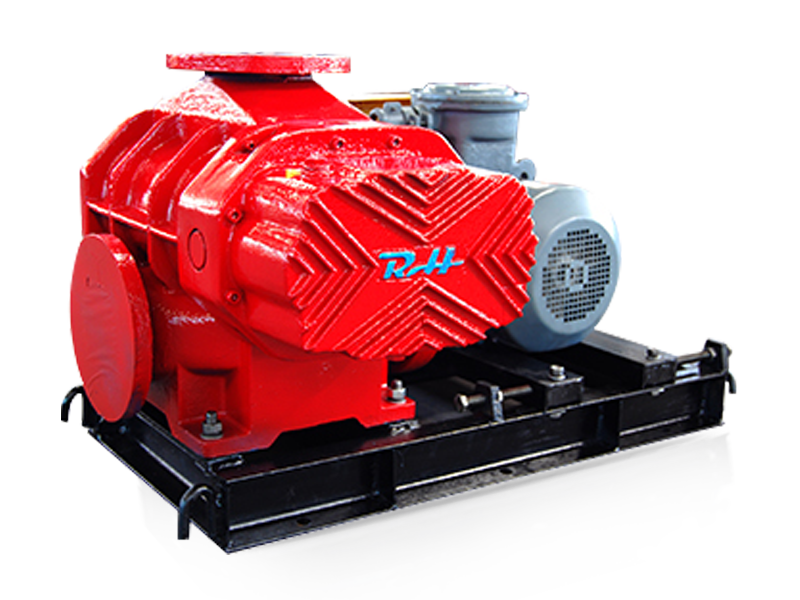
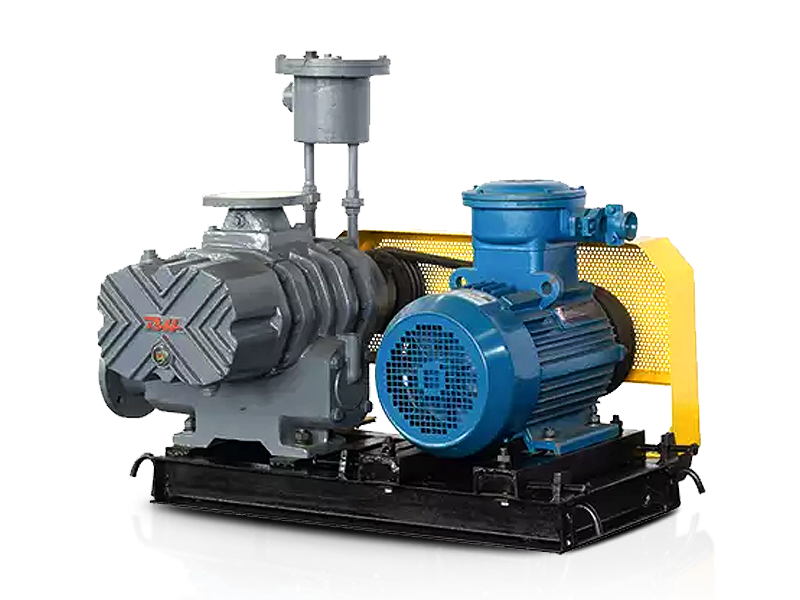
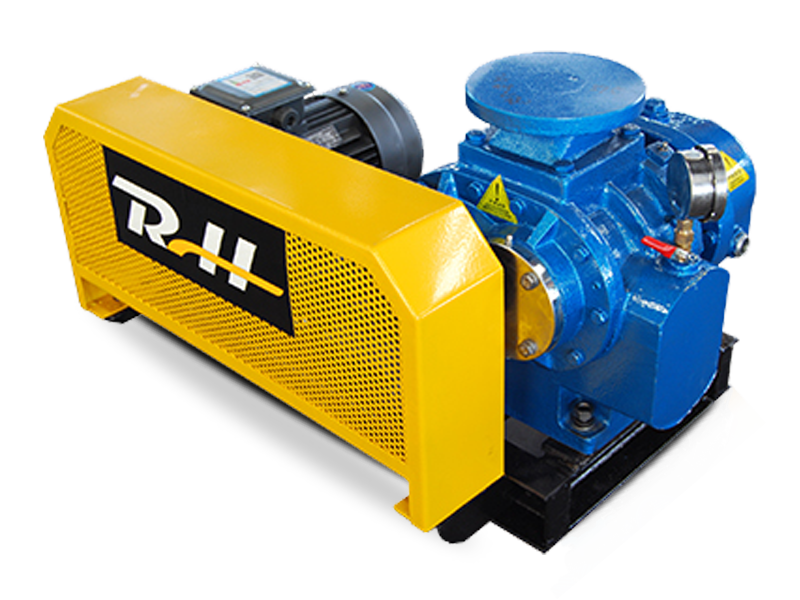
| Rotary lobe (roots) | 2-15 psi | 50-3,000 CFM | Higher-pressure knives, steady flow against back pressure |
| Air suspension turbo | 1-3 psi | 400-5,000 CFM | Continuous duty where energy and service cost dominate |
| Oil-free screw | 5-20 psi | 200-2,000 CFM | Combined pressure and vacuum duty on one machine |
Size the blower for the pressure at the knife plus the losses in the duct. A 20 ft run of 2 in hose at 400 CFM can lose 15 to 25 inH2O, which is a quarter of a small blower's usable pressure. Long runs, sharp elbows and undersized headers quietly turn a good machine into an average one.
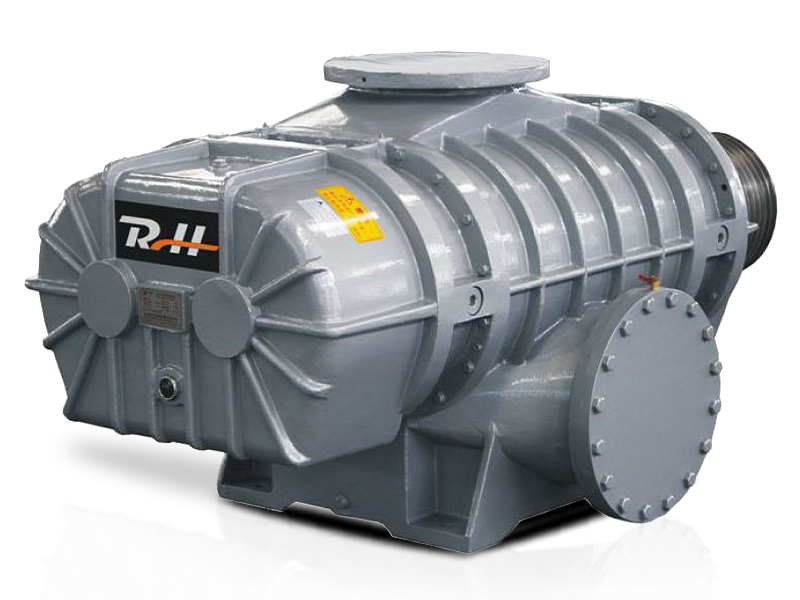
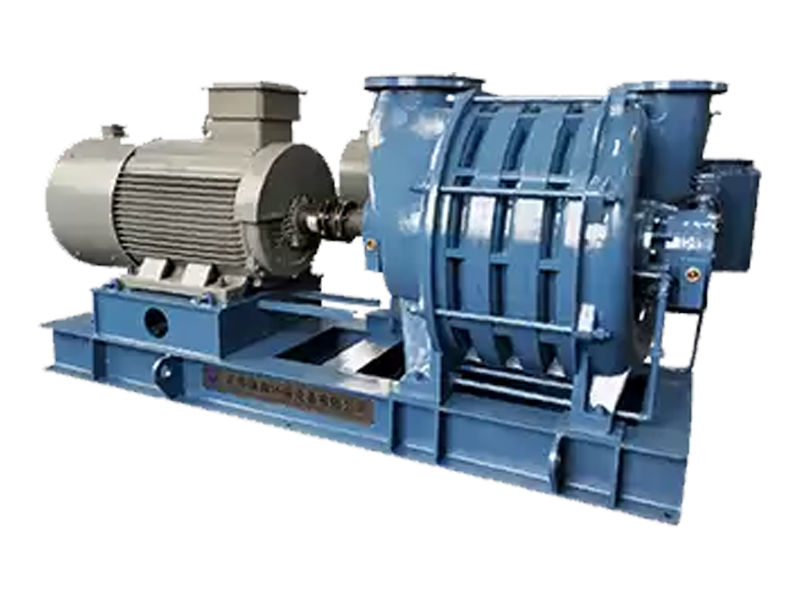
For wide, oil-free blow-off at high flow, a high-flow inlet multistage centrifugal machine is usually the first type worth pricing. It holds pressure across a broad flow band, discharges air that will not contaminate food, film or coated surfaces, and it tolerates the long duct runs that wide air knives need.
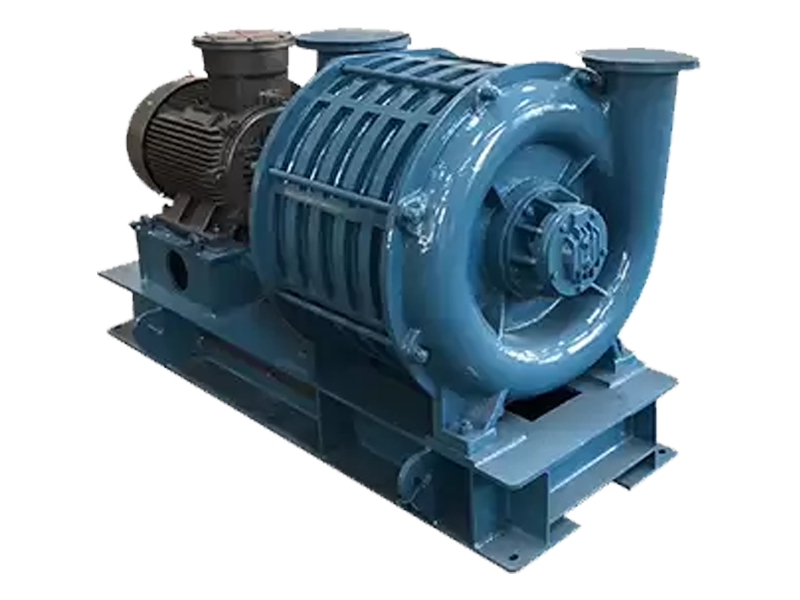 High-Flow Inlet Multistage Centrifugal BlowerHigh-flow multistage centrifugal blower for oil-free blow-off over wide flow ranges and long duct runs; economical, quiet, with broad pressure capability.View Product →
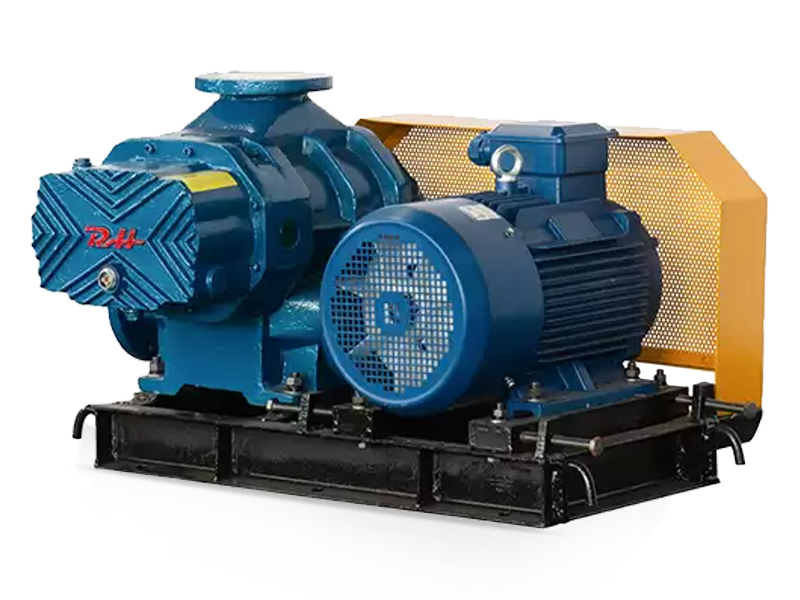
If the knife sits at the end of a long header or needs 5 psi or more, a rotary lobe machine is the more honest choice. Positive displacement holds flow almost regardless of system pressure, at the cost of higher noise and a heavier maintenance load. For a wider survey of how these families are used across plants, the site keeps a running guide to industrial blower types and applications.
Sizing the Blower and the Air Path Together
The blower, the knife and the ducting have to be sized as one system, because a knife rated for 2 psi will never deliver 2 psi on the end of an undersized hose.
- Start from the knife. A 12 in knife with a 0.06 in gap running at 1.5 psi draws roughly 55 to 90 CFM. Scale that linearly with knife length, then add the flow of every branch fed by the same blower.
- Add the duct loss. Keep discharge velocity below about 3,500 ft/min and use the largest hose or pipe the knife inlet will accept. Every elbow, tee and sudden reduction costs pressure you already paid to generate.
- Add a working margin. Ten to fifteen percent covers a loaded inlet filter, a hot afternoon and site altitude. Sizing to the bare calculated number leaves the knife weak after the first month of operation.
- Decide how flow will be trimmed. A throttling valve wastes the energy you saved. A variable frequency drive changes blower speed to match the product, and on a line that runs several products it is usually the single largest saving available.
Part-load duty is the quiet cost. A blow-off station that only needs full flow for one product or one shift will spend most of its life at 50 to 70 percent of design flow, and a fixed-speed machine cannot give that energy back. Ask for the part-load power curve, not just the rated point.
Noise, Heat and the Maintenance Calendar
An air knife is loud by design, and an open blower package often adds more sound than the knife itself, so acoustics belong in the specification rather than in the after-sale conversation.
An uncased package typically sits at 85 to 95 dB(A) at one meter. The knife adds a high-frequency component in the 2 to 8 kHz band that is harder to absorb than low-frequency motor noise. Under a 5 dB exchange rate, the permitted exposure time doubles with every 5 dB(A) you remove.
Pulling a package from 95 down to 85 dB(A) turns a four-hour exposure limit into a full shift. That is an operational decision as much as a safety one, because a line that cannot run a full shift without rotation is a line that is already short-staffed.
An acoustic enclosure solves most of the problem, provided it is designed as part of the air path rather than dropped over the machine. Panels need enough free area for cooling air, the inlet filter must stay reachable without dismantling the housing, and the discharge duct has to be isolated so panel vibration does not become a new noise source. A correctly sized enclosure typically brings a package down to 70 to 75 dB(A) at one meter while holding motor temperature rise within limits.
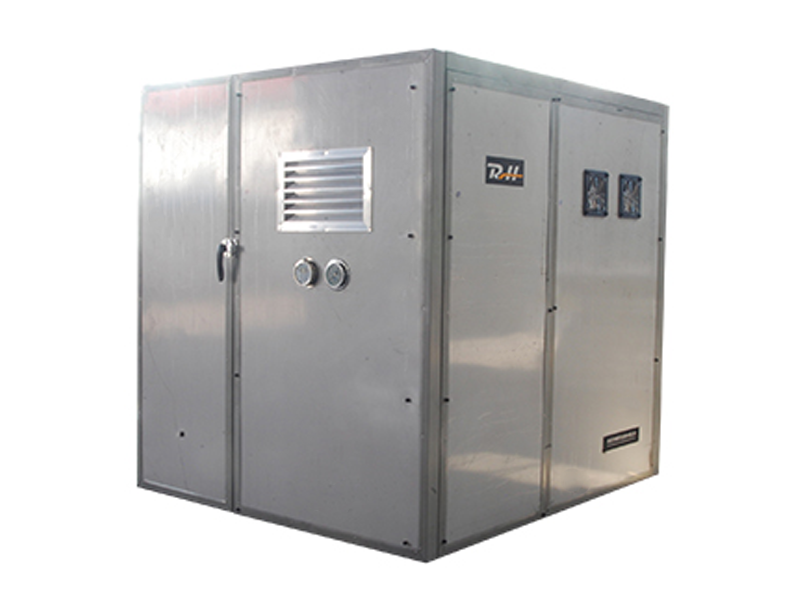 Roots Blower Acoustic Enclosure for Noise ReductionAcoustic enclosure for Roots blowers, reducing noise 15–20 dB(A) with weatherproof galvanized steel construction, ventilation, and hinged access for maintenance.View Product →
Heat and wear are the other long-term costs. Oil-lubricated roots machines and belt-driven units need a scheduled eye on several items, while oil-free turbo machines trade that work for a clean air supply and electronic condition monitoring. Whichever route you take, put these on the maintenance sheet before commissioning:
- Inlet filter differential pressure, checked monthly on dusty sites
- Belt tension and pulley alignment on belt-driven packages
- Oil level, oil condition and breather routing on lubricated units
- Bearing temperature and vibration trend, logged rather than watched
- Discharge temperature, which rises first when a filter clogs
Lifecycle Cost: Where the Money Actually Goes
Over a ten-year life, energy is roughly 75 to 85 percent of the cost of owning a blower for an air knife. Capital, maintenance and downtime make up the rest.
That split changes how specifications should be written. A machine that costs twenty percent more but draws fifteen percent less power is almost always the cheaper purchase. The chart below shows indicative relative energy draw for the same blow-off duty.
A machine drawing 16 kW where another draws 18 kW saves 2 kW. Across 6,000 running hours that is 12,000 kWh a year, roughly $1,400 at $0.12 per kWh, which is often more than the price difference between the two units.
Efficiency is only half of the argument. Air suspension and magnetic bearing turbo blowers remove the oil system, the gears and most routine consumables, which matters on lines that cannot stop for a bearing change.
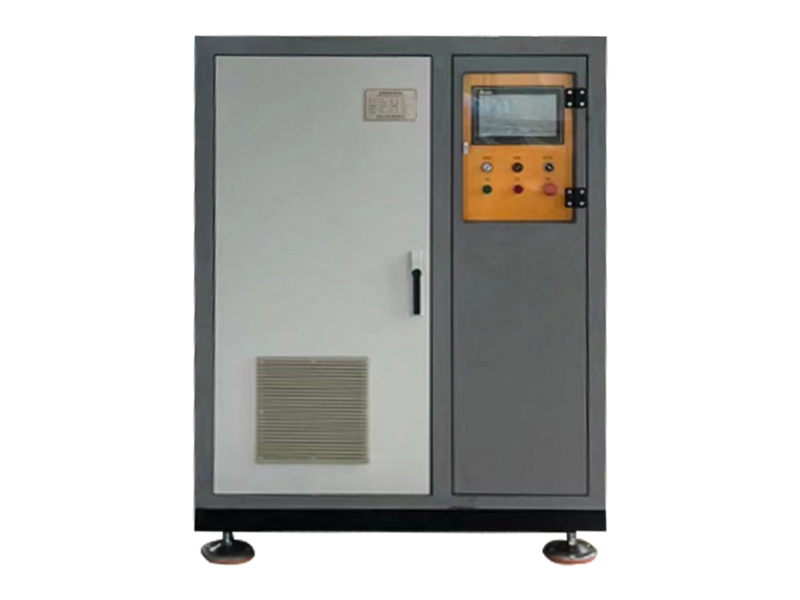 Air Suspension High-Speed Centrifugal Turbo BlowerOil-free air suspension turbo blower for continuous-duty lines; high-speed centrifugal design eliminates gearbox and lubricating oil system, reducing routine maintenance.View Product →
Lifecycle maths only holds if the supplier is still supporting the machine in year eight. It is worth checking service documentation and spare-part practice, not just the performance curve. A supplier such as Rongheng, a blower manufacturer based in Nantong, publishes return-visit maintenance records for installed units alongside its roots, multistage centrifugal, rotary and air suspension ranges, which is the kind of evidence that tells you whether a machine will still be serviceable a decade from now.
Frequently Asked Questions
What size blower do I need for an air knife?
Multiply the knife length by the flow per unit length at your target pressure, then add 10 to 15 percent for duct loss and filter loading. A 12 in knife at 1.5 psi usually draws 55 to 90 CFM, so a 48 in knife typically lands somewhere between 250 and 400 CFM.
Can I run an air knife from an existing compressed air line?
Yes, for intermittent duty, small knives and pilot lines, where the simplicity of a compressed-air connection outweighs the running cost. For continuous duty above roughly 100 CFM, the penalty of generating air at 100 psi and using it at 2 psi is large enough that a blower usually pays for itself within two years.
How much pressure does a blower-driven air knife actually need?
Most systems are specified between 0.7 and 3.5 psi at the knife inlet. More pressure does not automatically mean better drying. Above about 3 to 4 psi the jet becomes turbulent, noise rises quickly, and much of the extra energy turns into heat and sound instead of impingement velocity.
Do blower air knives need a variable frequency drive?
Not always, but a VFD is usually the cheapest energy saving available. It lets the blower follow the product rather than the design case, and it removes the need for a throttling valve that would simply waste the pressure the blower worked to create.
The practical sequence is short. Fix the knife geometry and the pressure it needs. Add the duct losses. Choose the blower family that covers that pressure at the right flow. Then check the noise and the service story before the energy story.
An air knife system is judged on the drying result, but it is paid for on the blower.