 86-0513-68903288
 13906298796@139.com
 русский
 Español
 عربى
عربىContent
- 1 What Counts as a Packaging Line Blower
- 2 Four Duties Blowers Handle on a Packaging Line
- 3 Choosing the Right Blower Type for Each Duty
- 4 Sizing Rules: Pressure, Flow and Duty Cycle
- 5 Noise, Heat and Service Life on a 24/7 Line
- 6 Specifying and Sourcing: What to Put in the RFQ
- 7 Frequently Asked Questions
That slow drift is why packaging engineers size a blower by duty rather than by the peak figure on the nameplate. The pressure a nozzle or suction cup actually needs, the number of points open at the same time, and the hours the line runs all decide which machine belongs on the frame.
What Counts as a Packaging Line Blower
A packaging line blower is a low pressure air mover specified for continuous duty on a packaging machine, for blow-off, drying, vacuum hold or conveying, rather than as part of a plant compressed air system.
The useful band is narrow. Most packaging duties sit between 1 and 4 psi at the nozzle and 50 to 2,500 cfm of flow. A fan cannot hold that pressure against a manifold of open nozzles; a compressor can, but charges for it.
Compressed air at 90 psi costs roughly ten times more per cubic foot than blower air at 2 psi, because energy demand rises with pressure at constant flow. On a three shift line with open blow-off nozzles, that gap appears on the first electricity bill.
Vacuum duties run between 150 and 500 mbar, and the holding force is the vacuum level multiplied by cup area. Conveying duties sit between 0.3 and 1.0 bar, where flow matters more than pressure.
Four Duties Blowers Handle on a Packaging Line
A packaging line blower normally performs one of four duties: blow-off and drying, vacuum hold and pick-and-place, trim and scrap conveying, or cooling and air cushioning.
| Duty | Typical demand | Usual blower type | Common failure mode |
| Blow-off and drying | 1 to 4 psi, 100 to 800 cfm | Multistage centrifugal, regenerative | Loaded inlet filter and worn nozzles |
| Vacuum hold and pick-and-place | 150 to 500 mbar vacuum | Rotary vane, roots vacuum pump | Leaking cups and hoses, not the blower |
| Trim and scrap conveying | 0.3 to 1.0 bar | Roots, oil-free screw | Blocked screens, eroded pipe elbows |
| Cooling and air cushion | 0.5 to 2 psi | Centrifugal, radial | Duct leakage, dust on the impeller |
Air quality separates the duties more than pressure does. Where air touches a food contact surface, a sealing film or the inside of a package, an oil-free machine becomes the default specification.
Choosing the Right Blower Type for Each Duty
Match the blower type to the pressure band first, then to the air quality requirement and the duty cycle. Purchase price is the last filter, not the first.
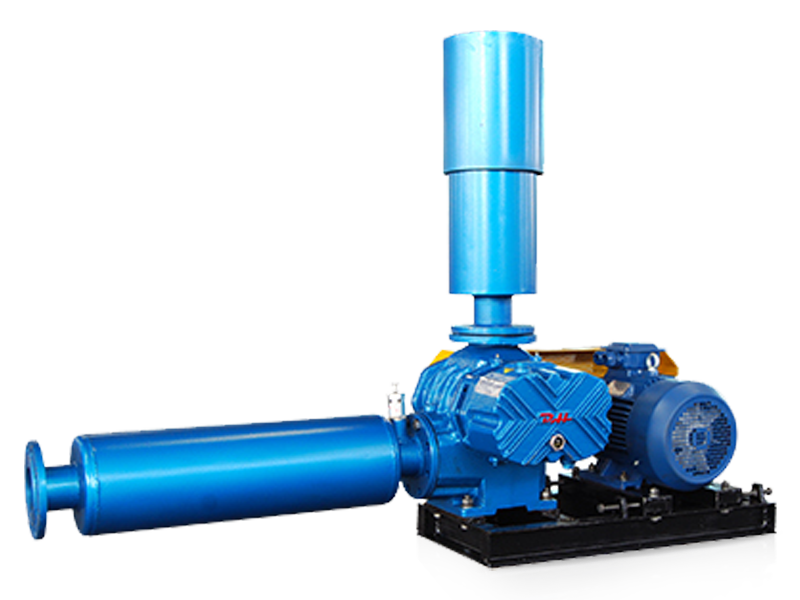
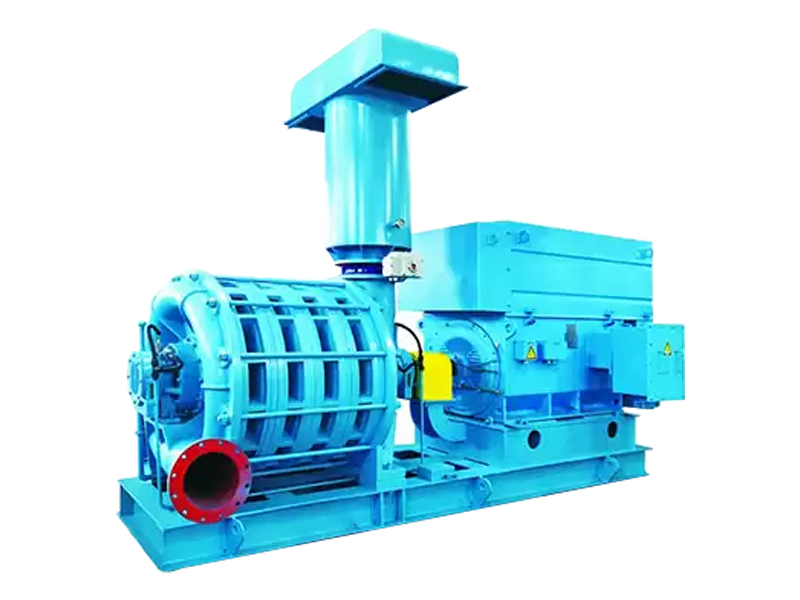 Medium flow inlet multi-stage centrifugal blowerUsage: water treatment industry for aerationView Product →
Multistage centrifugal blowers cover blow-off and drying on mid to high speed lines. They run without internal contact, keep oil out of the air path, and span roughly 50 to 2,400 cfm at pressures up to about 4 psi, which is the top of the blow-off band. Flow stays close to constant as pressure changes, so the machine behaves predictably when a few nozzles are closed.
Type selection in practice
- Regenerative and rotary sliding vane units are compact and reach 2 to 5 psi at lower flows, which suits labelers and small carton erectors.
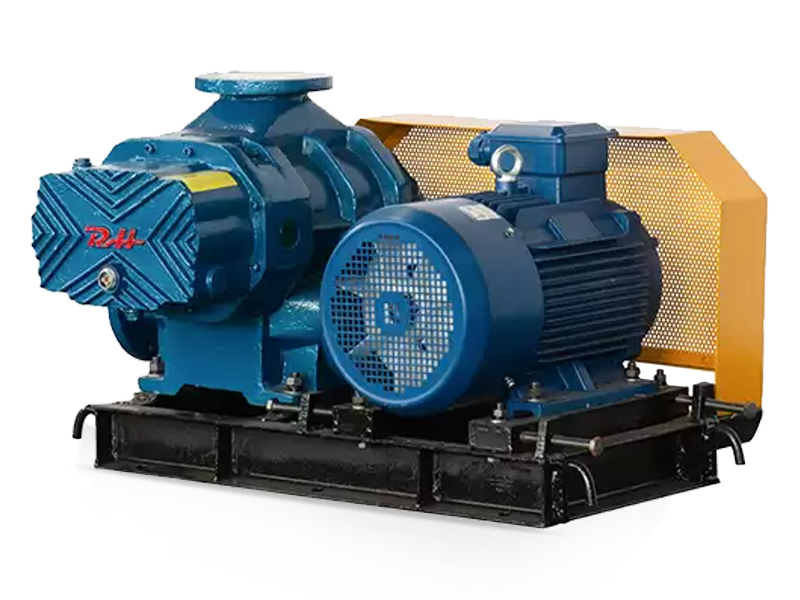
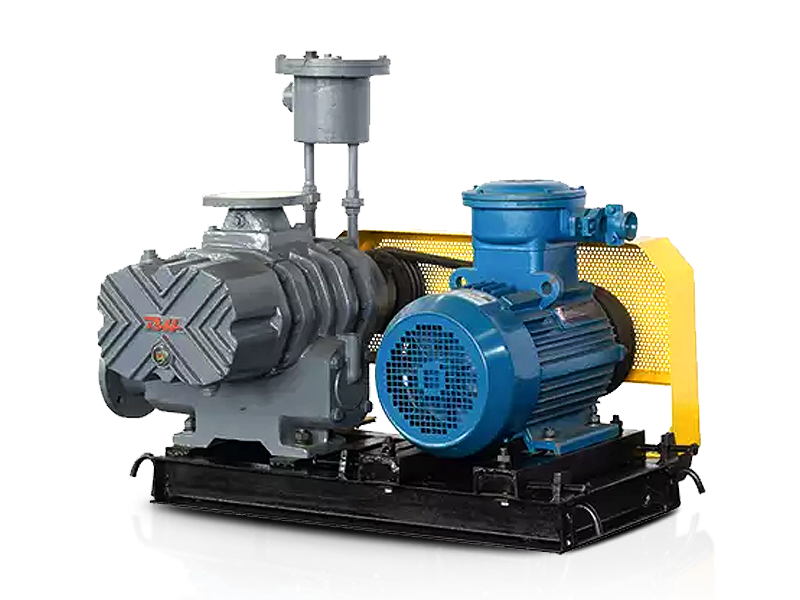
- Roots blowers are positive displacement machines, so flow stays almost constant as pressure changes, which suits trim conveying, dosing and vacuum duties.
- Air suspension and magnetic bearing turbo blowers cut part-load power on lines running several formats, provided intake air is clean and ambient temperature is stable.
- Oil-free screw blowers deliver 0.5 to 1.5 bar of oil-free air where the air stream contacts food, pharmaceutical packaging or sensitive film.
Sizing Rules: Pressure, Flow and Duty Cycle
Size the blower at the point of use rather than at the outlet: set the pressure the nozzle or cup needs, add system losses, then confirm duty cycle, ambient temperature and turndown.
- Fix the point-of-use pressure. Blow-off nozzles work between 1 and 4 psi, and anything above that turns into noise rather than drying performance.
- Add system losses. Hoses, manifolds, silencers and filters consume 0.3 to 0.8 psi at the flow you need, and that loss grows as the filter loads.
- Total the flow across every point open at the same time. One open fitting can pass as much air as a correctly designed nozzle.
- Confirm the duty cycle. Continuous three shift drying asks for different bearings and service factors than intermittent labeling duty.
- Check turndown. On multi-format lines, a variable frequency drive with 40 to 60 percent turndown avoids repeated start and stop cycles.
Ambient conditions finish the calculation. Motor output derates above about 40 C, and an enclosure that traps hot air shortens bearing life long before the impeller shows wear. A filter that loads within a week usually means the intake is positioned badly, not that the filter grade is wrong.
Noise, Heat and Service Life on a 24/7 Line
Noise and heat, not wear, decide the service life of most packaging line blowers. Units rated between 75 and 95 dB(A) at one metre need acoustic treatment, and every enclosure needs a defined cooling air path.
Positive displacement: roots and screw
- Flow stays nearly constant as pressure rises
- Handles conveying and vacuum duties well
- Uses gear oil, so the air path must be separated
Dynamic: centrifugal and regenerative
- Flow falls as system pressure rises
- Oil-free air path with no internal contact
- Less effective above 4 psi, sensitive to dust
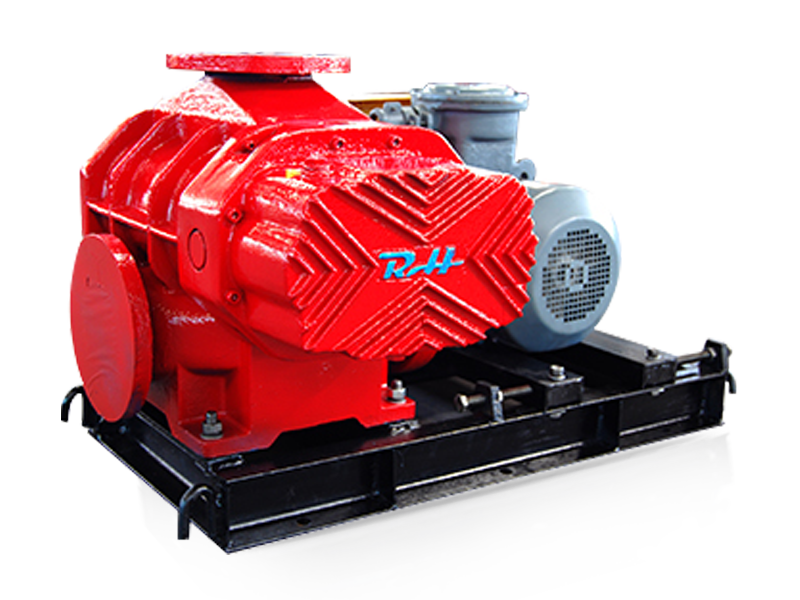
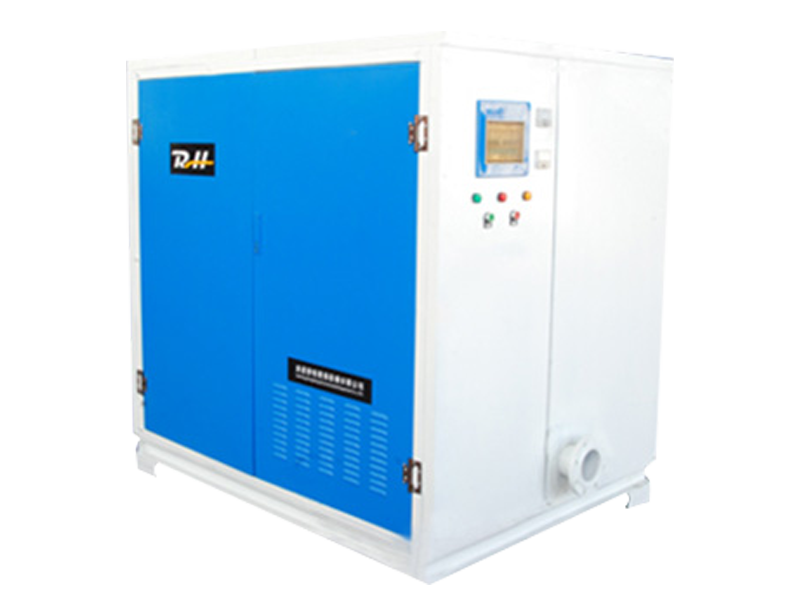 Sound Enclosure For Roots BlowerThere are many laws today that seek to regulate the noise produced by industrial product lines. Moreover, many workers have filed lawsuits claiming hearing damage due ...View Product →
An acoustic enclosure typically removes 15 to 25 dB(A) at one metre, which is often the difference between a compliant packing hall and a hearing protection zone. The enclosure only works if it also carries an air path sized for the motor's cooling requirement. A sealed box drops noise and raises winding temperature, and thermal protection trips on the hottest shift of the summer.
Specifying and Sourcing: What to Put in the RFQ
A packaging line blower RFQ should state the duty, the point-of-use pressure and flow, the air quality requirement, the mounting position, the acoustic limit and the starting method.
- Duty and duty cycle, in hours per day and days per week
- Pressure or vacuum at the point of use, with the number of points open together
- Air quality: oil-free or oil-lubricated, plus the filtration class
- Ambient temperature, dust load and whether washdown is used
- Noise limit at one metre, with enclosure and cooling arrangement
- Starting method: direct on line, soft starter or variable frequency drive
- Spare parts list with filters, belts, seals and a service interval
Where a supplier publishes its manufacturing and certification record, buyers can judge capability before the quotation stage. Rongheng documents its manufacturing background and its GB/T 29490 intellectual property certification on the company site, which is the kind of evidence worth checking when a blower sits inside a validated packaging process.
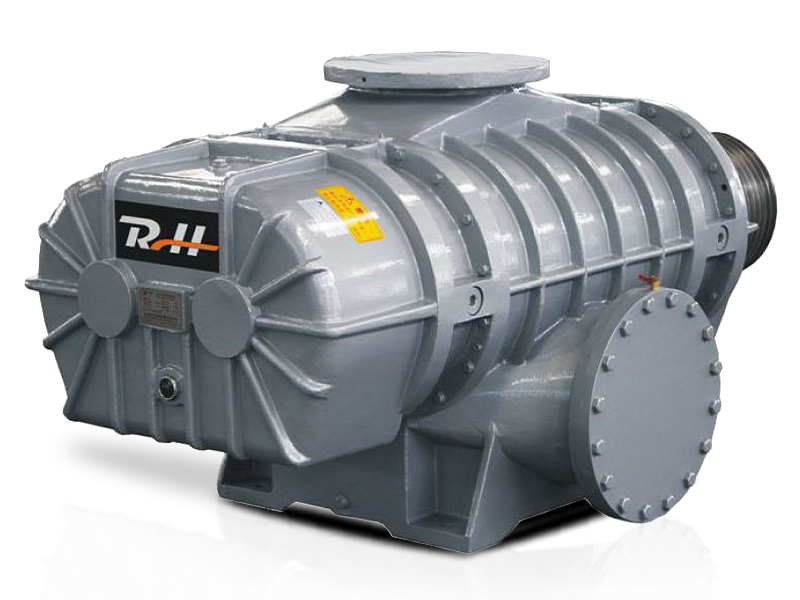
Lines that remove trim, caps or granules pneumatically need a different specification from blow-off duties. A positive displacement unit keeps volumetric flow steady as back pressure rises, so material does not slow down or settle when the pipe run is long or the receiving point sits at a higher level.
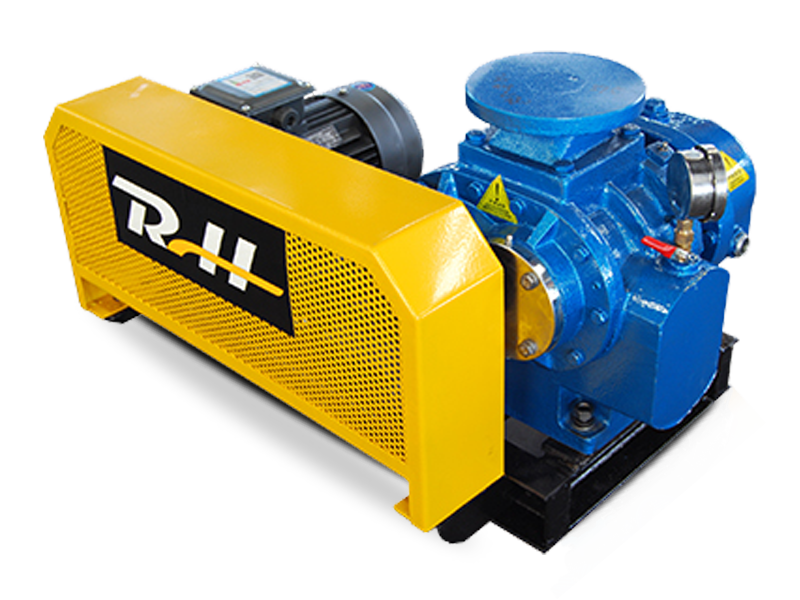
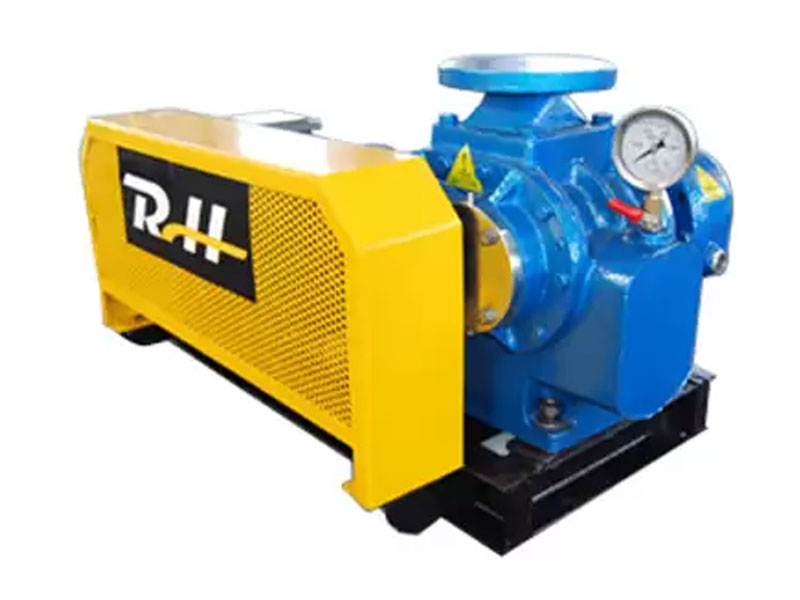 Pneumatic Conveying Roots BlowerFlow Rate: 0.6 ~ 713.8m³ / minView Product →
Energy belongs in the same spreadsheet as the purchase price. Techniques that cut blower operating cost can change the ranking between two quotations once annual running hours are applied.
Frequently Asked Questions
What size blower does a packaging line need?
Start from the point of use. Most blow-off and drying duties on a mid-speed line need 100 to 800 cfm at 1 to 4 psi, vacuum hold duties need 150 to 500 mbar, and trim conveying needs 0.3 to 1.0 bar. Add system losses, count every point open at once, then select the next standard size up.
Can a packaging line blower run on a variable frequency drive?
Yes, and on a multi-format line it usually pays back. Confirm that the motor is rated for inverter duty with adequate insulation, and check the blower's minimum speed. Roots and screw units have a lower speed limit set by lubrication, while centrifugal units tolerate a wider turndown range.
How often should blower filters be replaced?
In a clean packing hall, 1,000 to 2,000 running hours is typical. In dusty or washdown areas, 500 to 800 hours is more realistic. Differential pressure across the filter is a better guide than a calendar, because a loaded filter costs pressure and power on every shift.
Do food packaging lines need an oil-free blower?
Yes, where the air contacts the product, the sealing film or the inside of the package. Multistage centrifugal and oil-free screw units keep the air path clean by design. Oil-lubricated roots blowers remain acceptable where a sealing arrangement isolates the air stream from the lubricated chamber.