 86-0513-68903288
 13906298796@139.com
 русский
 Español
 عربى
عربىContent
- 1 The Venturi Principle in Plain Engineering Terms
- 2 Venturi Vacuum and Mechanical Vacuum: A Straight Comparison
- 3 Where Venturi Vacuum Generators Earn Their Place
- 4 Where the Venturi Principle Falls Short, and What It Costs
- 5 Sizing and Acceptance Checks Before You Order
- 6 When the Duty Cycle Demands a Mechanical Vacuum Source
- 7 Two-Stage Approaches on Both Sides of the Fence
A carton erector loses vacuum in the middle of a cycle and the line jams. The maintenance team pulls the vacuum pump and finds worn vanes, an oil mist film on the floor, and a duty cycle that actually calls for suction for about 1.5 seconds out of every 6. That pattern, intermittent suction with a short hold time and a moderate vacuum level, is exactly where the venturi principle belongs.
Here is the short answer. For intermittent, decentralized suction that never needs to go deeper than roughly -60 kPa, a venturi vacuum generator is normally the simpler, cleaner and longer-lived choice. For vacuum held continuously for minutes, for levels below -80 kPa, or for a central header feeding many stations, a mechanical vacuum source such as a rotary vane pump or a Roots vacuum unit will usually cost less to own over ten years. The rest of this article shows where those dividing lines come from and how to test them with real numbers before you order.
The Venturi Principle in Plain Engineering Terms
Force a fluid through a narrowing channel and the same mass must pass a smaller cross-section every second. Velocity rises, static pressure falls. That is Bernoulli's relationship in its working form, and inside a vacuum generator it is the entire product: the low-pressure zone at the throat is what drags air in through the side port.
lowest pressure, highest velocityCompressed air enters the nozzle at, say, 0.5 MPa, about 5 bar gauge. The nozzle converts that pressure into velocity, and the flow chokes at the throat, which is why suction stops improving once supply pressure passes a certain point. Two dimensions decide the performance you get: the nozzle diameter, which sets air consumption and available suction flow, and the diffuser profile, which sets the maximum vacuum the unit can hold.
Typical figures for a well-made ejector on 5 bar air: a single-stage unit reaches about -40 to -60 kPa, while a multistage unit with two or three nozzles in series reaches roughly -80 to -90 kPa. Below -90 kPa the venturi principle stops being practical, because too little pressure difference remains to drive useful suction flow.
Venturi Vacuum and Mechanical Vacuum: A Straight Comparison
Most selection mistakes come from comparing the purchase price of an ejector with the purchase price of a pump and stopping there. The useful comparison sets duty cycle against total cost, and the table below is the version we use when a customer asks whether a venturi generator is enough.
| Selection factor | Venturi ejector | Rotary vane pump | Roots vacuum unit |
|---|---|---|---|
| Ultimate vacuum | -40 to -90 kPa, depending on stages | -80 to -95 kPa | Limited alone; much deeper as a booster |
| Response time from signal | Under 0.1 s | 2 to 5 s | 10 to 30 s |
| Parts in the gas path | None | Vanes, seals, oil | Rotors, timing gears, seals |
| Best duty cycle | Intermittent, under about 50% | Continuous | Continuous, high throughput |
| Media tolerance | Wet or dusty gas with a suitable body material | Needs dry, filtered air | Needs inlet filtration, tolerates vapour |
| Noise at one metre | 70 to 90 dB(A) | 60 to 75 dB(A) | 75 to 95 dB(A) |
| Energy source | Compressed air | Electric motor | Electric motor |
Read the table in one direction: the ejector wins on response time, moving parts and tolerance of dirty or wet gas, while the mechanical machines win on continuous duty and energy cost per unit of vacuum.
Where Venturi Vacuum Generators Earn Their Place
- Intermittent handling. Pick-and-place heads, carton erectors, bag openers and label applicators that need vacuum for a fraction of each cycle.
- Decentralized installation. The generator mounts at the suction cup, so there is no long vacuum line to leak and no pressure drop to compensate for.
- Wet, dusty or corrosive gas. With a suitable body material there are no vanes or bearings in the gas path to wear.
- Hazardous areas. Compressed air does the work, so no electric motor or switchgear sits at the point of suction.
- Fast, repeated cycling. Response is measured in milliseconds, which suits high-speed indexing lines.
The maintenance profile follows from the same list: a filter, a silencer and occasionally a nozzle are the only wear items, and a nozzle swap takes minutes.
Where the Venturi Principle Falls Short, and What It Costs
Compressed air is the most expensive utility in most plants. Producing one cubic metre of compressed air at 7 bar typically consumes around 0.1 kWh of electricity before distribution losses, and an ejector converts only a modest share of that pneumatic energy into useful vacuum work. A generator delivering 300 Nl/min of suction flow may draw 200 to 400 Nl/min of compressed air for every second it is energised.
Continuous duty is the second trap. An ejector running 100% of the time pays for compressed air every second, while a mechanical pump of equal suction capacity runs on a motor that is far cheaper per operating hour. Above roughly 50% duty, the energy comparison usually reverses within a year or two.
Ultimate vacuum is the third limit and noise is the fourth. Ejectors commonly sit at 70 to 90 dB(A) at one metre and need a properly sized silencer rather than a plug with a hole in it, because mufflers that add back pressure quietly steal suction flow.
Sizing and Acceptance Checks Before You Order
- Fix the target vacuum at the cup, not at the generator. Minus 50 kPa at the port can become -30 kPa at the workpiece through leakage and hose losses.
- State the volume to evacuate and the time allowed. Moving 0.5 L to -60 kPa in 200 ms is a different product from moving 20 L to -40 kPa in 5 seconds.
- Quote supply pressure at its worst case. Catalog suction figures are usually taken at 6 bar, and a header that sags to 4.5 bar during shift change delivers noticeably less.
- Budget for leakage. A porous or uneven workpiece can leak more air than the ejector was ever sized to handle.
- Keep air hoses short and fat. A 10 mm hose at 10 m length can cost more supply pressure than the nozzle recovers.
Acceptance should be measured, not assumed. Run the machine at the lowest normal supply pressure, measure vacuum with a calibrated gauge at the cup, and time the cycle with a PLC counter. Measure noise at one metre as well, since a supplier's "quiet" claim means little without a number attached to it.
If the final decision moves to a mechanical vacuum source, noise control usually becomes a separate line item, because a rotary lobe machine in an open plant room is not a quiet neighbour. Enclosure selection is far easier when it is planned together with the machine rather than after the first complaint from the night shift.
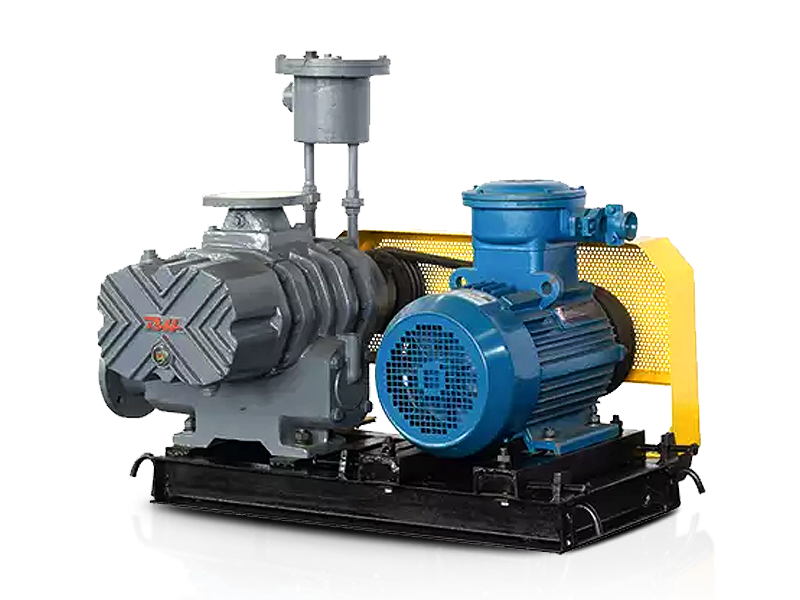
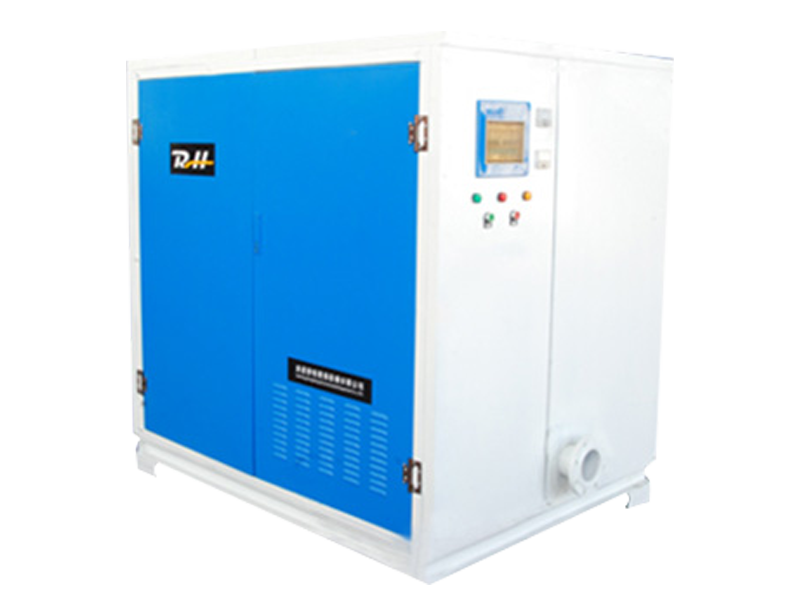 Sound Enclosure For Roots BlowerThere are many laws today that seek to regulate the noise produced by industrial product lines. Moreover, many workers have filed lawsuits claiming hearing damage due ...View Product →
When the Duty Cycle Demands a Mechanical Vacuum Source
Some duties simply do not suit compressed air. A central header feeding twenty stations, a process that holds vacuum for minutes, a vacuum conveying line, or a paper machine that needs stable vacuum across a whole shift all need a rotating machine that produces vacuum for as long as the motor turns.
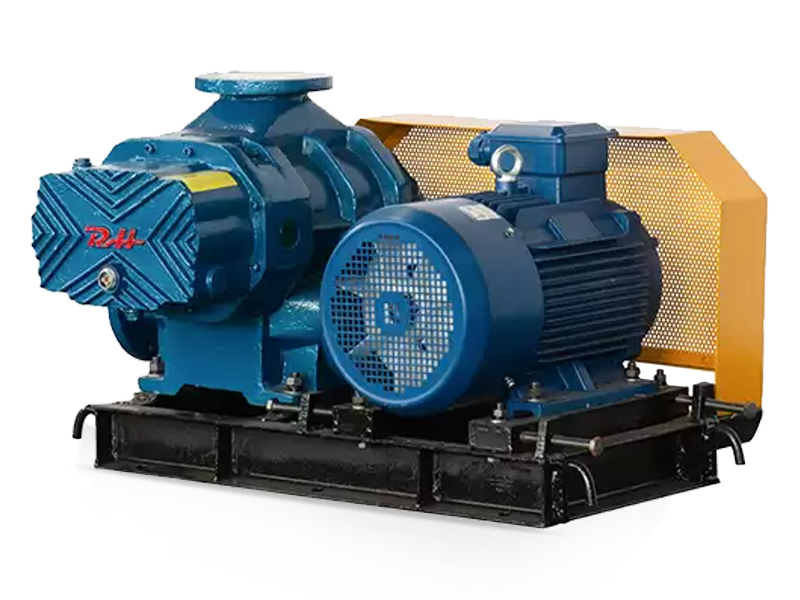
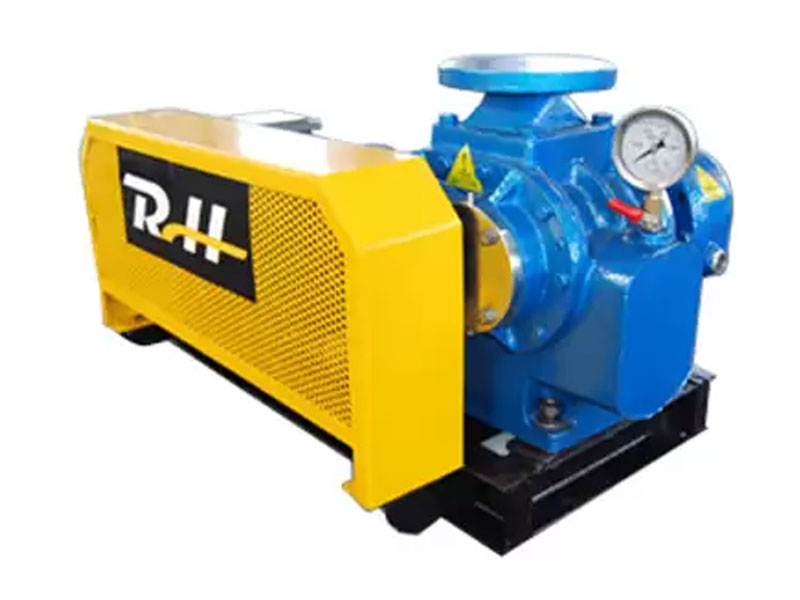
Roots vacuum units are the usual choice on the dry side of that range. Two counter-rotating lobes, synchronised by timing gears, move gas without touching each other and without oil in the gas path, which suits vapour-laden process air as long as the inlet is filtered. The same design is the standard booster stage when a process needs a deeper vacuum than a single machine can reach on its own.
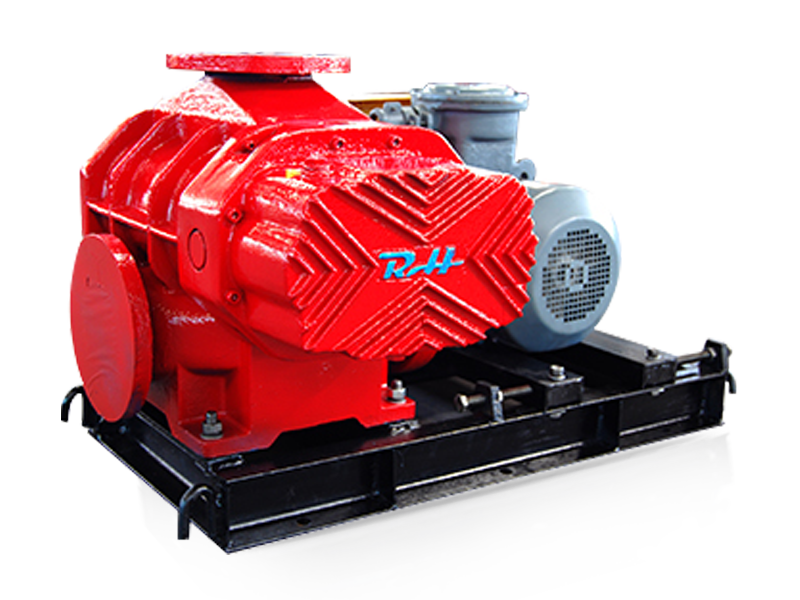
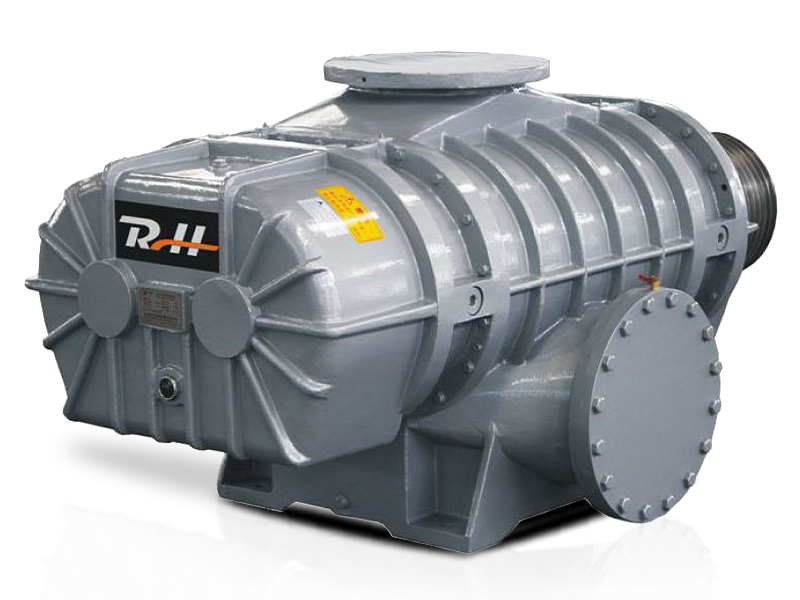 Roots Vacuum PumpFlow Rate: 0.6 ~ 713.8m³ / minView Product →
How a Roots vacuum pump compares with a rotary vane pump under real production loads is a question we answer often; the short version is that the vane unit reaches deeper vacuum by itself, while the Roots unit handles higher throughput and more moisture without an oil change schedule.
Two-Stage Approaches on Both Sides of the Fence
Staging is not unique to mechanical machines. A two-stage ejector places a second nozzle downstream of the first and uses the intermediate pressure to add more momentum to the flow, which is how a compact unit reaches -80 kPa where a single stage stalls around -55 kPa. The trade-off is roughly double the compressed air consumption for the same suction flow, so it only pays when the deeper level is genuinely required.
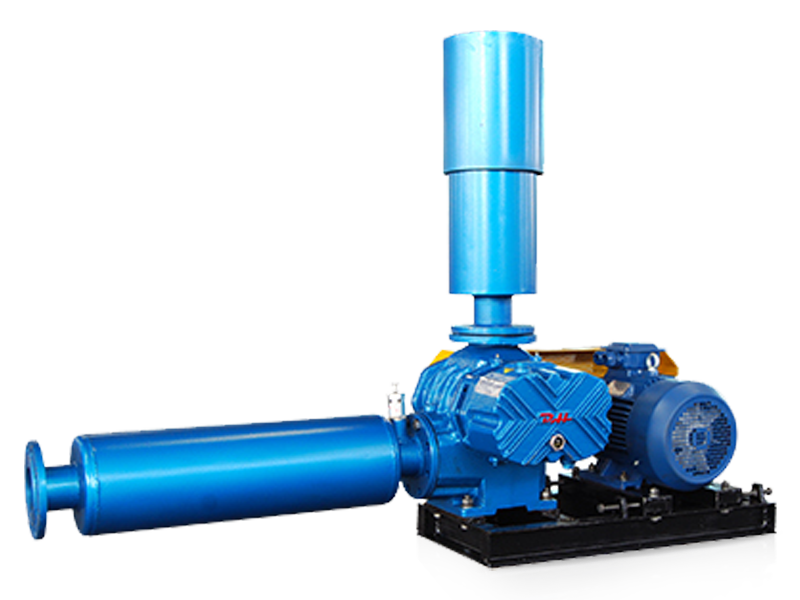
Mechanical staging works on the same principle. Two rotary lobe stages in series reach a higher pressure ratio than one rotor pair, which is why two-stage units appear wherever a single stage would be pushed to its thermal limits: more differential pressure for the same footprint and a better specific power figure at the duty point.
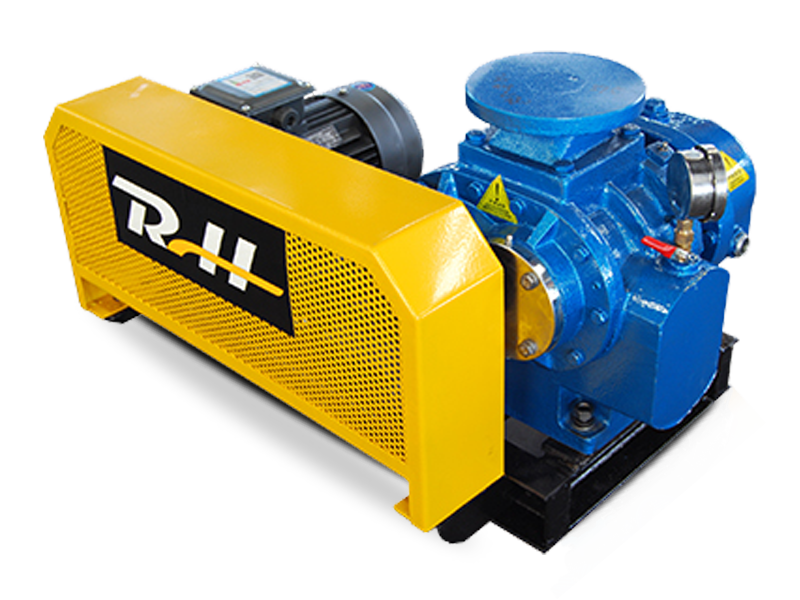
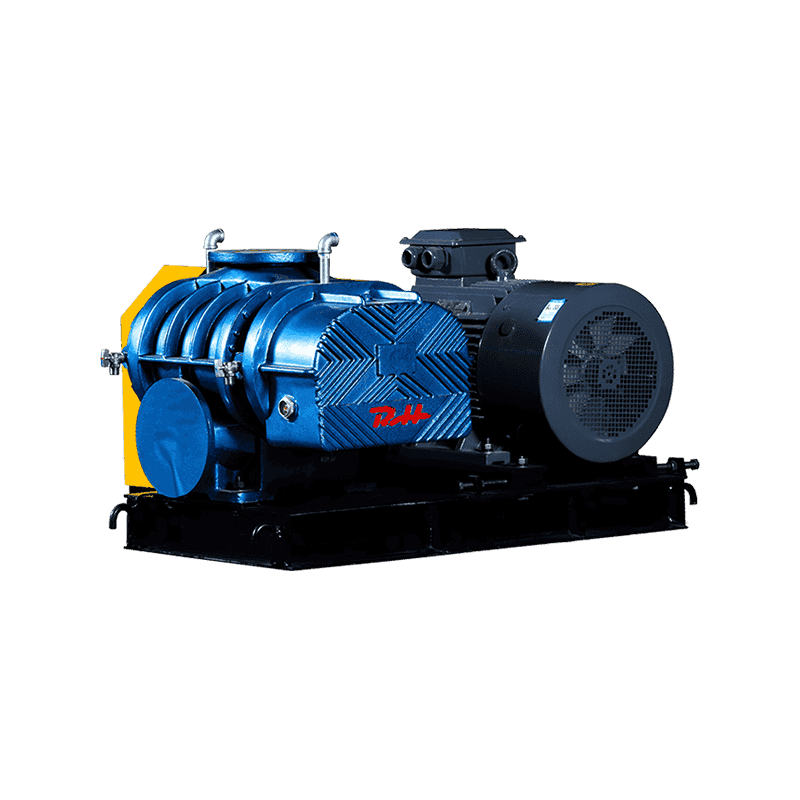
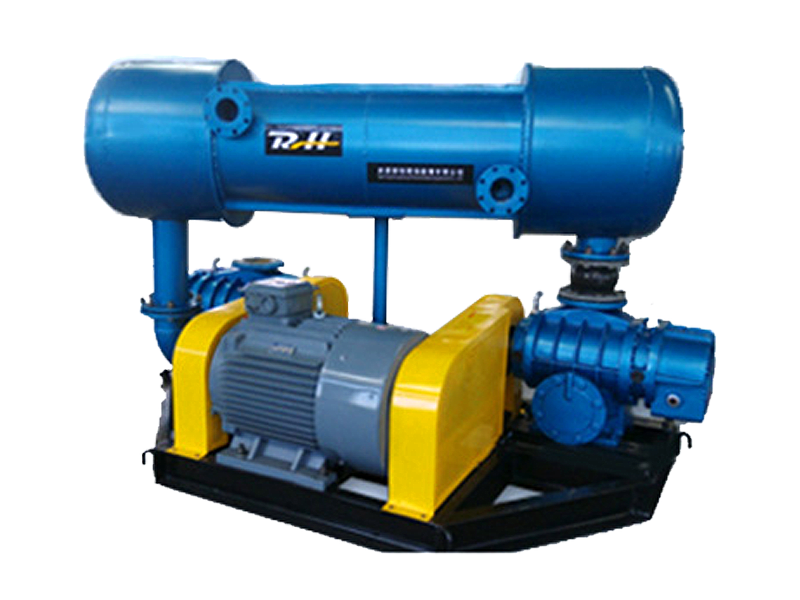 Two-stage Series Roots BlowerFlow Rate: 0.6 ~ 120m³/ minView Product →
Decide with three numbers and one calculation: the vacuum level you actually need at the workpiece, the volume you must evacuate, and the fraction of the cycle that vacuum is held. Intermittent and shallow points toward the venturi principle; continuous and deep points toward a rotating machine; and the middle of the range is where a duty-cycle comparison of compressed air cost against electricity cost settles the argument.
Whichever side of that line your application falls on, the hardware still has to match the media, the environment and the control scheme rather than a catalog flow figure alone. Where a dry rotary lobe machine is the answer, it pays to check the selection against service experience on the same duty before the order is placed. Our manufacturing background covers two-lobe machines for water treatment, pneumatic conveying and vacuum duty, together with the silencers, control cabinets and cooling kits that turn a machine into a working installation.