 86-0513-68903288
 13906298796@139.com
 русский
 Español
 عربى
عربىContent
If an oil-sealed rotary vane vacuum pump stalls at 5 mbar instead of pulling down to its rated ultimate pressure near 0.5 mbar, an experienced technician checks the oil before touching the vanes, the motor, or the coupling. In this pump design, oil is a working element inside the pumping chamber rather than a lubricant dabbed at the edges, and the vacuum gauge is usually the first place a failing oil function shows itself.
One oil charge performs four jobs at once: it seals the clearances, lubricates the sliding vanes, carries away compression heat, and protects every internal surface from corrosion. Lose any one function and the others follow.
Understanding what the oil actually does makes oil selection, condition monitoring, and change intervals far easier to defend — whether you are buying pumps or running them around the clock.
Where the Oil Actually Goes Inside the Pump
A rotary vane vacuum pump is a positive displacement machine. An eccentric rotor spins inside a cylindrical stator, and vanes sliding in slots cut through the rotor divide the rotor-to-stator space into chambers that grow at the inlet and shrink toward the exhaust. With no piston rings or dynamic seals to rely on, the machine depends on clearances of only hundredths of a millimetre staying effectively closed — and oil, fed continuously into the pumping chamber, is what closes them. Once inside, it migrates to four critical gaps:
- the vane tips pressing against the stator wall,
- the vane ends sliding in the rotor slots,
- the crescent-shaped clearance between rotor and stator,
- the exhaust valve seat, which must stay closed against vacuum between compression cycles.
- Oil film seals the vane tip against the stator wall.
- Oil seals the widest clearance, on the suction side of the rotor.
- Oil floods the narrow crescent where the rotor nearly touches the stator.
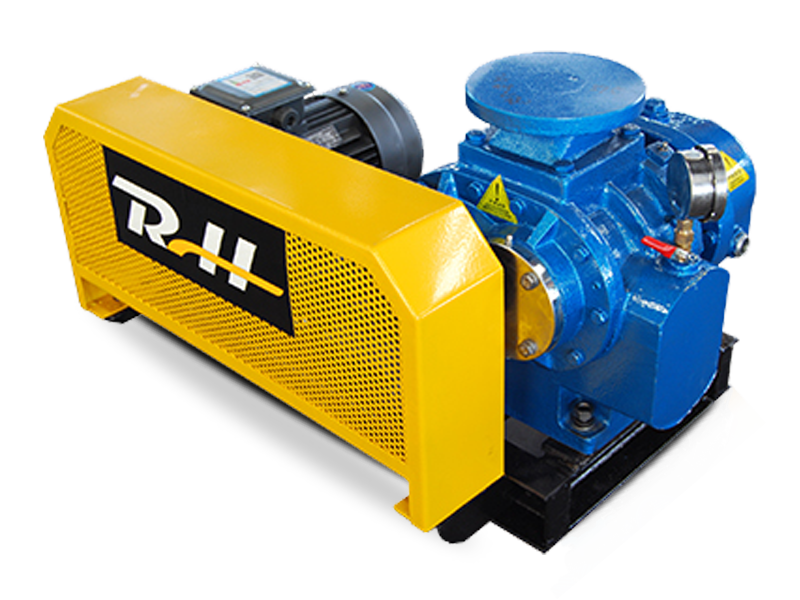
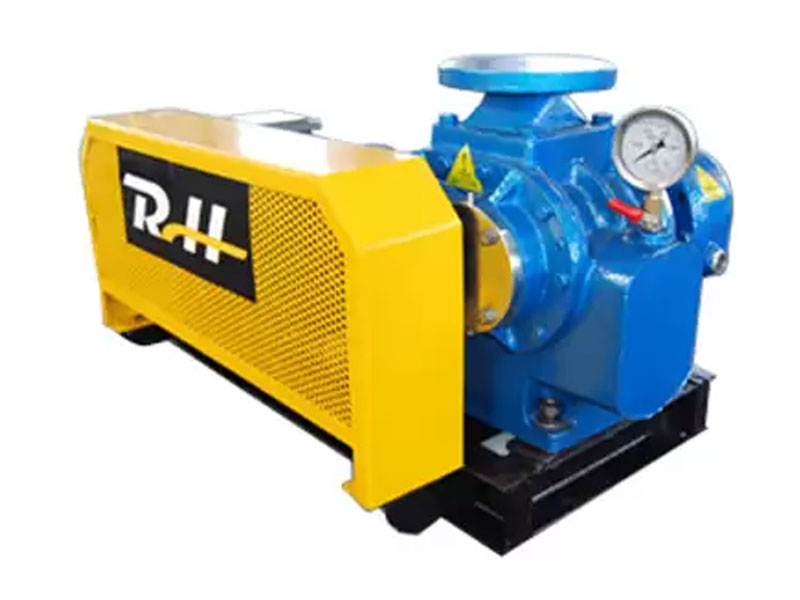
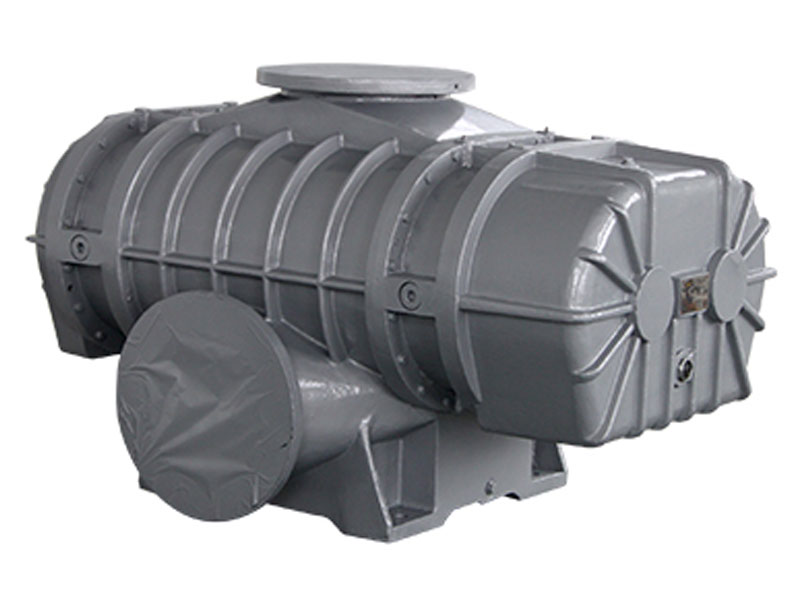
The same vane principle also works at positive pressure: it is the core of the rotary sliding vane blower, which moves clean air in water treatment and low-pressure pneumatic duty where sealing demands are far gentler. Under vacuum, the identical geometry becomes unforgiving — any gap the oil film cannot bridge appears directly as lost ultimate pressure.
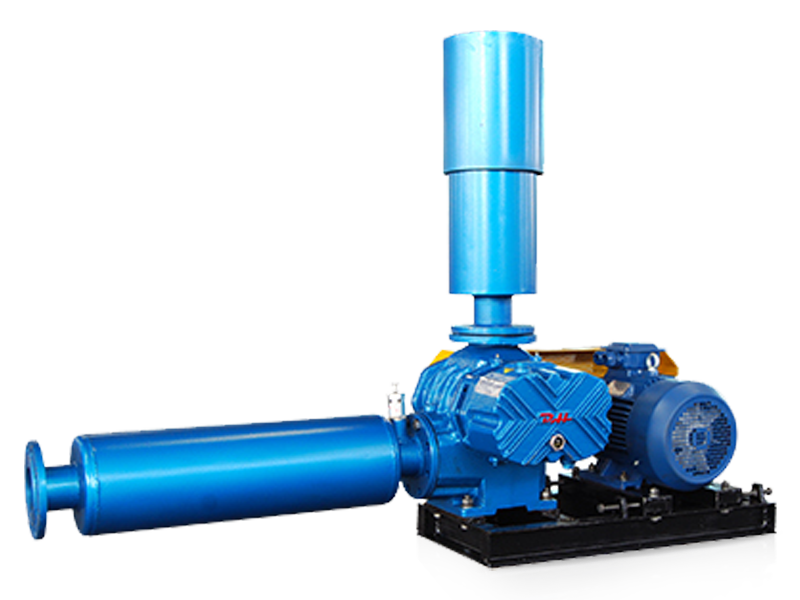
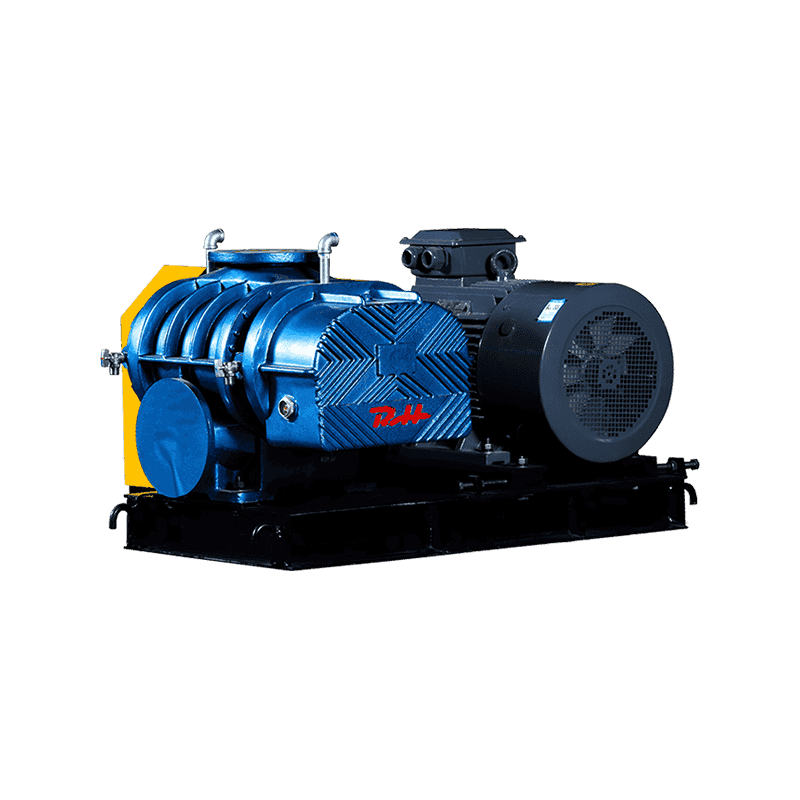 Rotary Sliding Vane Blower for Low-Pressure Air DutyRunning the same vane geometry at positive pressure, this blower delivers 0.59-0.66 m3/min at up to 49 kPa below 60 dB, serving aeration in water treatment where sealing demands are gentler than in vacuum.View Product →
The Four Functions of Oil in a Rotary Vane Vacuum Pump
Sealing
Sealing is the function that makes vacuum possible. The oil film between vane tip and stator is only microns thick, yet it holds back a pressure difference of up to roughly 1,000 mbar between adjacent chambers. If the film breaks, gas slips backward from the compression side to the inlet side; the pump keeps turning while the needle refuses to fall. Oil also keeps the exhaust valve seated until chamber pressure exceeds it.
Lubrication
Each vane slides out of its slot and rides along the stator wall twice per revolution at genuine sliding speed. The oil layer replaces metal-to-metal contact with fluid friction, keeps vane and slot wear predictable, and also serves the rotor bearings and shaft seals. A pump running low on usable oil announces the problem audibly — a rattle or knock — well before it seizes.
Cooling
Oil absorbs the heat of gas compression and carries it to the pump housing, or to an external or water-cooled circuit on larger models, and it quenches the hottest spot in the machine: the compressed gas exhausting through the valve. This is why oil case temperature is treated as a health indicator, with many manufacturers specifying maximum case temperatures in the 80–95°C range. Where plant water circuits are already in place, a circulating cooling system keeps oil temperature — and therefore oil viscosity — stable through long duty cycles.
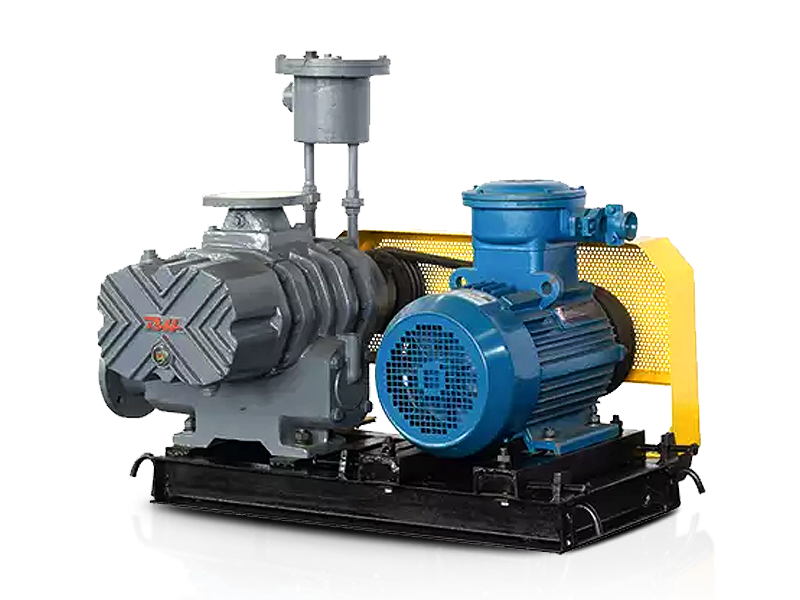
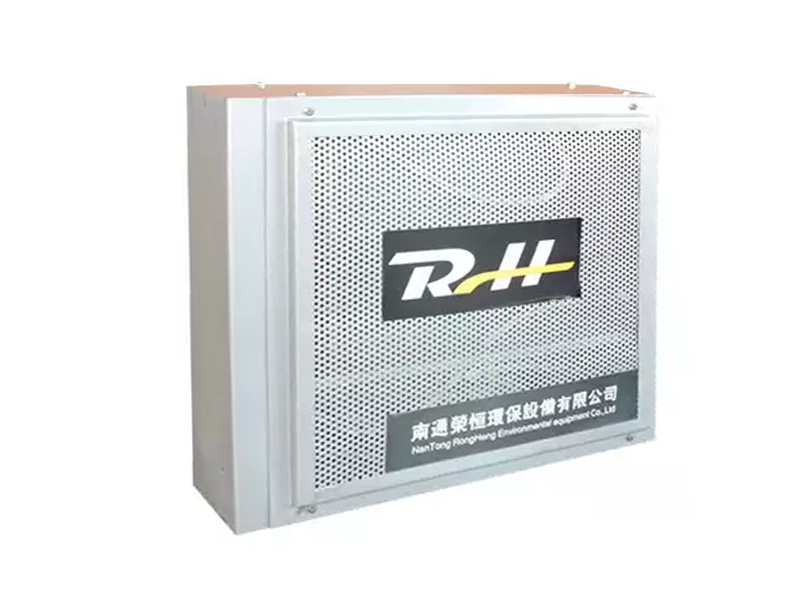 Circulating Water Cooling System Kit for BlowersWith 10,000-20,000 kJ/h heat exchange and a leakproof magnetic drive pump, this compact kit stabilizes oil temperature on blowers and compressors, keeping viscosity steady through long duty cycles without extra feed piping.View Product →
Corrosion protection
Finally, every internal surface carries an oil film that keeps condensate and aggressive vapors off bare metal. This matters most after wet duty or shutdown: residual water condenses as pressure equalizes, and an unprotected pump can flash-rust overnight, then tear its vanes loose at the next start.
| Function | Where it acts | What failure looks like |
|---|---|---|
| Sealing | Vane tips, vane slots, rotor-stator clearance, exhaust valve | Ultimate pressure rises; pump will not pull down |
| Lubrication | Vane slots, stator wall, bearings, shaft seals | Rattling or knocking; accelerated vane and slot wear |
| Cooling | Compression zone, exhaust valve, pump housing | Overheating; coked oil; vanes sticking or seizing |
| Corrosion protection | All internal metal surfaces | Flash rust after wet or idle periods; hard restarts |
What Separates Vacuum Pump Oil from Ordinary Oil
The property that matters most is vapor pressure, not extreme-pressure additives. If a pump is rated to reach 0.01 mbar, the oil itself must stay below that vapor pressure at operating temperature, or the pump emits oil vapor and never pulls down. Dedicated rotary vane oils are therefore highly refined mineral grades, most commonly ISO VG 46 to VG 68, with fine-vacuum variants distilled further until their vapor pressure sits orders of magnitude below the pump's rated ultimate pressure.
Viscosity pulls in the opposite direction. Oil that is too thin loses the seal at operating temperature; oil that is too thick leaves vanes sluggish on cold starts, raises power draw, and overloads the exhaust oil mist separator. Synthetic grades — esters, or perfluoropolyether for aggressive chemistry — extend change intervals and resist oxidation, at several times the price.
The gas ballast valve works directly with the oil. On moist duty, opening the ballast admits a little air into the compression stage so water vapor exits through the exhaust before condensing into the oil — the standard defence against the milky emulsion described below, at the cost of a slightly higher reachable ultimate pressure.
How Pump Oil Degrades — and What Each Failure Costs
Oil in a rotary vane pump lives inside the process: everything the inlet takes in ends up in contact with it. Four degradation patterns cause most oil-related service calls:
- Water vapor forms a tan-to-milky emulsion. Emulsified oil loses sealing ability first, so ultimate pressure creeps upward days before any mechanical symptom appears.
- Solvents and hydrocarbons dilute the oil, thinning the seals and increasing backstreaming into the chamber.
- Dust and wear particles act as lapping paste between vanes and stator, accelerating slot wear and scoring.
- Oxidation and varnish from sustained overheating make vanes sticky and raise start-up torque.
The practical response is routine rather than heroic. Check oil level and color through the sight glass weekly, run the gas ballast after wet batches, change the oil hot so suspended contaminants leave with it, and replace the oil mist separator at the interval the manual specifies. Expect the first change early — commonly within the first 100 to 500 running hours, while a fresh pump sheds break-in particles — then settle into intervals of roughly 1,000 to 4,000 hours depending on oil grade and process cleanliness. Measured against a seized vane kit or a scored stator, an oil change is the cheapest line on the maintenance schedule.
When the Process Is Better Off Without Oil
Everything oil does well inside the pump defines its weakness at the vacuum boundary: a trace of oil is always present in the gas path, as backstreaming into the chamber or as mist in the exhaust. In food packaging, pharmaceutical freeze-drying, electronics, and laboratory instruments, that trace is a contamination risk and a permanent operating cost.
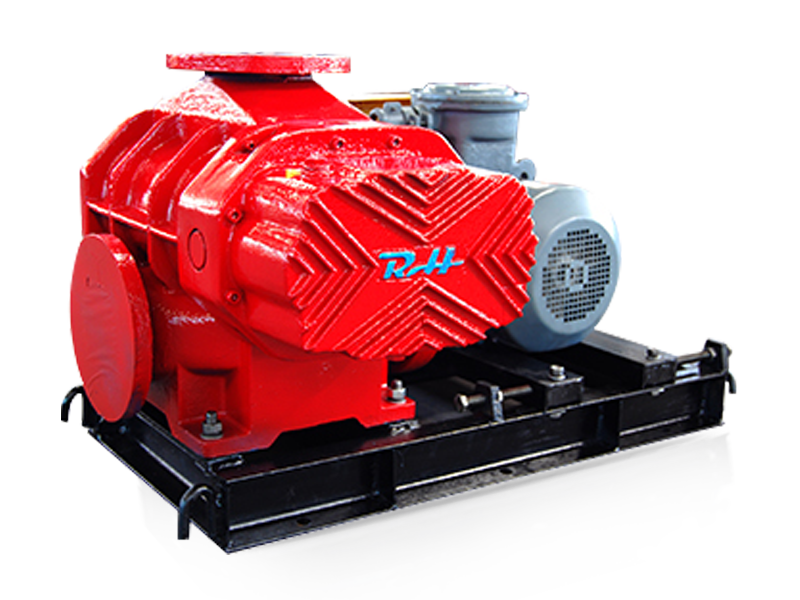
There are two responses. The first keeps the oil-sealed pump and manages the oil with mist separators, oil-return systems, and adsorption traps. The second removes oil from the pumping chamber altogether: a Roots vacuum pump runs a dry pumping chamber with gear and bearing lubrication isolated outside the vacuum space, which is why it is widely applied as a dry booster over an oil-sealed backing pump. We examine this trade-off when comparing the performance of a Roots vacuum pump with a rotary vane pump in real applications, and for large dry flows it is also worth reviewing whether oil-free screw machines can carry vacuum duty directly.
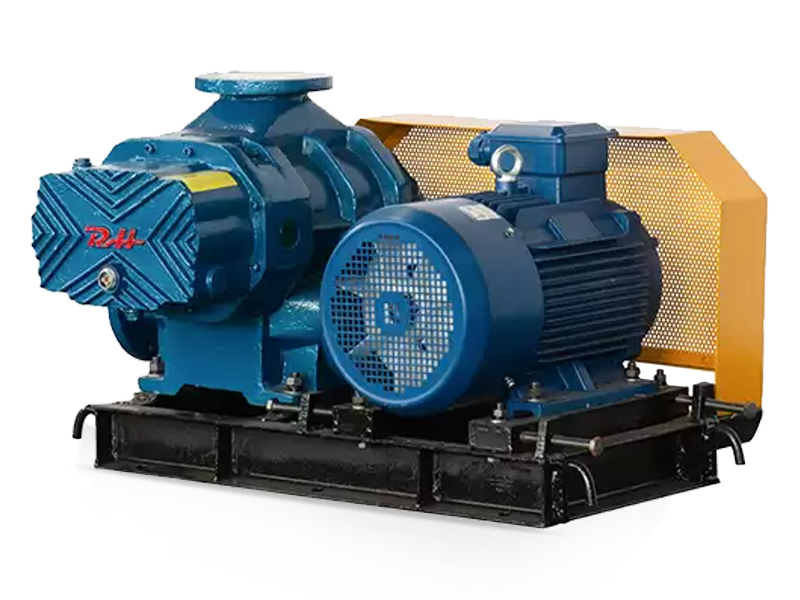
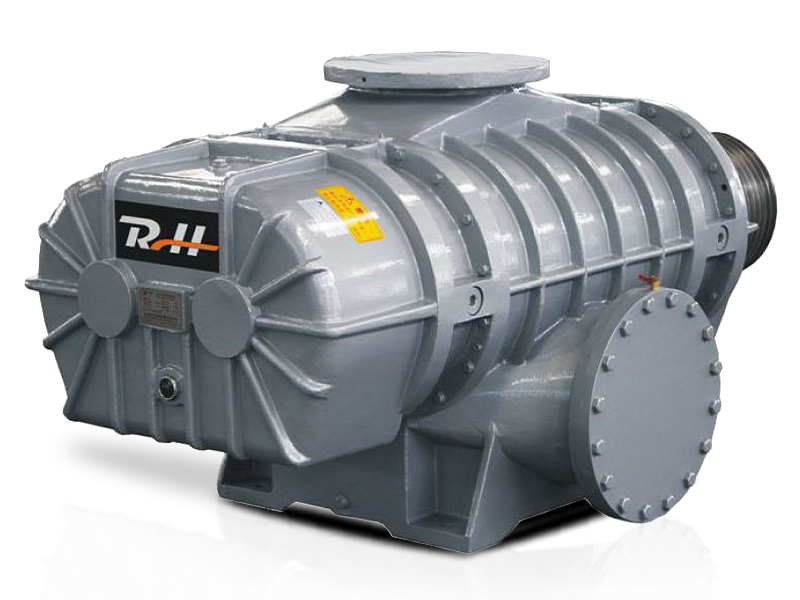 Roots Vacuum Pump as a Dry BoosterOffering 0.6-713.8 m3/min with a dry pumping chamber and isolated gear lubrication, this Roots pump boosts large flows over an oil-sealed backing pump when product cleanliness or oil upkeep costs decide the choice.View Product →
As a maker of both Roots vacuum pump units and vane-type machines, we see this decision settled less by technology preference than by two numbers: how clean the product must stay, and what oil upkeep costs per year.
A Practical Oil Checklist
Oil in a rotary vane vacuum pump is the sealing element, the lubricant, the coolant, and the corrosion barrier at once, which makes it the pump's most important consumable. Manage it accordingly:
- Use only the oil grade named in the pump manual; substitution is a false economy at vacuum level.
- Check oil level and color weekly, and log the ultimate pressure trend at the same time.
- Run the gas ballast after wet or solvent-heavy batches to purge condensate.
- Change the oil warm, and change the oil mist separator with it.
- Treat milky, dark, or foamy oil as a stop-and-investigate condition, not a note for next month.
Handled this way, the oil system becomes cheap insurance rather than a recurring worry. If you are specifying vacuum equipment for tissue production, wastewater plant duty, or another continuous process and would like a second opinion on selection or oil-related maintenance planning, our engineering team supports customers from model selection through installation and return-visit service — a habit built on three decades of Roots and vane-type machine heritage.