 86-0513-68903288
 13906298796@139.com

 русский
 Español
 عربى
Content
- 1 What a Motor Efficiency Class Actually Defines
- 2 The IE Ladder From IE1 to IE5
- 3 What Half a Percentage Point Is Worth on a Running Blower
- 4 How the Class Is Tested, and Where Nameplate Values Mislead
- 5 Matching the Class to Blower Duty, Not to the Brochure
- 6 A Procurement Checklist for Class Decisions
- 7 Frequently Asked Questions
A 75 kW aeration blower running 8,000 hours a year draws roughly 630,000 kWh from the grid. Move its motor from IE3 to IE4 and the annual saving lands near 3,900 kWh, which is real money but not a redesign of the plant budget. Pick the wrong blower for that same duty and the waste is ten times larger. That is the honest frame for motor efficiency class decisions: the label matters, and it is never the biggest number in the room.
The rest of this page separates three things that catalogues blur together: what IEC 60034-30-1 defines, what regulators actually require, and what a blower package costs to run.
What a Motor Efficiency Class Actually Defines
A motor efficiency class is a fixed minimum full-load efficiency band that IEC 60034-30-1 assigns to one specific combination of rated output, pole count and supply frequency. It is a boundary value, not a performance promise for your site.
Because the limit is set per rating, the class number alone says very little. An IE3 motor at 1.1 kW delivers around 84% efficiency; an IE3 motor at 75 kW delivers above 95%. Both carry the same label. When a project team compares an IE3 quote against an IE4 quote, the only meaningful comparison is at identical output, pole count and frequency.
Definition. The IE class is a threshold. A manufacturer may mark a motor IE3 only if its efficiency, determined by test to IEC 60034-2-1, is equal to or above the IE3 limit for that exact rating, pole count and frequency. The class says nothing about part-load behaviour, ambient conditions, voltage quality or the driven machine.
Two consequences follow. A class label is a claim about a design population, not a measurement of the unit in your plant. And a motor can drop below class-level efficiency in service without anyone touching the nameplate.
The IE Ladder From IE1 to IE5
IE1 through IE5 form an ascending ladder of full-load efficiency, and in most industrial markets IE3 has been the legal floor for standard motors since 2021, with IE4 mandatory in a defined high-power band.
| Class | Common name | Approx. efficiency at 75 kW | Market status |
| IE1 | Standard | 93 to 94% | Legacy; no major market mandates it |
| IE2 | High | 94.7% | Floor for small motors in several regions |
| IE3 | Premium | 95.4% | EU floor since July 2021, 0.75 to 1000 kW |
| IE4 | Super-premium | 96.0% | EU mandatory since July 2023, 75 to 200 kW |
| IE5 | Ultra-premium | 96.5% and above | Defined in the latest revision, not yet mandated |
Scope matters more than the ladder. Explosion-proof motors, submersible units, brake motors and high-speed designs usually sit outside the IE mandate, so a class label on those units is a voluntary claim that deserves a test report.
Variable-speed duty adds a second framework: IEC/TS 60034-30-2 sets classes for motors sold specifically for converter operation, and those values are not interchangeable with the 50 Hz line figures above. If the blower will run on a drive, ask which framework the quoted efficiency belongs to.
What Half a Percentage Point Is Worth on a Running Blower
At 75 kW and 8,000 operating hours, one percentage point of motor efficiency is worth roughly 6,500 kWh per year, so the IE3 to IE4 step saves about 3,900 kWh, or a few hundred dollars at typical industrial tariffs.
Full-load efficiency at 75 kW, four-pole, 50 Hz. Bar length is scaled from a 90% baseline, not from zero.
Where does the lost energy sit? In a four-pole induction motor the split is roughly: stator copper losses 35 to 40% of total loss, rotor losses around 20%, core losses 15 to 20%, friction and windage about 10%, with stray load losses taking the remainder. IE4 designs attack that list with more copper, thinner laminations, tighter slot geometry and, increasingly, permanent-magnet or synchronous-reluctance rotors.
The payback line. An IE4 motor typically costs 15 to 30% more than the IE3 equivalent, and the motor is usually 15 to 25% of a blower package price. On continuous duty the premium often returns inside two years; on intermittent duty it may never return.
Wastewater aeration is the clearest case for the higher class, because duty is continuous and load is stable, which is the profile behind most packaged aeration units.
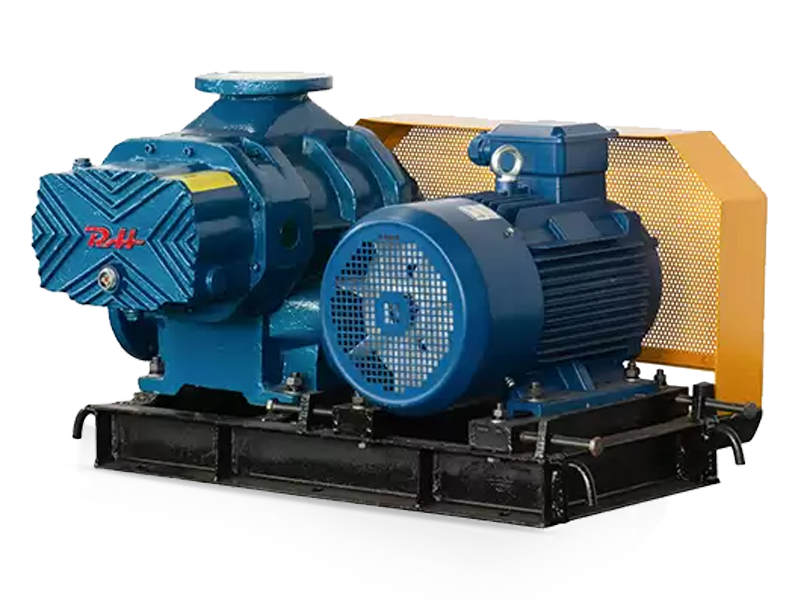
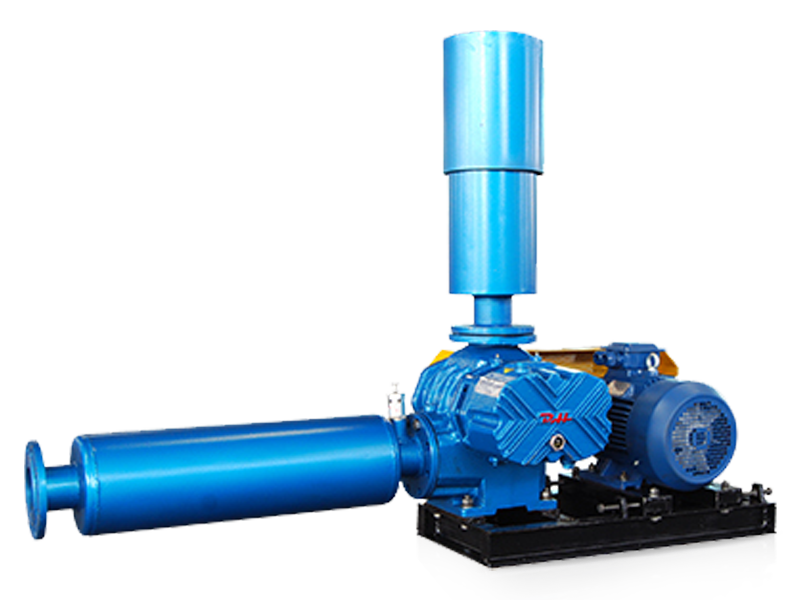
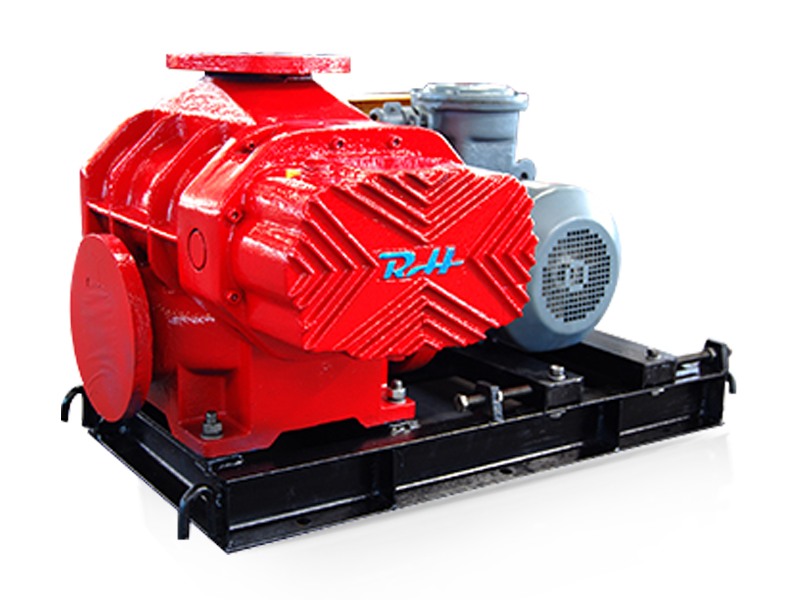
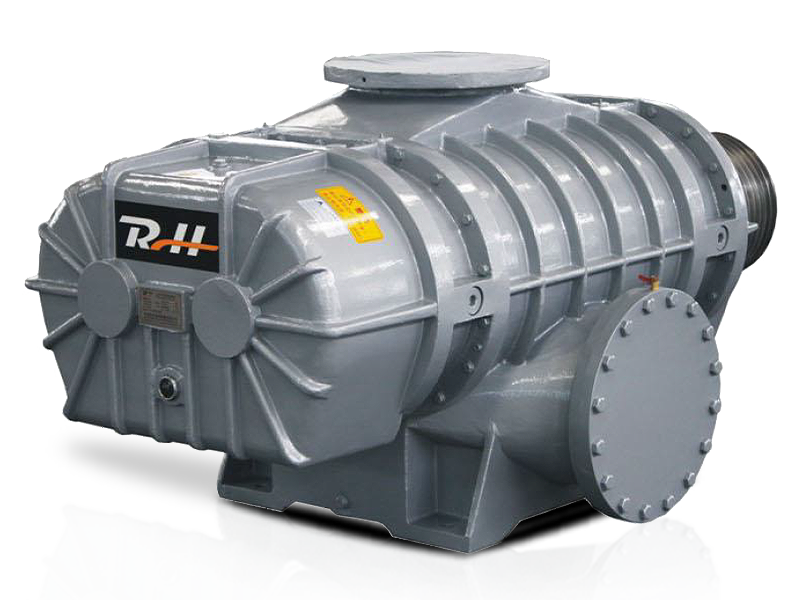 RH Series Roots Blower for Wastewater AerationPositive displacement RH blower suited to continuous wastewater aeration, with three-blade impeller, adjustable speed, and switchable air/water cooling.View Product →
For field measures that cut consumption without touching the motor at all, the site notes on rotary blower energy efficiency cover control, piping and maintenance side savings.
How the Class Is Tested, and Where Nameplate Values Mislead
The class is verified by a laboratory test to IEC 60034-2-1, and the declared value carries a standard tolerance, so the figure on the plate is a tested reference rather than a guarantee of installed performance.
- Voltage unbalance: a 3% unbalance typically forces a derating to roughly 85% of rated output and pushes losses up sharply.
- Ambient and altitude: ratings reference 40 C ambient and 1000 m elevation; above either, available output falls.
- Converter supply: fast switching and harmonic content add rotor and stator loss that a sine-wave test never sees.
- Installation losses: belt drives, undersized cables and blocked ventilation all sit downstream of the nameplate.
Two motors of the same class can differ by more than a full class step once both are installed in a real plant. Ask for the test report, then check the site conditions.
A supplier who can only quote the class name is quoting a label. A supplier who quotes tested efficiency at the exact rating, with the method and tolerance named, is quoting performance.
Matching the Class to Blower Duty, Not to the Brochure
Choose the efficiency class after the duty profile is fixed, because a blower's annual energy is dominated by the air end, the control mode and system resistance, while the motor class moves the total by a point or two.
Motor-side levers
- Class step from IE3 to IE4
- Correct rating instead of a 30% oversize margin
- Efficiency at part load, not only at the rated point
- Starting method matched to the supply
System-side levers
- Control mode: throttling versus variable speed
- Pipe and diffuser pressure loss
- Air end clearances and internal leakage
- Cooling air path and heat recovery
Variable speed changes the arithmetic again. The IE framework quotes efficiency at the rated point, while a blower on a drive spends most of its hours somewhere else, so the loss curve across the real operating range decides the bill. High-speed direct-drive machines sit outside the framework altogether: an air suspension unit turning at tens of thousands of rpm is specified on specific power, kW per unit of delivered flow, and that figure already includes motor and impeller together.
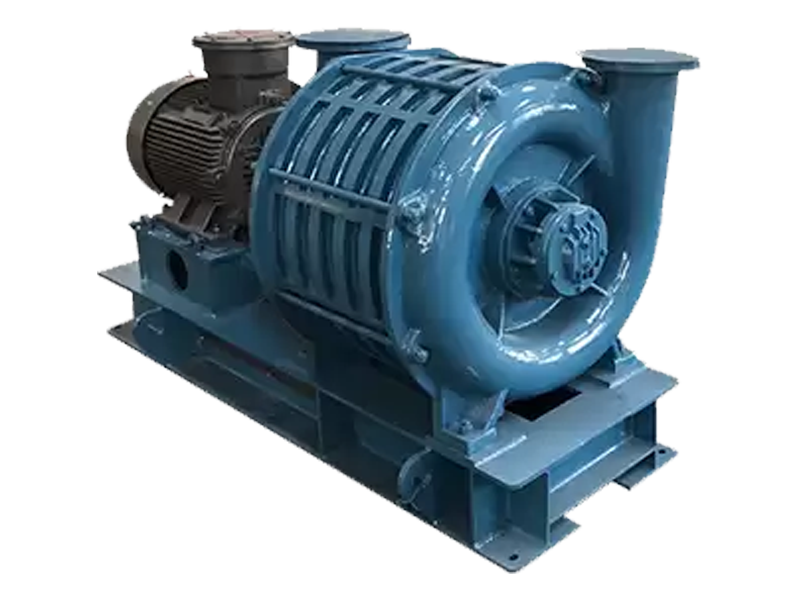
 Air Bearing Turbo Blower for High-Speed AerationHigh-speed centrifugal blower with air suspension bearings, direct impeller-motor connection, and inverter control, specified on specific power for variable-duty applications.View Product →
A Procurement Checklist for Class Decisions
Write the duty point, the annual hours and the control mode into the specification before you write an efficiency class, because the class choice only becomes defensible once those three are fixed.
- Lock the duty point: flow, pressure, altitude, ambient temperature and gas composition.
- State the control mode: fixed speed, inlet throttling, or variable speed with the expected load profile.
- Check scope: confirm whether the motor falls inside the IE regulation for its power and design, and whether a class claim is voluntary.
- Ask for tested values at the exact rating, with the test standard and tolerance named.
- Price the package, not the motor: compare specific power and annual kWh at your duty.
- Match the starting equipment to the supply and the load, since an efficient motor on direct-on-line starting still draws several times rated current.
Step six is where drives and soft starters earn their place, particularly on larger drives and weak supplies where the inrush current sets the cable and protection sizing.
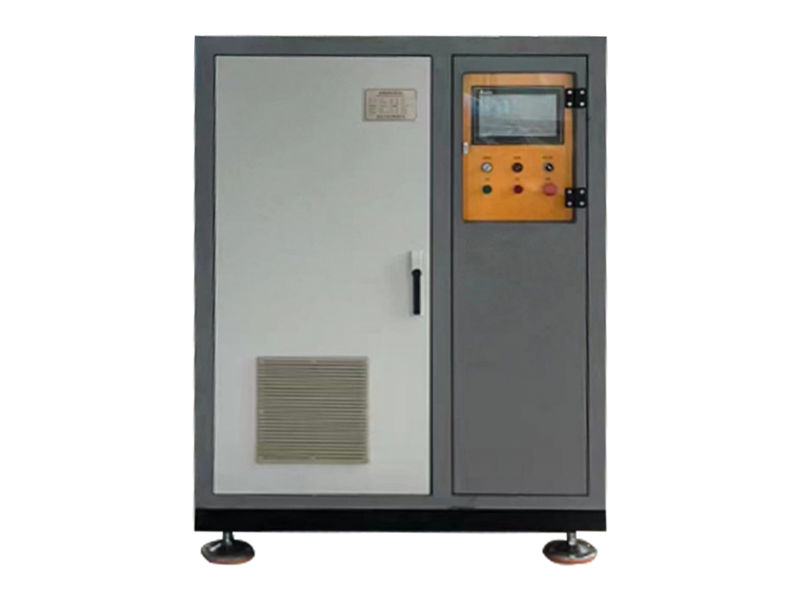 XBQ Frequency Conversion Starting Cabinet for BlowersBlower starting accessory offering stable start-up, speed-regulation energy savings, and custom or GGD cabinet options with 380V three-phase input.View Product →
Frequently Asked Questions
Is IE4 always better than IE3?
Not automatically. IE4 lowers losses at the rated point, and the gain pays best on continuous duty above roughly 75 kW. On a small motor running two shifts a week, the price premium may never return, and the regulation does not require IE4 in that band.
What is the difference between IE3 and IE4 in numbers?
About 0.6 points at 75 kW on a four-pole motor, and up to 1.5 points at small ratings where the limits are steeper. IE4 designs usually add copper and electrical steel, and sometimes switch to permanent-magnet or synchronous-reluctance rotors.
Do air suspension blower motors carry an IE class?
Usually not. IEC 60034-30-1 is written around line-frequency induction motors, while an air suspension turbo blower uses a high-speed permanent-magnet motor integrated with the impeller. Compare those machines on specific power instead of an IE label.
Does a higher efficiency class reduce starting current?
No. Starting current depends on motor design and starting method, not on the class. A premium-efficiency motor started direct-on-line still draws about six times rated current, which is why soft starters and variable-frequency cabinets are specified on larger blower drives.
Judge a blower by kWh per year at your duty point; use the class label only to make two motor quotes comparable.
Efficiency classes are a narrow, useful tool: they standardise one number so quotes can be compared at the same rating. Everything else about the package, from air end clearances to the control cabinet, decides whether the plant saves energy. Buyers working with a manufacturer that builds both the machine and its electrical package can request the whole set of figures together, which is the practical advantage of a single-source supplier such as Rongheng.