 86-0513-68903288
 13906298796@139.com
 русский
 Español
 عربى
عربىContent
A PET bottling line running 24,000 bottles an hour leaves the rinse tunnel with roughly 0.05 ml of water sitting on every cap. Across a 40 square metre conveyor that adds up to more than a litre of liquid per hour, enough to smear an inkjet date code, jam a case packer and trip a leak detector forty feet downstream. The component that clears it in under 300 milliseconds, without ever touching the product, is an air knife.
What an Air Knife Actually Does
An air knife is a sealed plenum with a continuous machined slot that converts low-pressure blower air into a thin, high-velocity sheet and uses that sheet to strip liquid, dust or debris off a surface without contact.
The rest is plumbing and geometry. A blower pushes air into the chamber at low static pressure, commonly 2 to 10 kPa on a blower-fed unit or 400 to 550 kPa on a compressed-air version. Internal baffles even the pressure out so exit velocity stays uniform along the full length of the slot, which matters when the knife is 1,200 mm long and the product is a 1,200 mm web. The slot then does the conversion. Force the same volume of air through a 60 square millimetre gap instead of a 3,000 square millimetre duct and the air has to speed up, because it all still has to pass in the same second.
Knives are built in fixed lengths from about 100 mm up to 3 m, and in three basic shapes: straight for flat product, circular for cans and bottles on a rotary table, and curved or angled for contoured surfaces. Air supply and mounting distance are usually the only two variables a buyer still has to decide.
Why a Thin Sheet of Air Beats a Round Nozzle
A thin sheet outperforms a round jet because three effects work together: continuity, the Coanda effect and entrainment.
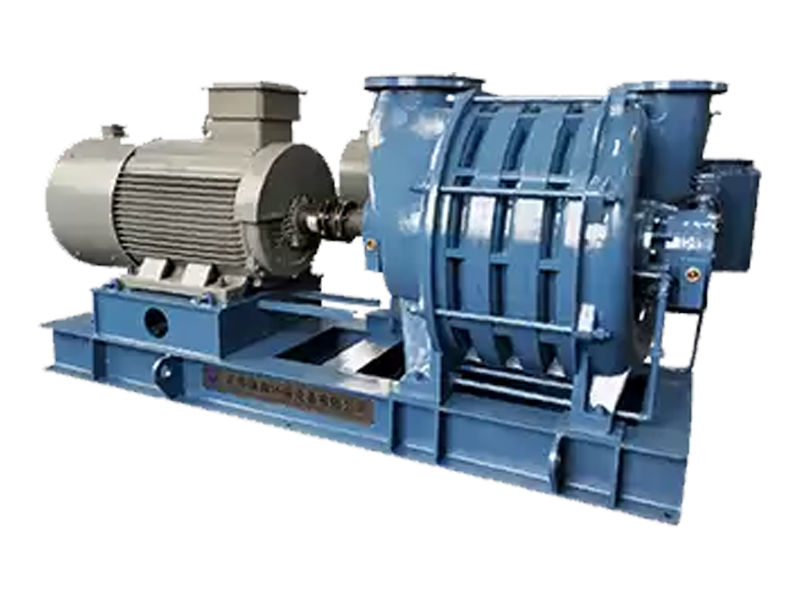
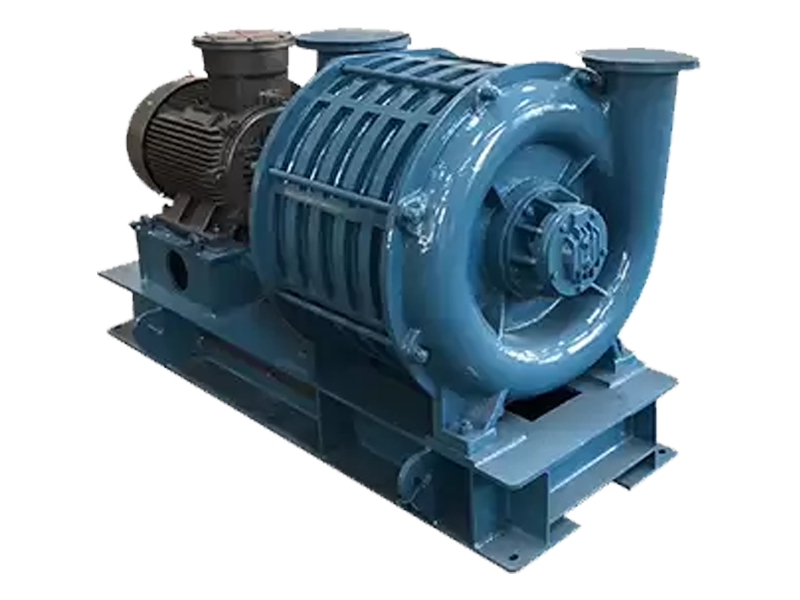
A roots blower or multistage centrifugal blower fills the plenum. Pressure is modest and volume is large, which is the duty point where these machines run most efficiently.
Without internal baffling the air piles up at the inlet end and starves the far end, which is why a cheaply built knife dries one edge of a web and leaves the other edge wet.
Continuity does the work. Squeeze the same volume through a much smaller opening and velocity rises in proportion. Static pressure is traded for speed, and speed is what lifts water off a surface.
A moving stream of air tends to follow a nearby surface, so the curtain hugs the product instead of bouncing off it, sweeping water toward the edges of the conveyor rather than atomizing it back onto the caps.
The fast sheet drags surrounding still air along with it. A knife fed with 3 cubic metres per minute can move 60 to 120 cubic metres per minute at the surface, and that extra air costs nothing.
Blower-Fed or Compressed-Air: Which Air Knife Fits
If a line runs more than a few hundred hours a year, blower-fed air is almost always the cheaper answer. Compressed air only wins where there is genuinely no room to mount a blower, or where the knife fires for a few seconds at a time.
Blower-fed air knife
- Runs on 2 to 10 kPa, so the air itself is cheap
- Energy per cubic metre typically 60 to 90 percent lower than plant air
- Needs a dedicated blower, feed pipe and usually a starter or control cabinet
- Louder at the knife, so an acoustic enclosure is often part of the package
- Best payback on continuous duty: bottling, canning, web drying, parts washing
Compressed-air air knife
- Runs on 400 to 550 kPa of plant air and is instantly available
- Simplest to install, with no blower, starter or extra floor space
- Expensive to run continuously because every minute is metered air
- Suited to intermittent duty, retrofits and tight machine frames
- Easier to keep quiet because the air volume is small
Blower choice follows from the knife, not the other way round. Air knives want volume rather than pressure, so a machine rated at high flow and moderate pressure is the natural match; the practical boundary between a blower, a fan and a compressor is worth reviewing before anything is sized (see how industrial blowers differ from fans and compressors).
For long lines where one knife has to cover a wide conveyor, a high-flow inlet machine keeps the plenum full even as filters load up and ambient temperature climbs.
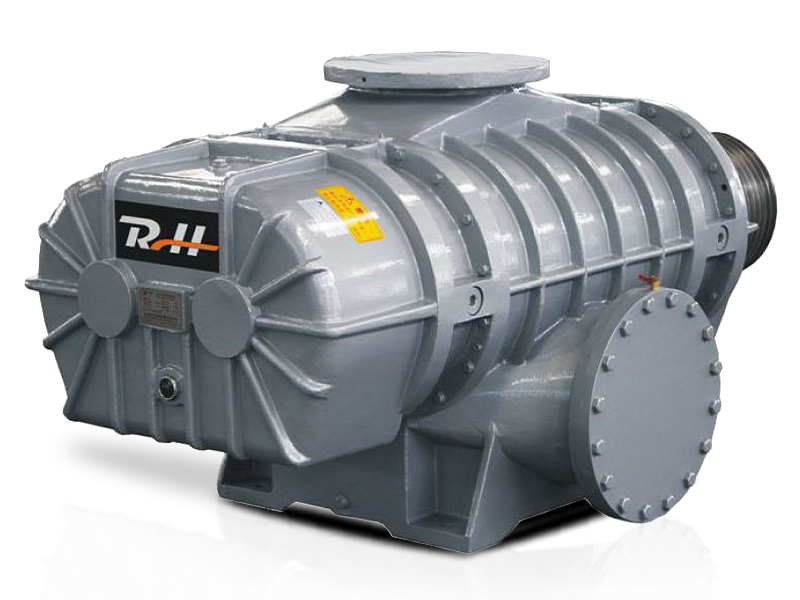
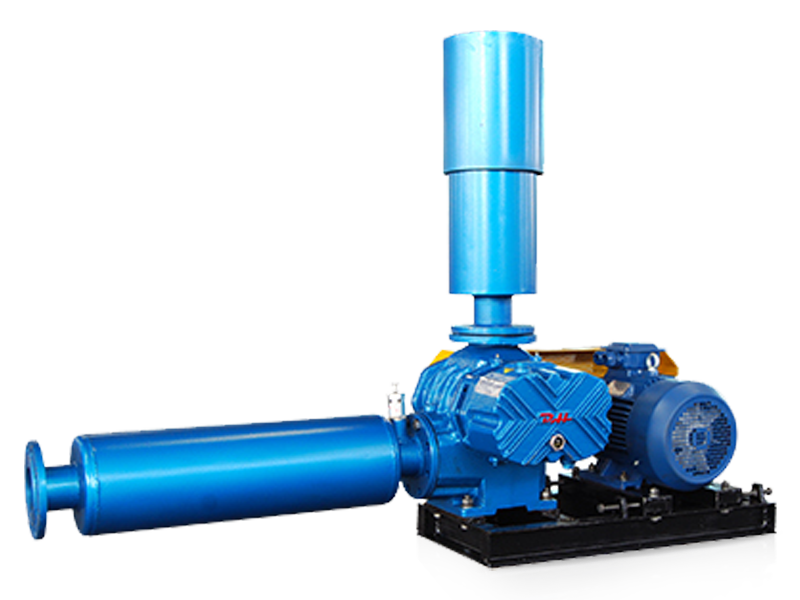
 RH Series High Flow Inlet Multistage Centrifugal BlowerFor wide conveyor air knife lines, this direct-coupled RH blower maintains plenum pressure across high flow demands without a gearbox.View Product →
The Numbers That Decide Whether It Will Work
Five numbers decide whether an air knife will dry your product or merely make noise: slot width, sheet velocity, static pressure, air volume and sound level.
| Slot width | 0.05 to 1.0 mm | Sets the thickness and reach of the sheet. Too wide and the sheet is slow and soft; too narrow and it whistles, heats up and loads the blower. |
| Sheet velocity at the slot | 90 to 150 m/s | Determines whether water and dust actually leave the surface. Below roughly 70 m/s a film of water survives the pass. |
| Static pressure | 2 to 10 kPa blower fed; 400 to 550 kPa compressed air | Controls how far the sheet holds together before turbulence breaks the curtain apart. |
| Air volume | 3 to 8 cubic metres per minute per 300 mm of knife | Sets the conveyor speed you can realistically run without leaving streaks behind. |
| Sound level | 75 to 95 dB(A) at 1 m | Decides operator exposure and whether an enclosure has to be budgeted alongside the knife. |
Where Air Knives Earn Their Keep
Air knives are used wherever a surface has to be dry, clean or cool before the next step, and wherever touching the product is not an option.
Noise is the one cost that catches buyers out. A well-built knife sits in the 75 to 95 dB(A) range at one metre, and the cheapest way to stay inside a plant's hearing protection rule is to enclose the blower rather than throttle the knife, because throttling gives back the performance you just paid for.
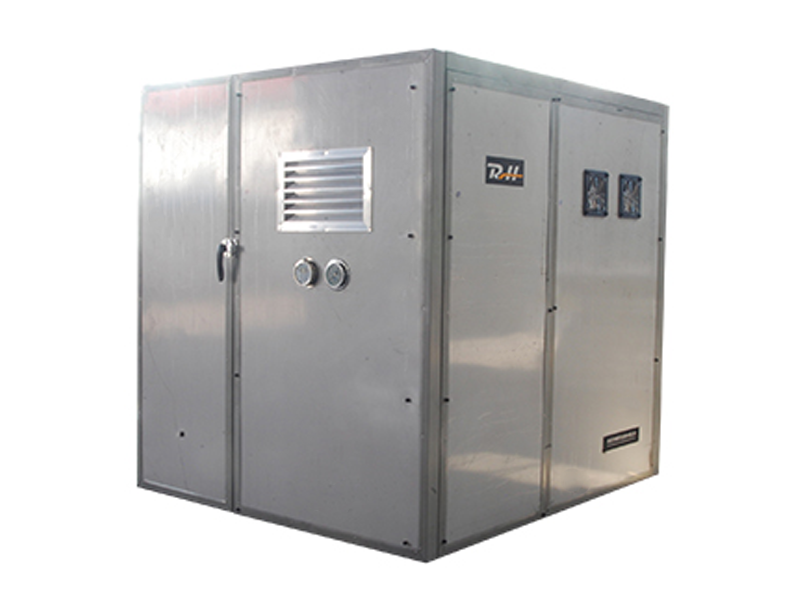 Roots Blower Acoustic Enclosure with Ventilation and Hinged AccessA weatherproof, ventilated enclosure that lowers Roots blower noise by 15–20 dB(A) while allowing maintenance access without throttling the air knife.View Product →
Setup Mistakes That Kill Performance
Most air knife installations that underperform fail for mechanical reasons rather than pneumatic ones, and the losses show up as reduced airflow at the product rather than as a broken machine.
The same problems repeat across plants, and they are all avoidable before the first bolt is tightened.
- Feed pipe sized on pressure instead of volume, so the plenum starves at the far end of a long knife
- Knife pushed 200 mm away because a guard or a sensor was in the way, which quietly cancels most of the entrained airflow
- Slot cleaned with a wire brush, burring the lip and turning a laminar sheet into a ragged one
- No inlet filter on a dusty line, so lint gradually closes a 0.1 mm gap
- Air taken from a header already serving other equipment, so knife performance changes every time another machine cycles
- Noise solved by throttling the knife instead of enclosing the blower, which trades drying performance for a decibel reading
That is why a packaged arrangement, where the blower, starter and controls are matched to each other before shipping, removes most of the field variables a maintenance team would otherwise have to chase.
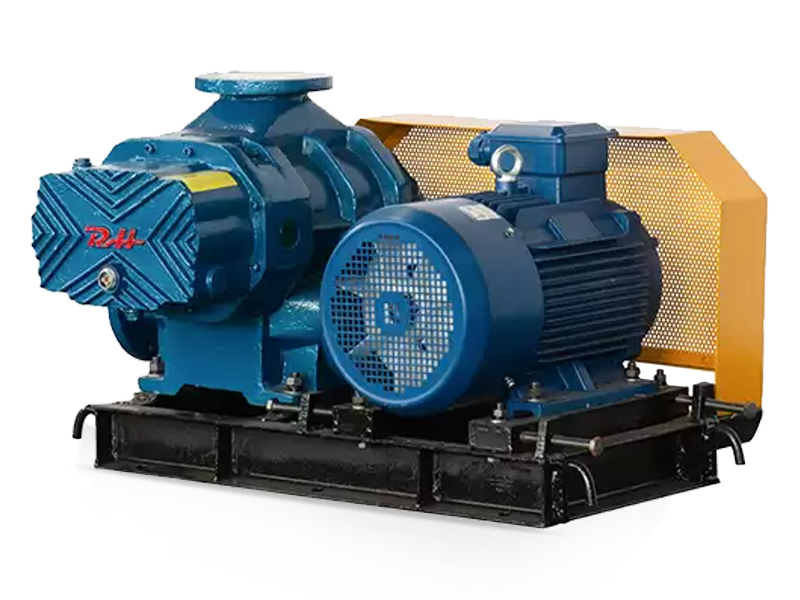
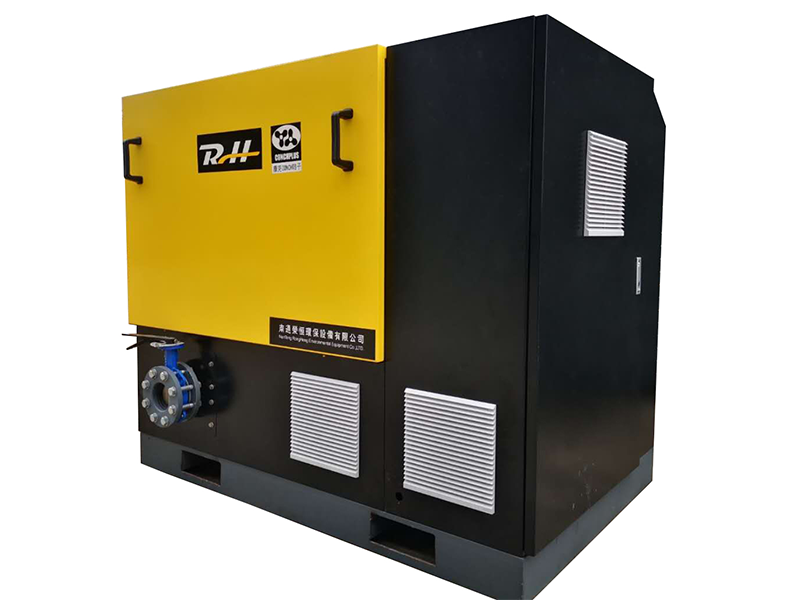 R-BOX Packaged Roots Blower with Integrated Control CabinetA factory-matched blower, starter and control package for aeration and gas delivery, with remote monitoring and reduced field installation variables.View Product →
A supplier that builds the blower, the enclosure and the control cabinet under one roof can match the plenum to the blower curve instead of forcing a catalogue knife onto whatever machine is already bolted to the floor, and that manufacturing background matters more than the knife datasheet (see the company profile and manufacturing background).
Air Knife Questions Engineers Ask Most
Does an air knife need compressed air?
No. Most industrial air knives are fed by a blower at 2 to 10 kPa, because the slot converts volume into velocity and does not need high line pressure to do it. Compressed-air versions exist for intermittent duty, retrofit jobs and machine frames where no blower can be mounted.
How much pressure does an air knife need?
Blower-fed knives typically run on 2 to 10 kPa of static pressure and 3 to 8 cubic metres per minute per 300 mm of length, while compressed-air knives use 400 to 550 kPa. Sheet velocity at the slot, not the pressure gauge reading at the header, is the number that predicts whether a surface will come out dry.
How far should an air knife be from the product?
Between 25 mm and 150 mm for most lines. Closer is stronger because velocity decays roughly 10 to 15 percent per 100 mm of travel, but it also risks contact with a product that flutters, so conveyor stability usually sets the final gap.
Can one air knife dry a whole conveyor?
Only if the length and airflow match the belt width and speed. Coverage is a function of knife length and total volume, not of pressure, so a wider knife fed by the same blower will always produce a softer sheet than a narrow one.