 86-0513-68903288
 13906298796@139.com

 русский
 Español
 عربى
Content
A 400 mbar vacuum figure rarely survives its first week on a real machine. On a cartoning line we looked at, the suction cups held a 900 g box perfectly on the bench and dropped it on the line: the quoted 400 mbar was the blower shut-off maximum, while the duty point sat near 160 mbar once 220 m3/h of air had to travel through six metres of hose and a filter that had been in service for three months.
The gap is not a supplier error. Side channel blowers, also sold as regenerative blowers, trade deep vacuum for a compact, oil-free, low-maintenance package, and the usable band is narrower than the headline number suggests. What decides whether a unit works is where your duty point sits inside that band.
What a Vacuum Rating in mbar Actually Measures
A side channel blower vacuum rating is the pressure difference it can hold below ambient at the suction port, written in millibar as a negative gauge value.
Most quotation mistakes begin here. A catalogue lists maximum vacuum 400 mbar beside maximum pressure 450 mbar, and buyers compare those figures across models as if they were tyre ratings. They are not comparable. Each number belongs to a curve measured under defined conditions, and the flow at that point can be close to zero.
Convert before comparing. One millibar is 0.1 kPa, so 400 mbar equals 40 kPa; one inch of mercury is about 33.9 mbar, so 400 mbar is roughly 11.8 inHg. Absolute pressure matters for packaging and process work, gauge vacuum matters for lifting and holding.
Typical Vacuum Ranges by Stage Count
Most single-stage side channel blowers deliver 100 to 300 mbar of vacuum, two-stage units 250 to 500 mbar, and three-stage designs reach roughly 700 mbar, with usable flow falling sharply toward the top of every band.
| Configuration | Working vacuum (mbar) | Maximum often quoted (mbar) | Typical fit |
| Single stage | 100 to 250 | 280 to 350 | Pick-and-place, sheet feeding, light drying |
| Two stage | 250 to 400 | 450 to 520 | Vacuum packing, printing, CNC hold-down |
| Three stage | 400 to 550 | 600 to 700 | Deep gripping, degassing, special processes |
That matters during selection. Two-stage machines place two impellers on one shaft in series, so the same air passes through both and a motor of the same size moves less volume at a deeper vacuum. When a process needs high flow and deep vacuum at the same time, stage count is the wrong lever; that is a positive displacement question.
Why the Installed Reading Differs From the Datasheet
Installed vacuum is nearly always shallower than the catalogue maximum, because altitude, air temperature, leakage, filtration and hose bore each move the duty point away from the test bench.
- Altitude: at 1500 m, air density is about 0.85 of the sea-level value, and vacuum falls with it.
- Inlet temperature: air at 60 C carries roughly 15 percent less mass per cubic metre than air at 15 C.
- Leakage: one unsealed joint or one worn cup bleeds flow continuously, and the blower spends capacity on the leak.
- Filtration: a loaded filter drops vacuum at the port and raises discharge temperature at the same time.
- Hose bore and length: line loss is subtracted from the vacuum that reaches the cup, so the gauge at the blower always reads deeper than the working point.
Published curves usually carry a tolerance of about plus or minus 10 percent, measured with 15 C air at 1013 mbar at the inlet flange. That tolerance is normal rather than a quality problem: the same unit behaves differently in a cold plant in winter and a hot plant in summer.
Where the supply voltage sags under load, or the process runs most of the day at part demand, speed control recovers the difference more cheaply than bleeding air into the suction line.
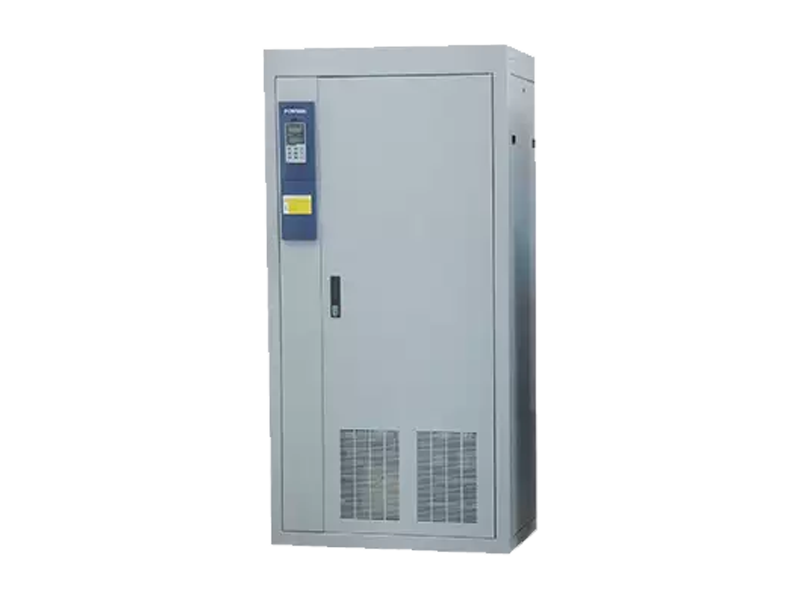 XBQ Frequency Conversion Starting Cabinet for Blower Speed ControlFor blower duties with variable demand, this cabinet offers stable start-up, speed regulation and energy savings, with custom or GGD cabinet options.View Product →
Matching Vacuum Levels to Common Duties
Duty sets the band: vacuum handling and packaging usually need 150 to 350 mbar, drying and hold-down often run below 200 mbar, and pressure-side aeration sits at 200 to 500 mbar of positive pressure.
| Duty | Working vacuum (mbar) | What usually goes wrong |
| Vacuum cup pick-and-place | 150 to 350 | Porous parts leak; cups sized on vacuum instead of flow |
| Vacuum packaging | 200 to 400 | Moisture reaches the impeller; no trap fitted |
| Printing sheet feeder | 120 to 250 | Paper dust blocks the filter within weeks |
| CNC router hold-down | 150 to 300 | Small parts need more flow, not deeper vacuum |
| Drying and blow-off | 200 to 500 on the pressure port | Vacuum port used by mistake; drying stalls |
When a Side Channel Blower Runs Out of Vacuum
Above about 500 mbar of working vacuum, a roots vacuum pump or a rotary vane pump is usually the better choice, because a side channel blower flow collapses as it approaches its maximum vacuum.
- Sweet spot from 100 to 400 mbar
- Compact, oil-free, quiet with an enclosure
- Flow falls steeply near maximum vacuum
- Single impeller, few wear parts
- Holds 500 to 800 mbar with real flow
- Dry running, non-contact lobes
- Needs silencing and more floor space
- Higher capital cost, longer payback
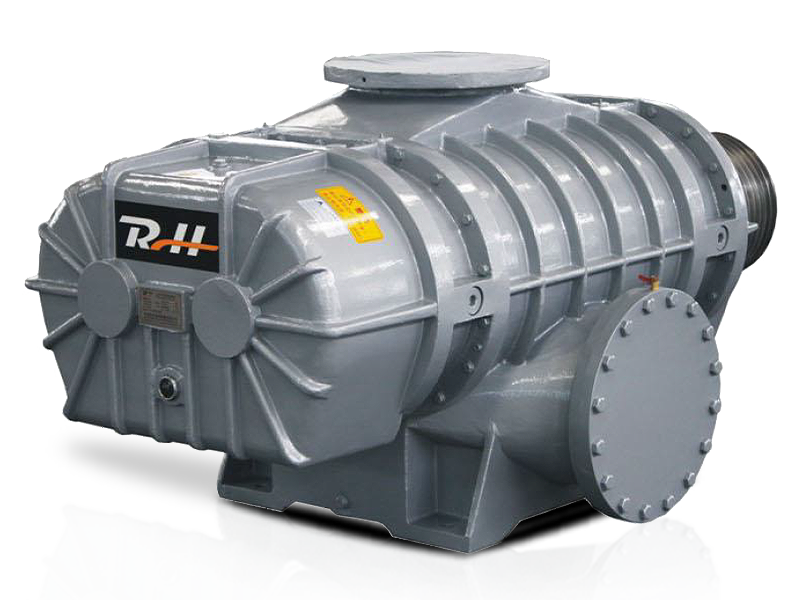
Positive displacement machines hold depth with usable flow, and the question of whether roots machines can run in vacuum duty is worth reading before the process pressure is fixed. A roots vacuum pump uses two counter-rotating lobes that never touch, so it runs dry and holds depth with airflow a side channel unit cannot match at the same point.
 Roots Vacuum Pump for Dry Vacuum and Booster DutiesThis dry-running roots pump pairs with backing pumps for large pumping speeds, offering robust construction and optional frequency control for vacuum duties.View Product →
RFQ Checklist: Six Numbers to Send
Six numbers let a supplier size a side channel blower correctly: working vacuum at the point of use, flow at that vacuum, inlet air temperature, site altitude, duty cycle and permitted noise.
- Working vacuum in mbar at the cup or port, not the blower maximum.
- Flow in m3/h or m3/min at that vacuum, taken from your own measurement where possible.
- Inlet air temperature, plus a note on dust, moisture or oil mist in the gas.
- Site altitude, which sets the density the impeller actually works with.
- Duty cycle: continuous or intermittent, and starts per hour.
- Noise limit in dB(A) at one metre, and the available supply voltage and frequency.
Send the six numbers with a sketch of the suction line and the cup size, then ask for the curve at the quoted duty point. If the answer is a single figure with no flow attached, ask again, or talk to the engineering team about the working point instead.
Frequently Asked Questions
Is 400 mbar a good vacuum for a side channel blower?
It sits at the top of a two-stage unit range and beyond most single-stage models. At that depth the flow is usually a fraction of the free-air figure, so confirm the flow at 400 mbar before approving the selection.
How do I convert mbar vacuum to kPa or inHg?
Multiply mbar by 0.1 for kPa, and divide by 33.86 for inches of mercury. A 300 mbar reading equals 30 kPa, about 8.9 inHg, or roughly 30 percent vacuum at sea level.
Can a side channel blower run continuously at maximum vacuum?
Not recommended. Continuous operation at the shut-off point means low cooling flow through the impeller and high motor current. Run at 60 to 80 percent of maximum vacuum and control the rest with a relief valve or a variable frequency drive.
Why does my blower pull less vacuum in summer?
Warmer inlet air is less dense, so mass flow and vacuum both drop. A unit that held 280 mbar in winter may read 240 mbar in a hot plant, and that is normal performance rather than a fault.