 86-0513-68903288
 13906298796@139.com
 русский
 Español
 عربى
عربىContent
What Makes Roots Rotary Lobe Blowers Different from Other Blowers
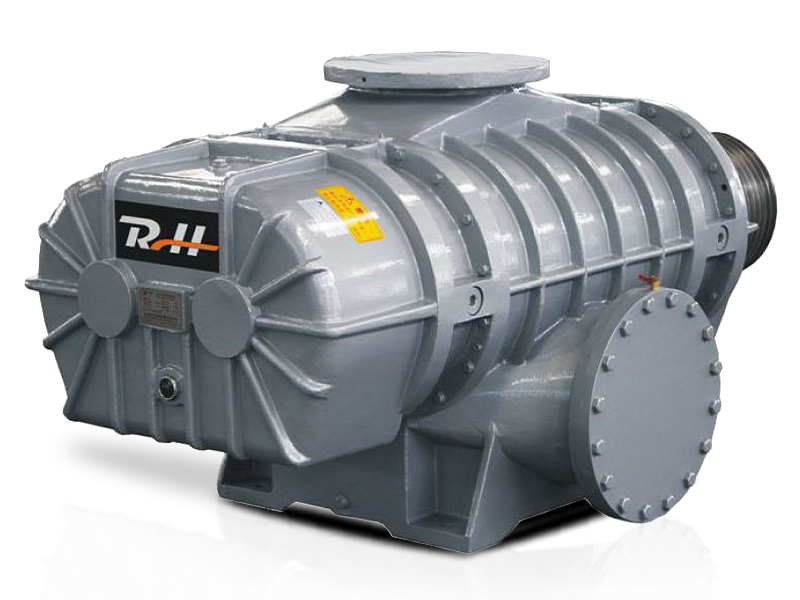
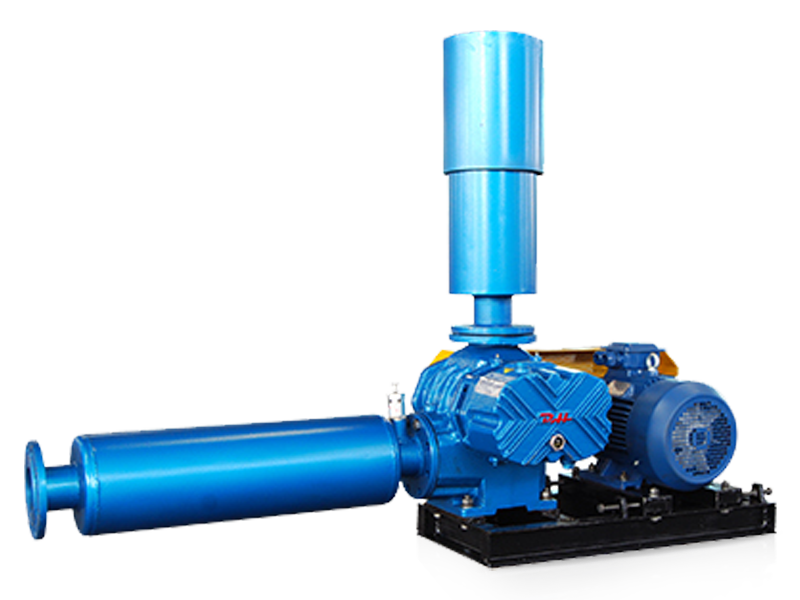
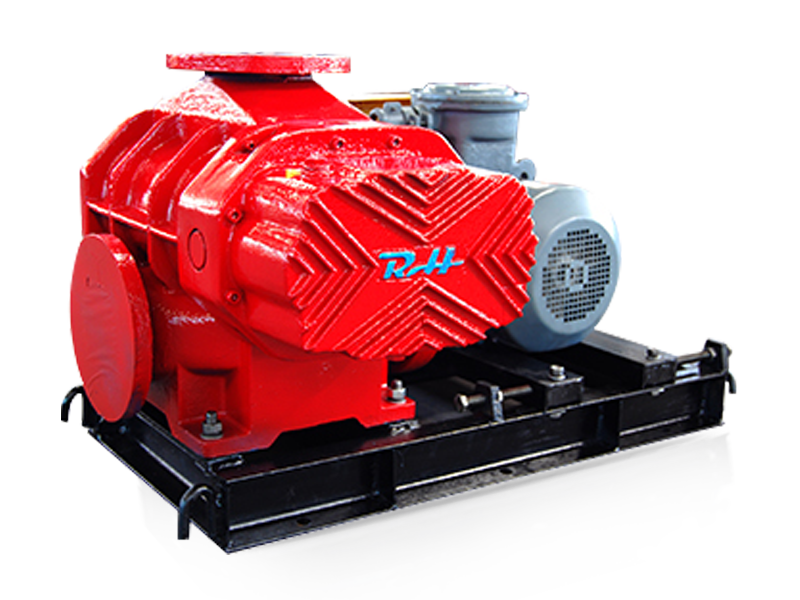
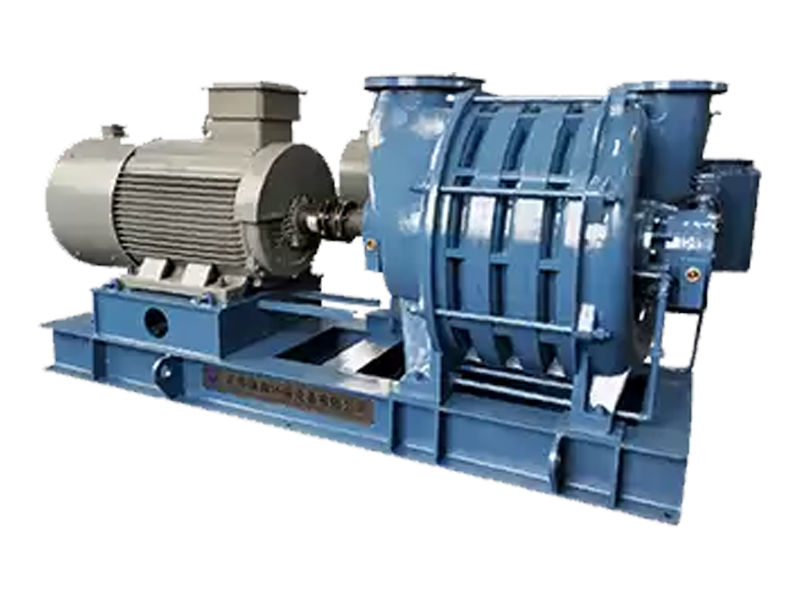
A Roots rotary lobe blower is a positive displacement machine: two or three lobed rotors spin in opposite directions inside a precision-machined casing, trapping fixed pockets of air and pushing them from inlet to outlet without any internal compression. The result is a constant, oil-free airflow regardless of pressure fluctuations — a property that centrifugal or screw blowers simply cannot match at the same cost and simplicity.
Three-lobe designs are now the industrial standard. Compared to two-lobe rotors, they generate lower pulsation, run quieter, and reach discharge pressure more smoothly. If your process is noise-sensitive or requires steady airflow to protect biological cultures — wastewater aeration being the clearest example — three-lobe geometry is the right starting point.
Key Performance Parameters You Must Define Before Selecting
Skipping this step is the most common — and expensive — mistake buyers make. Two numbers lock in your selection:
- Flow rate — expressed in m³/min or CFM at actual intake conditions (temperature, altitude, humidity). For wastewater treatment roots blowers, flow is calculated from the biological oxygen demand (BOD) of the incoming sewage, not from pipe diameter. The standard product range covers 0.6 – 713.8 m³/min, wide enough for small aeration tanks up to large municipal plants.
- Raising pressure — the total system resistance including static backpressure, piping friction, and diffuser losses. Standard single-stage units handle 9.8 – 98 kPa. Add a 10–15% safety margin. Applications requiring 58.8 – 200 kPa should move to a two-stage series roots blower rather than overpowering a single-stage unit.
Operating speed typically ranges from 500 to 2000 RPM. Slower speeds reduce heat and noise; higher speeds increase flow. A Variable Frequency Drive (VFD) paired with a frequency conversion starting cabinet lets operators tune the blower to actual demand in real time — the most practical path to energy savings on any continuous-duty installation.
Matching the Right Variant to Your Application
Not every process can use a general-purpose unit. Here is how the variants align with real-world requirements:
| Application | Recommended Variant | Key Spec |
|---|---|---|
| Wastewater aeration | Waste Water Treatment Roots Blower | Oil-free air, 9.8–98 kPa, water cooling at 90°C |
| Grain / bulk powder conveying | Pneumatic Conveying Roots Blower | 0.6–713.8 m³/min, 9.8–98 kPa, water cooling switching at 90°C |
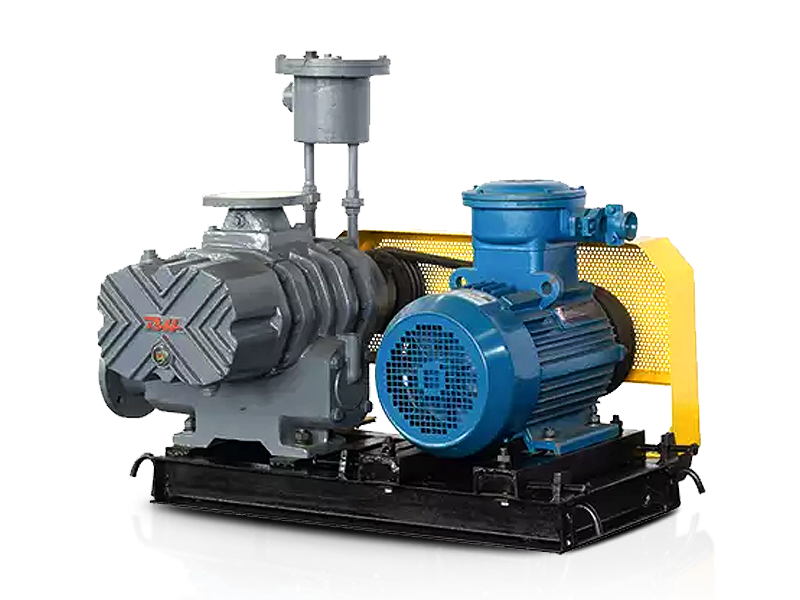
| Chemical / flammable gas environments | Explosion-Proof Roots Blower | EX DⅡ BT4 / CT4 motor, same flow and pressure range |
| High-temperature industrial processes | High Temperature and High Pressure Roots Blower | Up to 500°C, max pressure 1.2 MPa |
| Acidic / corrosive gas handling | Anti-Corrosion Roots Blower | Corrosion-resistant materials throughout |
| Space-constrained / submerged installations | Submersible Roots Blower | 0.6–120 m³/min, zero surface noise |
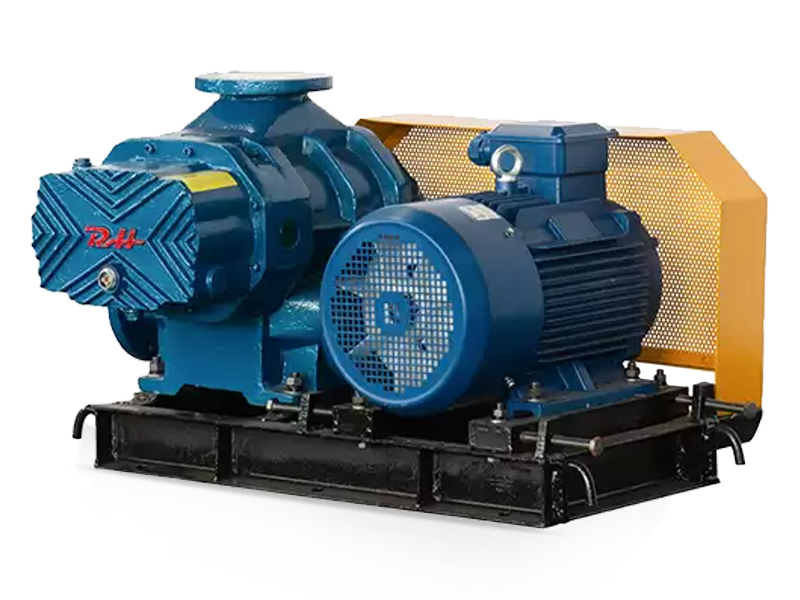
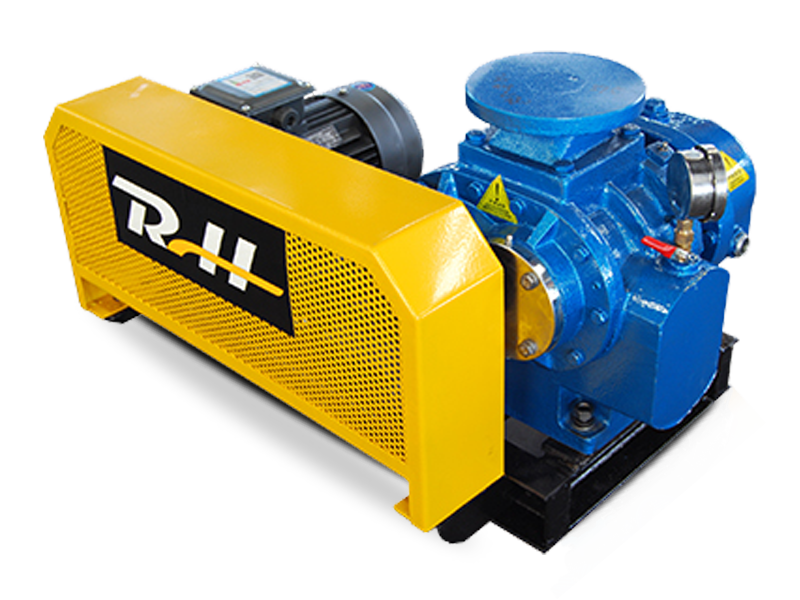
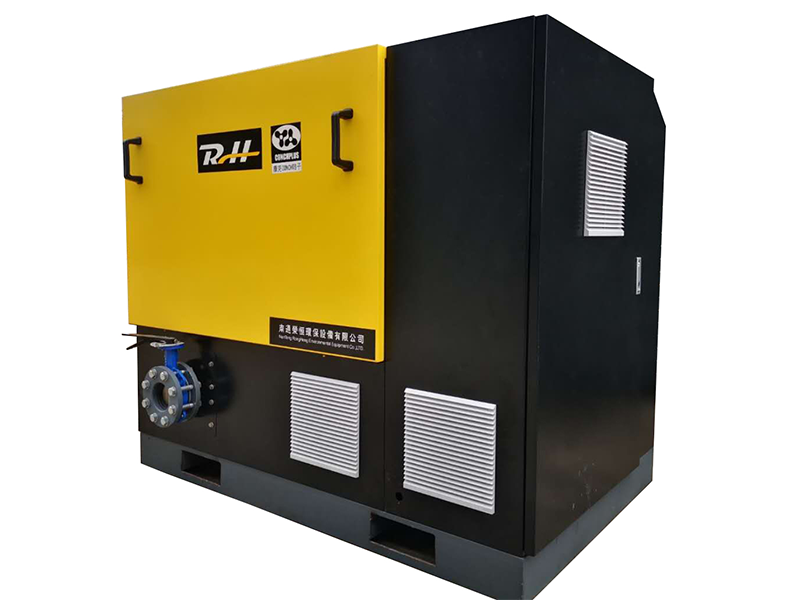
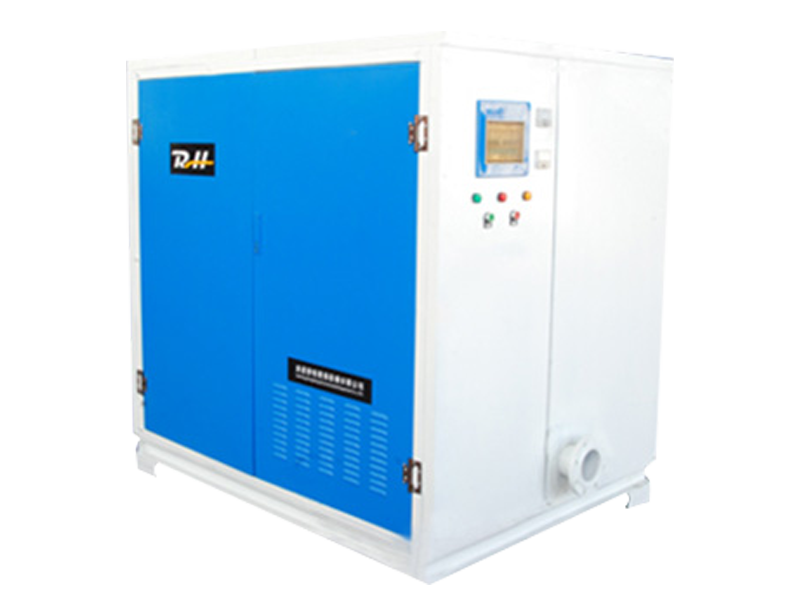
For compact installations requiring a turnkey solution, the roots blower package with integrated control cabinet ships pre-assembled with a three-lobe unit (4.5–7 m³/min, up to 78 kPa), acoustic enclosure rated below 77 dB at 1 meter, and a DN80 outlet — ready to wire and commission on arrival.
Energy Efficiency: Where the Real Cost Lies
Aeration blowers account for over 50% of total electricity consumption at a typical wastewater treatment plant, according to U.S. EPA guidance on energy conservation in wastewater facilities. That makes right-sizing and speed control the most impactful decisions in any blower project — not just the purchase price.
Three practical measures make the largest difference. First, match the blower to actual operating range rather than peak demand only; oversized units run inefficiently at part load. Second, pair the blower with a VFD and automated dissolved-oxygen feedback control to eliminate unnecessary runtime. Third, install a proper acoustic enclosure for the roots blower — it reduces noise without restricting airflow and protects the unit from environmental contamination, extending service intervals.
Maintenance Checklist That Actually Prevents Failures
Roots rotary lobe blowers are simple machines, but neglected lubrication and clearance checks are behind most unplanned shutdowns. Stick to this schedule:
- Every 500 hours: Check gear oil level and condition; inspect inlet filter; verify bearing temperature stays below the manufacturer's threshold (typically 80°C ambient + rise).
- Every 2,000 hours: Change gear oil; inspect timing gears for wear; measure rotor clearances against original tolerances.
- Annually: Full disassembly inspection of seals and anti-friction bearings; check rotor balance; verify coupling alignment.
One additional point specific to high-pressure and high-temperature variants: water cooling activation is set at 90°C discharge temperature (corresponding to 58.8 kPa backpressure on standard units). If the cooling circuit is fouled or the coolant flow is reduced, discharge temperature climbs rapidly — this is the earliest warning sign of an impending rotor contact event.
Quick Buyer's Summary
Rotary blowers and Roots rotary lobe blowers are not commodity items. The correct selection requires clear flow and pressure data, a variant matched to your process environment, and a control strategy that keeps part-load efficiency high. Get those three elements right, and a properly specified unit will run continuously for years with minimal intervention — which is why this technology, now well over a century old, still dominates aeration, pneumatic conveying, and vacuum applications across every major industry.
Browse the full roots blower product range or the broader rotary blower lineup to compare configurations side by side.