 86-0513-68903288
 13906298796@139.com
 русский
 Español
 عربى
عربىContent
- 1 Direct Answer: What a Roots Blower Delivers
- 2 Operating Principle and Internal Geometry
- 3 Bi-lobe versus Tri-lobe Selection
- 4 Performance Data and Operating Envelope
- 5 Industrial Applications and Material Selection
- 6 Customization and Integrated Packages
- 7 Maintenance and Reliability Factors
- 8 Selecting the Right Blower for Your System
Direct Answer: What a Roots Blower Delivers
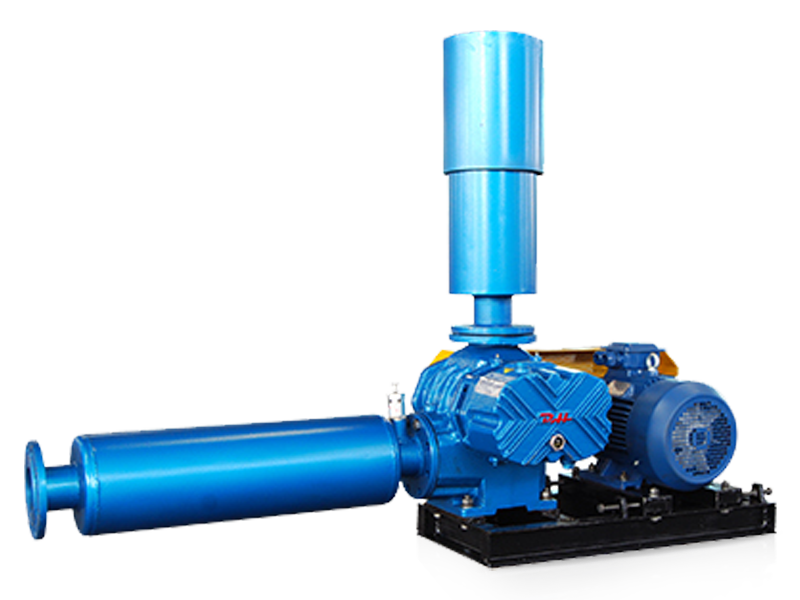
A Roots blower is a positive displacement machine that moves a fixed volume of gas with each shaft revolution, independent of discharge pressure. It provides constant flow at varying pressures, making it ideal for low-pressure applications up to 1 bar(g) in single-stage configurations. In water treatment plants, a tri-lobe Roots blower typically delivers oil-free air at 0.3–0.8 bar(g) for aeration basins, maintaining dissolved oxygen levels without contamination.
Operating Principle and Internal Geometry
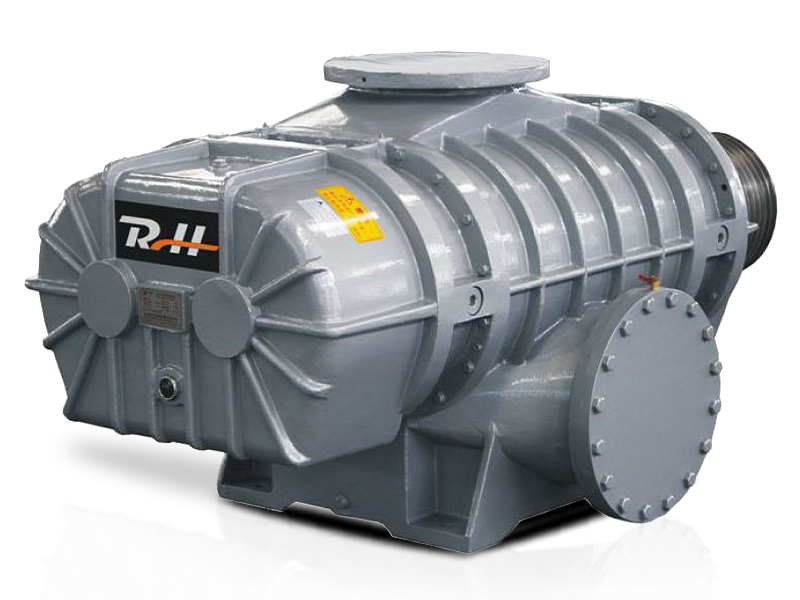
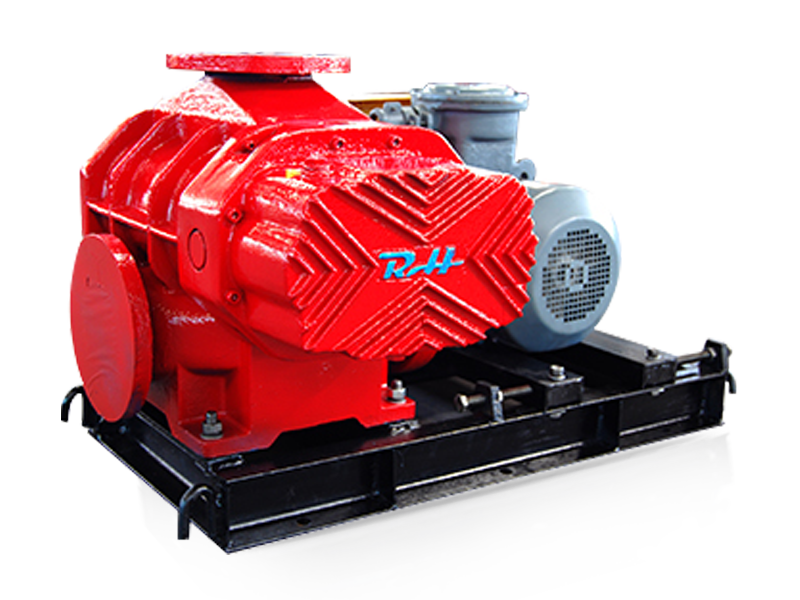
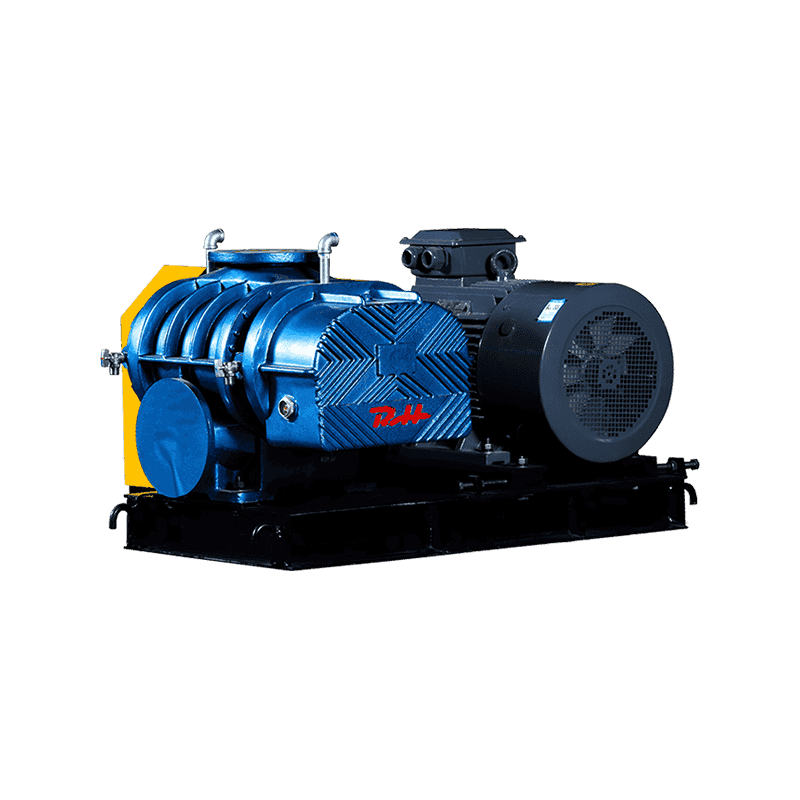
The blower uses two or three lobed rotors that rotate in opposite directions inside a close-fitting housing. Timing gears synchronize the rotors so they never touch each other or the casing, eliminating internal lubrication. This contact-free design guarantees 100% oil-free air delivery. As lobes unmesh at the inlet, gas fills the void; the trapped pocket is carried around the casing and forced out at the discharge port. The process is isochoric—there is no internal compression. Pressure rise occurs only when the discharge port opens against downstream system resistance.
Backflow Compression and Pulsation
Because compression happens externally through backflow, a Roots blower exhibits a characteristic pressure pulsation at the discharge. The pulsation frequency equals the number of lobes multiplied by the rotational speed. Tri-lobe designs reduce the amplitude of these pulses by approximately 30% compared to bi-lobe configurations, leading to lower noise and smoother operation.
Bi-lobe versus Tri-lobe Selection
Both two- and three-lobe rotors are available, and the choice directly affects efficiency, noise, and maintenance. The table below summarizes typical differences.
| Parameter | Bi-lobe | Tri-lobe |
|---|---|---|
| Discharge pulsation amplitude | Higher | 30–40% lower |
| Noise level (typical 1 m) | 85–95 dB(A) | 75–85 dB(A) |
| Volumetric efficiency | 70–80% | 75–85% |
| Cost index | Lower initial investment | 10–20% higher |
Tri-lobe blowers dominate modern municipal wastewater installations due to stricter noise regulations and reduced structural vibration. Bi-lobe machines still suit pneumatic conveying of granules where capital cost drives selection and noise enclosures are already present.
Performance Data and Operating Envelope
Roots blowers are specified by inlet volume flow and pressure rise. Standard models cover a flow range from 0.5 to 1000 m³/min, and single-stage units typically operate up to 1.0 bar(g). Absorbed power is directly proportional to pressure rise at constant speed. A blower delivering 20 m³/min at 0.6 bar(g) consumes around 22–25 kW.
Speed and Turn-down Capability
Variable frequency drives enable a turn-down ratio of up to 4:1. Reducing speed from 3000 rpm to 1500 rpm halves the flow while proportionally lowering power draw. In aeration basins with fluctuating oxygen demand, this can cut energy consumption by 30–40% compared to fixed-speed operation.
Industrial Applications and Material Selection
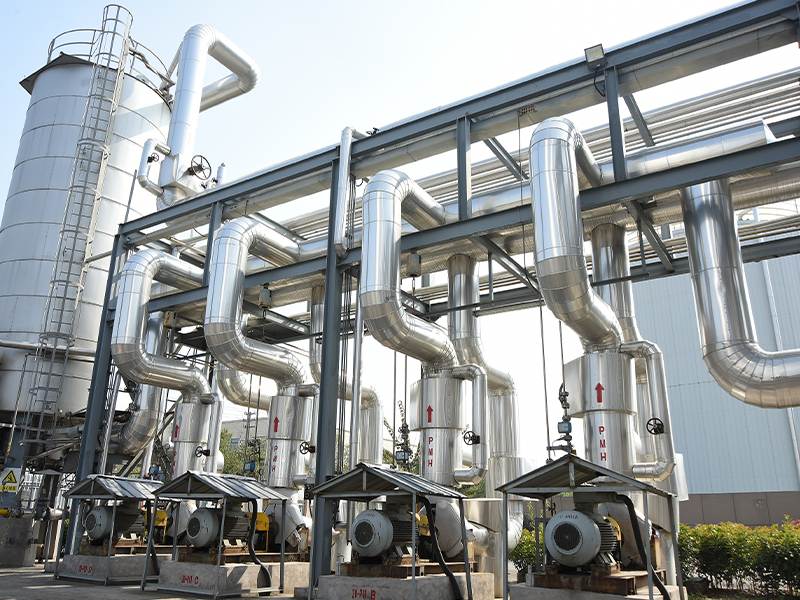
- Wastewater aeration: Cast iron casings with nitrided rotors provide adequate corrosion resistance. Fine-bubble diffusers require stable pressure around 0.5 bar(g).
- Flue gas desulphurization: Anti-corrosion tri-lobe blowers made of duplex stainless steel or coated rotors handle acidic gas up to 150 °C.
- Pneumatic conveying: Mild steel or aluminum construction moves cement, flour, and pellets. Pressure drop typically sits between 0.4 and 1.0 bar(g).
- Aquaculture: Oil-free air is mandatory. Small tri-lobe units maintain dissolved oxygen above 5 mg/L in ponds.
- Vacuum service: The same machine works as a vacuum pump, achieving end vacuum levels of –50 kPa(g).
Customization and Integrated Packages
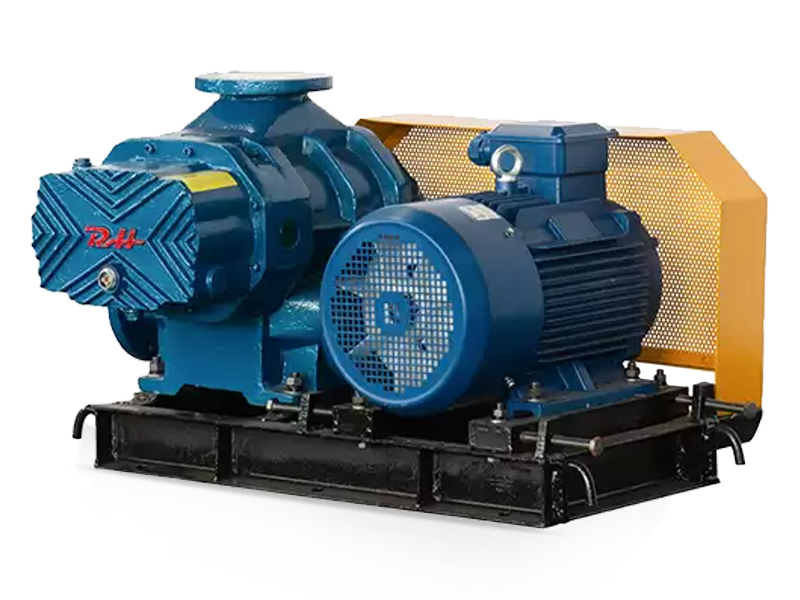
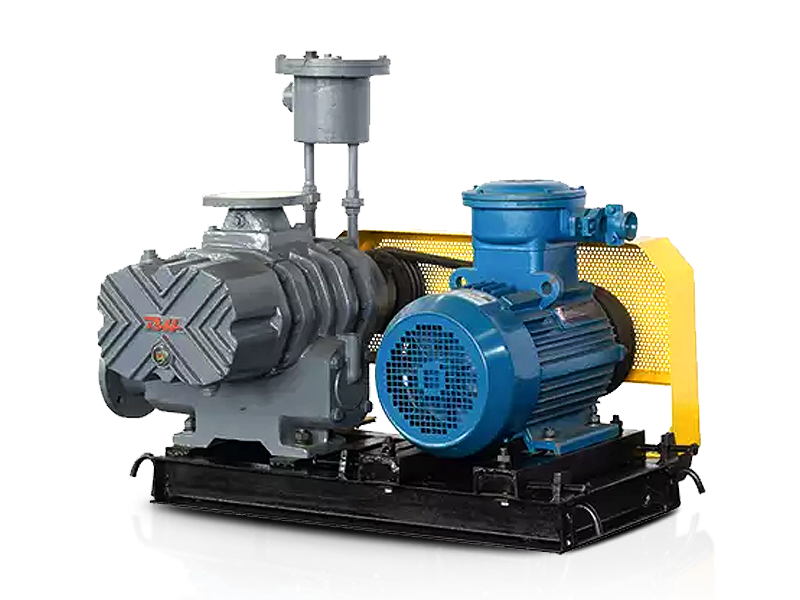
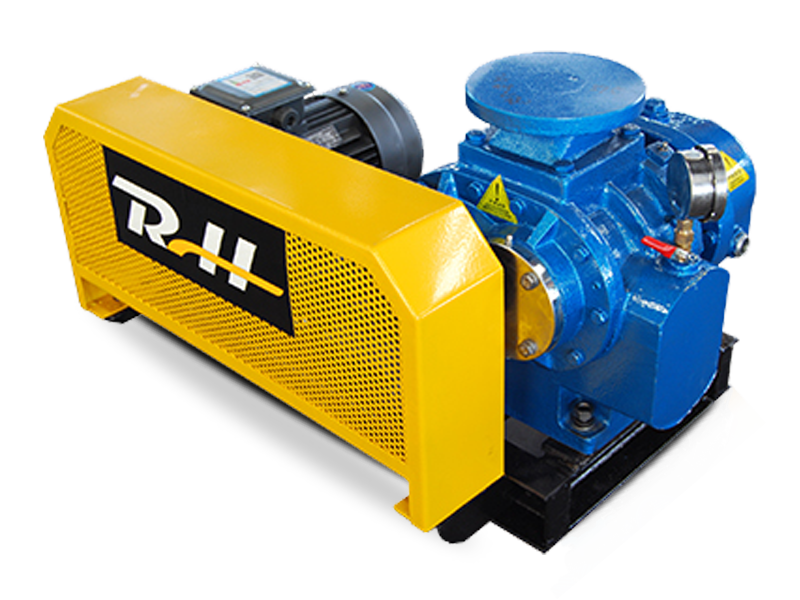
Standard blowers are often supplied as packages with inlet filter silencers, discharge silencers, pressure relief valves, check valves, and base frames. Customization ranges from special coatings for corrosive gases to explosion-proof motor arrangements. For high-temperature applications, rotors may receive PTFE or electroless nickel coating, and casing sealing upgrades to Viton O-rings. A factory with ISO 9001 and CE certifications can deliver packages matching specific customer drawings or performance curves.
Maintenance and Reliability Factors
Roots blowers have no internal metal-to-metal contact, leading to long service intervals. Main wear items are timing gears and bearings. Oil changes should follow the manufacturer's schedule—typically every 2000 operating hours with ISO VG 68 or 100 mineral oil. Air filters require cleaning every 500 hours in dusty settings. A well-maintained unit can exceed 60,000 hours between major overhauls. Monitoring discharge temperature is the most effective early problem indicator; a rise of 15 °C above baseline often signals clogged filters or a relief valve leak.
Common Troubleshooting Points
- Excessive noise: Check foundation bolts and pulsation dampener.
- Overheating: Verify inlet filter condition and discharge backpressure.
- Loss of flow: Inspect belt tension or VFD settings; check internal clearance drift.
- Oil contamination: Replace shaft seals immediately to prevent process gas ingress.
Selecting the Right Blower for Your System
Begin with required flow and maximum backpressure. Evaluate gas composition; if hydrogen sulfide or chlorine is present, specify anti-corrosion materials. For installations near residential zones, a tri-lobe blower with an acoustic enclosure is mandatory. Consider future scalability—modular packages with parallel blowers can meet growing demand. OEM and ODM services enable tailored solutions: engineers match port sizes, seal materials, and motor specifications to existing plant infrastructure, cutting installation time and cost.