 86-0513-68903288
 13906298796@139.com
 русский
 Español
 عربى
عربىContent
- 1 Why Roots Blowers Remain the Default Choice in Process Industries
- 2 How a Roots Blower Works
- 3 Core Performance Specifications at a Glance
- 4 Four Application Areas — and Which Model to Use
- 5 A Practical Selection Checklist
- 6 Common Sizing Mistakes and How to Avoid Them
- 7 Maintenance Intervals Worth Knowing
Why Roots Blowers Remain the Default Choice in Process Industries
Aeration alone accounts for 50–70% of a wastewater treatment plant's total power bill, according to U.S. EPA data. The blower running behind that number is almost always a Roots blower — a positive displacement machine that moves a fixed volume of gas per shaft revolution, independent of discharge pressure. That single trait — constant flow against varying back-pressure — is why engineers keep specifying it decade after decade.
But "Roots blower" covers a broad family of machines. Picking the wrong variant means wasted energy, premature wear, or outright process failure. This guide walks through how they work, what the numbers mean, and which type fits which job.
How a Roots Blower Works
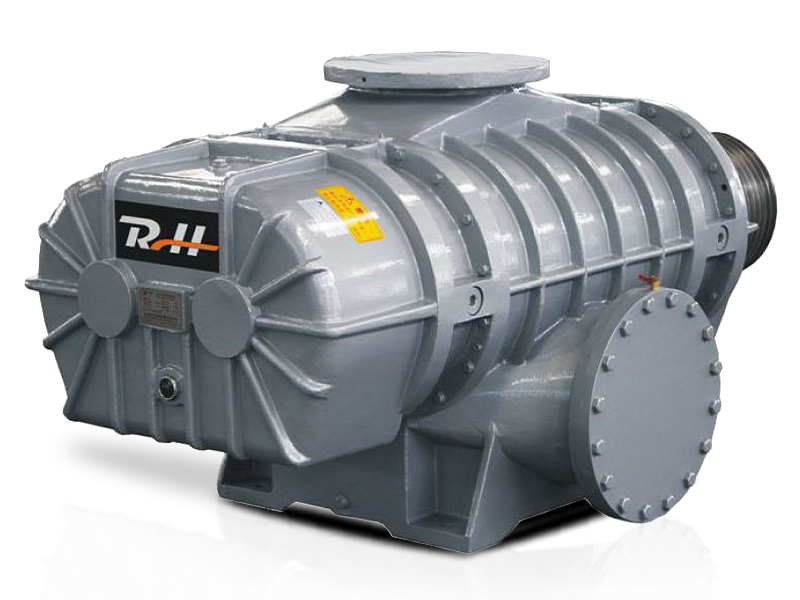
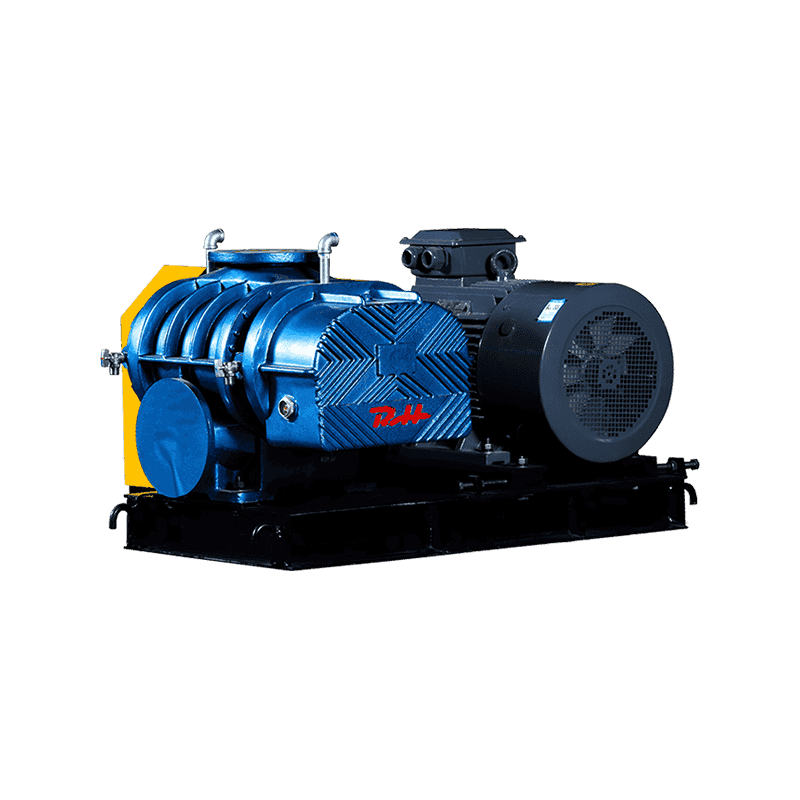
Two counter-rotating lobes — almost always three-lobed today — sweep air from the inlet pocket to the discharge port without internal compression. Pressure only builds when the trapped gas meets the higher-pressure system on the discharge side. The result is an abrupt, adiabatic pressure rise that generates heat. Managing that heat is the central engineering challenge in Roots blower design.
Because there is no metal-to-metal contact between the rotors, no lubrication enters the airstream — a key advantage for food processing, pharmaceutical filling, and clean-room pneumatic conveying. Timing gears on the shaft ends keep the lobes synchronized.
Core Performance Specifications at a Glance
Standard tri-lobe Roots blowers cover a flow range of 0.6 to 713.8 m³/min and a pressure rise of 9.8 to 98 kPa, at shaft speeds between 500 and 2,000 RPM. Those numbers span a remarkable breadth of applications — from small aquaculture tanks to large municipal aeration basins.
| Parameter | Standard Range | High-Pressure / Special Variants |
|---|---|---|
| Flow Rate | 0.6 – 713.8 m³/min | 0.6 – 120 m³/min (submersible / two-stage) |
| Pressure Rise | 9.8 – 98 kPa | 58.8 – 200 kPa (two-stage series) |
| Speed | 500 – 2,000 RPM | 490 / 580 / 730 / 980 / 1,450 RPM (HTHP) |
| Max Temperature | 90 °C water-cooling switchover | 500 °C (high-temp model) |
| Max Pressure (absolute) | Standard casing design | 1.2 MPa (high-pressure model) |
Four Application Areas — and Which Model to Use
1. Wastewater Aeration
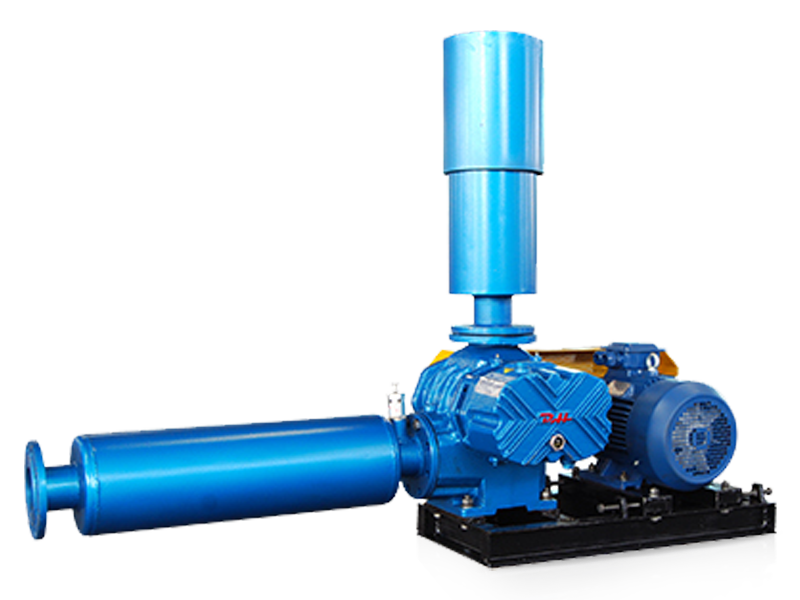
This is the highest-volume use case globally. Aerobic bacteria in activated-sludge basins need a steady, uninterrupted oxygen supply — exactly what a positive-displacement blower delivers. Most municipal plants operate at 40–60 kPa back-pressure, well within the standard curve. The dedicated wastewater aeration Roots blower carries a water-cooling switchover threshold of 90 °C (at 58.8 kPa), protecting the unit during sustained high-load operation. A packaged unit with control cabinet can hold noise below 77 dB at 1 m — important for plants sited near residential zones.
2. Pneumatic Conveying
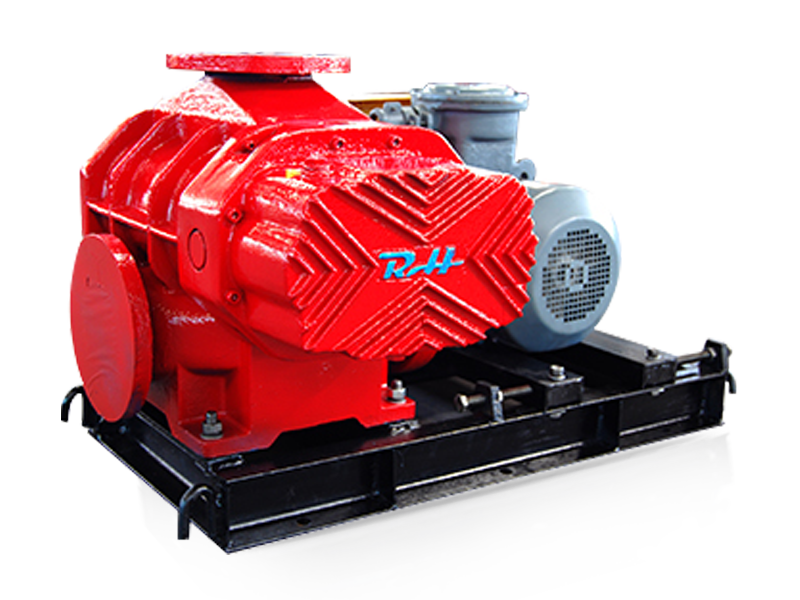
Cement, flour, plastic pellets, fly ash — bulk solids conveying demands a blower that holds consistent pressure against variable pipeline resistance. The pneumatic conveying Roots blower is rated across the full 9.8–98 kPa pressure band with the same 0.6–713.8 m³/min flow range, giving system designers flexibility across short horizontal runs and longer vertical lifts.
3. Hazardous-Area Gas Handling
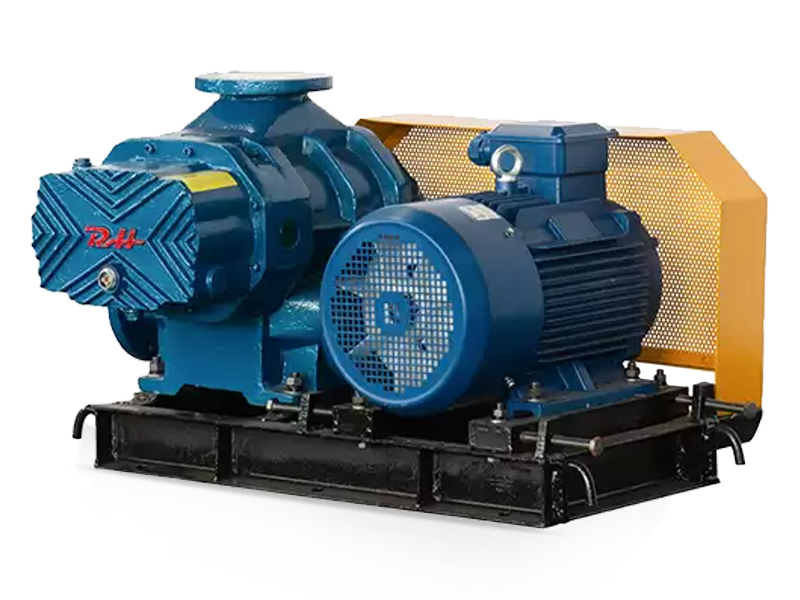
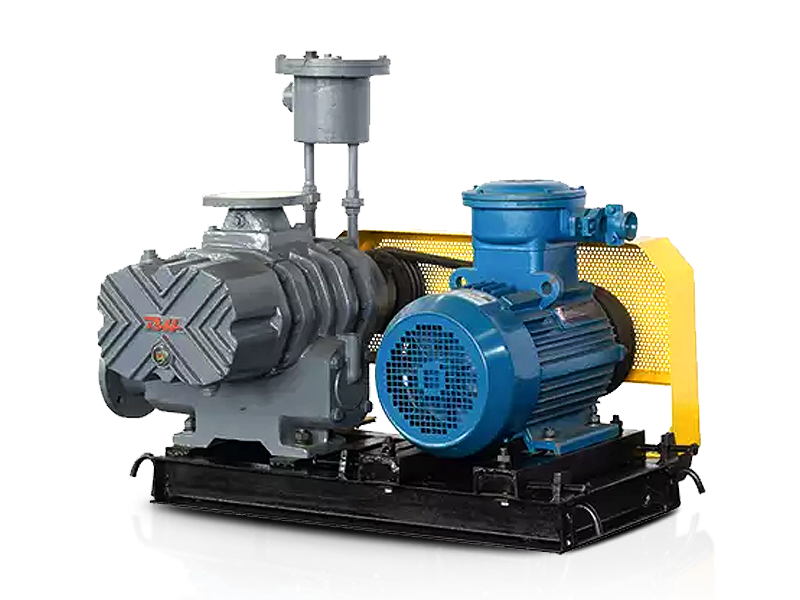
Petrochemical plants, flammable solvent lines, and coal-handling conveyors cannot use standard motors. The explosion-proof Roots blower carries motor certification to EX DⅡ BT4 / EX DⅡ CT4, satisfying the most common Zone 1 and Zone 2 area classifications. Flow and pressure parameters match the standard series, so it can replace a non-Ex unit on an upgrade without re-piping.
4. High-Temperature Process Gas
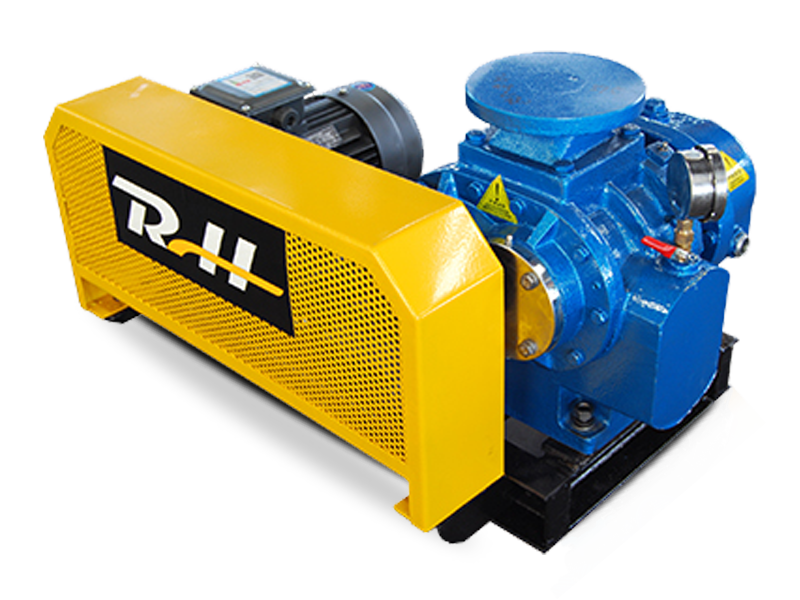
Kiln off-gas recovery, MVR (mechanical vapor recompression) evaporation, and drying circuits push temperatures far beyond what standard elastomers and lubricants can tolerate. The high-temperature, high-pressure Roots blower handles up to 500 °C gas temperature and up to 1.2 MPa operating pressure — a specification range that eliminates the need for expensive heat exchangers upstream of the blower in many plant layouts.
A Practical Selection Checklist
Before specifying a model, lock down these four parameters:
- Required flow (m³/min) at actual inlet conditions — correct for altitude and inlet temperature. A blower rated at sea level delivers less mass flow at elevation.
- System pressure rise (kPa) — include pipe friction, diffuser back-pressure, and any filter pressure drop. Add 10–15% design margin.
- Gas composition and temperature — clean dry air, humid air, or corrosive gas each demand different material choices. If the process gas exceeds 90 °C at the inlet, a high-temp unit or water-cooled casing is mandatory.
- Site classification and noise limits — hazardous areas need certified Ex motors; noise-sensitive sites should specify acoustic enclosures or submersible installation.
When flow requirements change seasonally (aquaculture ponds, fluctuating production schedules), pairing the blower with a Variable Frequency Drive (VFD) through a frequency-conversion starting cabinet is the fastest way to cut part-load energy consumption without hardware changes.
Common Sizing Mistakes and How to Avoid Them
Over-sizing is more dangerous than it looks. A Roots blower running at well below its design point sees increased slip flow across rotor clearances, higher relative discharge temperatures, and accelerated seal wear. Always size to operate between 70% and 100% of rated flow at the dominant process condition.
Under-sizing causes the motor to run at continuous overload. If peak demand is significantly higher than average, consider a two-machine installation with one unit on standby rather than pushing a single oversized blower at low load most of the time.
Finally, don't neglect the check valve. On multi-blower systems, a properly rated non-return valve prevents reverse spin through an idle unit — a failure mode that damages timing gears within minutes.
Maintenance Intervals Worth Knowing
Three-lobe Roots blowers are low-maintenance by design — no valve plates, no pistons, no oil injection. The typical service schedule centers on gearbox oil changes every 2,000–4,000 operating hours, inlet filter inspection monthly (or more frequently in dusty environments), and belt tension checks every 500 hours on V-belt driven configurations. Direct-coupled units with flexible couplings reduce drive-train maintenance further.
Temperature and vibration are the two best early-warning indicators. A sudden rise in discharge temperature at constant speed and pressure usually points to internal clearance growth or a partially blocked inlet filter. Elevated vibration typically signals bearing wear or rotor imbalance from material buildup.