 86-0513-68903288
 13906298796@139.com
 русский
 Español
 عربى
عربىContent
The aeration grid in a municipal wastewater plant stops overriding the system controls because the existing rotary blower is delivering half its rated flow at the required pressure. The maintenance team suspects worn lobes, but the real problem started months earlier when the specification focused on capital cost rather than sustained performance at the operating point. Choosing a rotary blower without understanding the interplay of flow, pressure, and mechanical integrity turns a reliable machine into a costly bottleneck. This article lays out the selection factors, performance benchmarks, and maintenance practices that keep rotary blowers running at design capacity for decades.
How a Rotary Blower Delivers Air
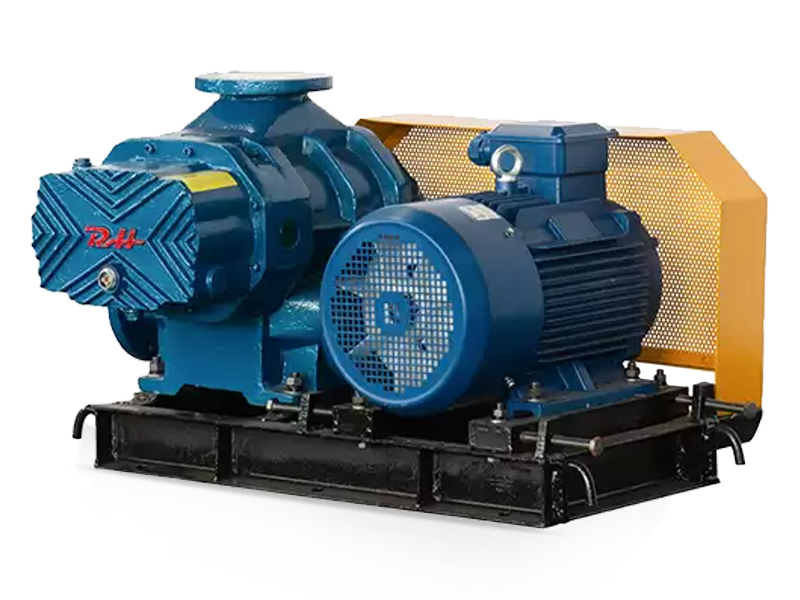
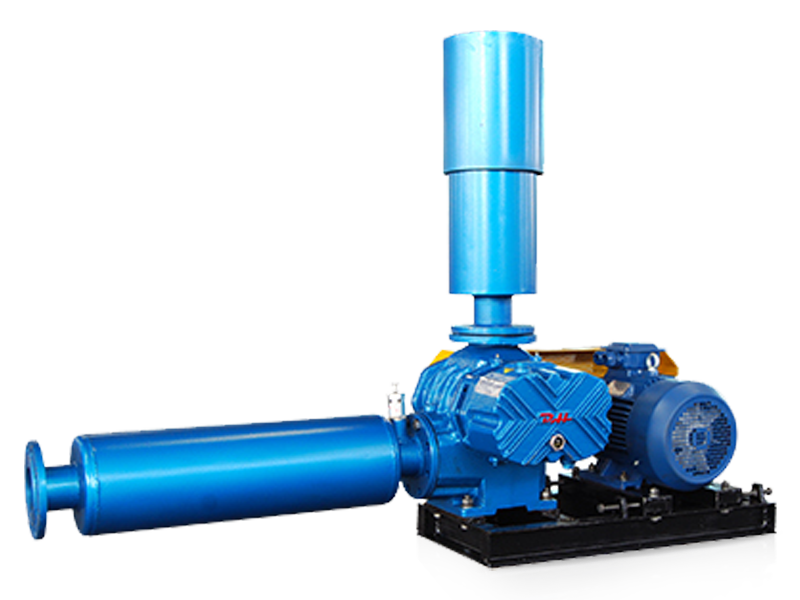
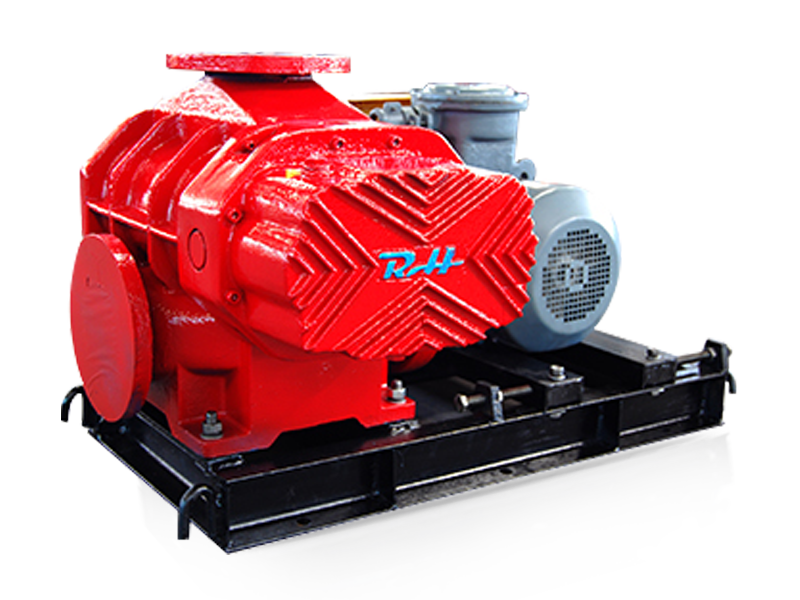
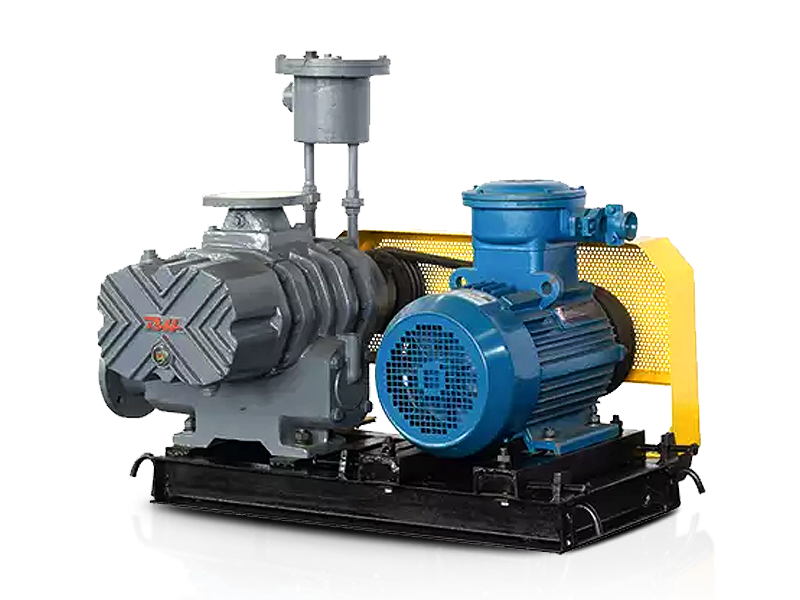
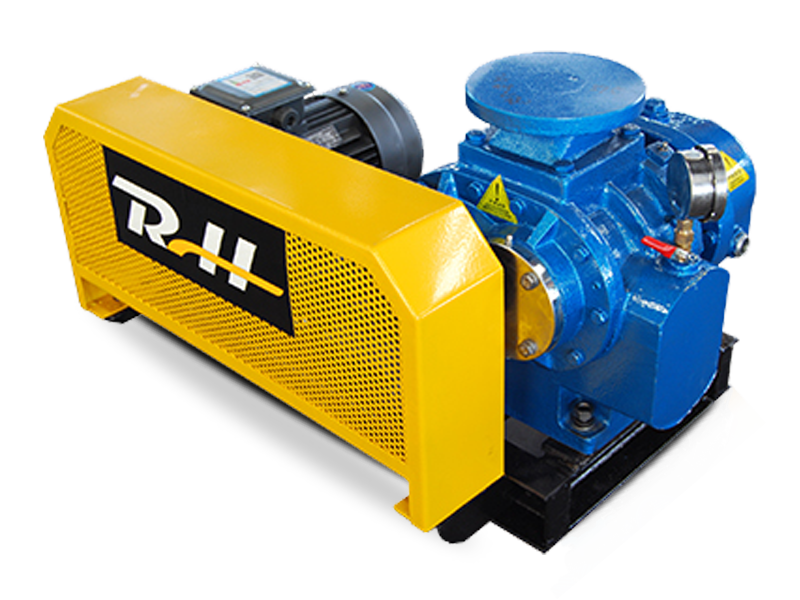
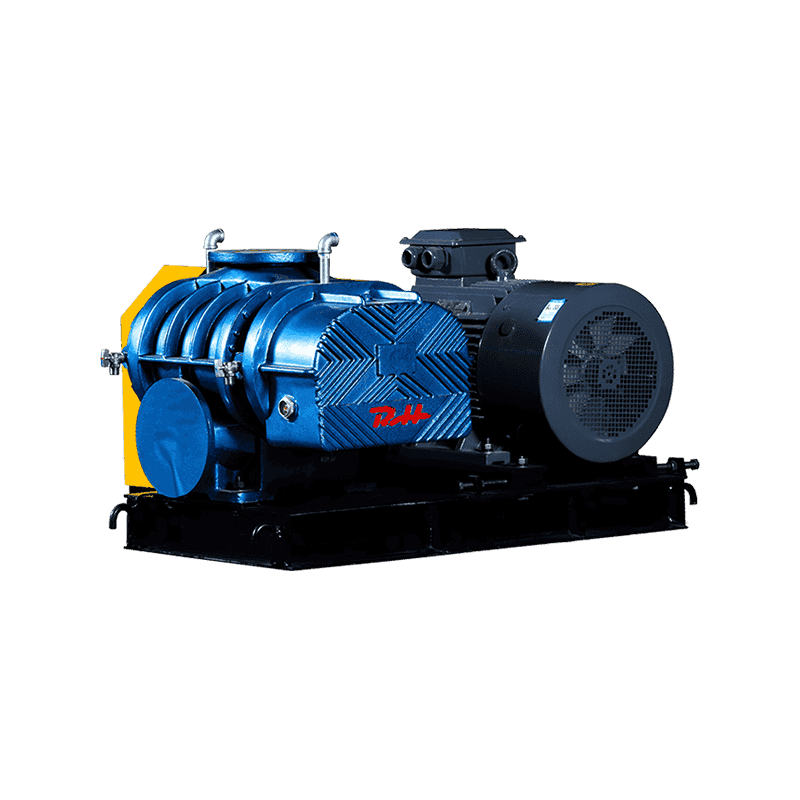
A rotary blower is a positive-displacement machine that traps a fixed volume of air and forces it into the discharge line against system back pressure. Unlike centrifugal blowers, a rotary unit maintains near-constant flow regardless of pressure changes, making it the preferred choice for applications where back pressure varies with process demand, such as filter cake formation, fluidization, or aeration depth changes.
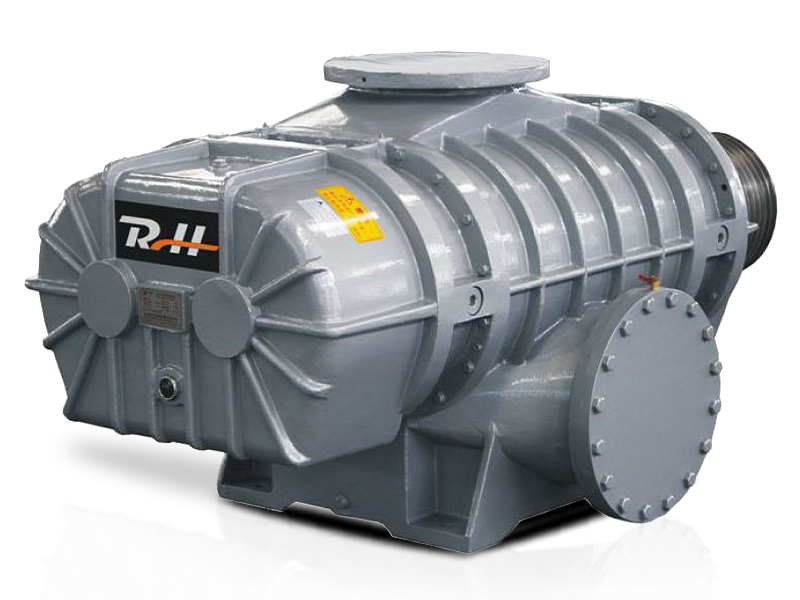
The machine’s core consists of two or more rotating elements inside a precision-machined housing. Clearances between these elements and the housing are tight—typically 0.05 to 0.15 mm—to minimize internal slip while allowing thermal expansion. Internal slip, or leakage, is the primary enemy of efficiency; even a few hundredths of a millimeter of extra clearance can drop volumetric efficiency by several percentage points.
Critical Performance Parameters
- Flow rate (CFM or m³/min): The volume of air moved at the inlet condition. Always confirm whether the specification is for inlet flow or standard flow, because corrections for temperature and altitude shift the actual delivery.
- Pressure rise (PSI or mbar): The difference between discharge and inlet pressure. Rotary blowers are commonly rated up to 15 PSI (1 bar) in single-stage designs and higher with multi-stage or screw-type units.
- Speed (RPM): Directly linked to flow; a 10% drop in speed reduces flow by 10%, but the impact on internal leakage can make the real drop worse.
- Power consumption (BHP or kW): Must be evaluated at the actual operating pressure, not the maximum rated pressure, to avoid oversizing motors and paying for unused capacity year after year.
Types of Rotary Blowers
The term “rotary blower” covers several configurations, each with distinct efficiency curves, pressure capabilities, and maintenance profiles. Selecting the wrong type for an application can double energy costs and shorten service intervals.
| Blower Type | Pressure Range | Typical Efficiency | Best Applications |
|---|---|---|---|
| Twin-lobe (Roots) | Up to 15 PSI | 55–65% adiabatic | Aeration, pneumatic conveying, vacuum |
| Tri-lobe | Up to 15 PSI | 60–68% adiabatic | Same as twin-lobe, with lower pulsation |
| Rotary screw | Up to 45 PSI and higher | 70–80% adiabatic | Higher-pressure industrial air, dust collection |
| Positive displacement claw | Up to 10 PSI | 50–60% | Low-pressure, oil-free applications |
For most municipal and industrial jobs below 10 PSI, a tri-lobe or twin-lobe blower offers the best balance of capital cost, rebuild intervals, and tolerance to dirty intake air. Screw blowers dominate above 15 PSI, where the efficiency gap becomes too large to ignore.
Matching a Blower to the Application
Every blower selection starts with two numbers: required flow and required pressure. Yet the majority of premature failures come from ignoring how those numbers change over time. A wastewater plant that expects the diffuser headloss to triple over a 10-year cleaning cycle is specifying a blower for the wrong operating point if it uses clean-water conditions.
Application-Specific Selection Rules
- Wastewater aeration: Size for the maximum expected submersion depth plus a 10% margin for diffuser fouling, not for the best-case scenario. Confirm that the turndown capability—either via variable speed drive or inlet throttling—covers low-load periods without pushing the machine into surge.
- Pneumatic conveying: Calculate the pressure drop for the longest transport distance and highest material loading. Account for filter resistance and rotary valve leakage, which can add 1–2 PSI to the overall demand.
- Industrial air supply (combustion, fluidization, air knife): Define the acceptable pressure deadband. A blower that cycles on/off with a narrow band cuts energy waste but requires proper relief valve and silencer sizing.
Wherever possible, request a blower performance curve at the actual expected speed and temperature, not just the catalog curve at standard 20°C. A unit operating in a hot enclosure can lose 3–5% of flow purely from inlet air density changes.
Performance, Efficiency, and Total Cost of Ownership
Purchase price represents roughly 10% of a rotary blower’s lifetime cost. The real line items are energy and maintenance, and a 5-point efficiency difference can add up to tens of thousands of dollars over a decade of continuous operation.
Evaluate efficiency using the adiabatic or isothermal efficiency figure provided by the manufacturer under test conditions. For a twin-lobe blower running at 8 PSI, an adiabatic efficiency of 62% is typical; a well-designed tri-lobe unit may reach 66%. That 4-point gain might not sound dramatic, but it reduces the absorbed power by roughly 6%, which can cover the cost of a VSD upgrade within two years for a large unit. Always compare efficiency at the same pressure ratio and speed.
Total cost also depends on allowable maintenance intervals. A blower that requires oil changes every 2,000 hours and lobe-timing adjustments every 8,000 hours costs more in labor than a design with 4,000-hour oil intervals and non-contacting lobe clearance that stays stable for 20,000 hours. Look for an extended service agreement that covers bearing replacements and seal kits, because unscheduled downtime in a critical aeration train can trigger regulatory violations that far exceed the blower’s purchase price.
Installation and Maintenance that Preserve Performance
Even a perfectly selected blower will underperform if installed without attention to three details: foundation rigidity, piping alignment, and intake air quality. A soft frame allows vibration to feed back into the lobes, accelerating bearing wear and enlarging clearances. Use a rigid steel base and check for angular misalignment on the coupling within 0.5 mm across the flex element.
Maintenance Triggers, Not Just Schedules
Move from calendar-based to condition-based maintenance by tracking:
- Discharge temperature rise: A sustained increase beyond 15°F above baseline at the same pressure and ambient conditions signals excessive internal slip or failing bearings.
- Vibration signature: A 10–15% rise in velocity at the lobe-pass frequency often precedes a timing gear wear issue that can be corrected before major damage occurs.
- Pressure pulsation: Monitoring the pressure transducer signal for an increase in peak-to-peak amplitude can reveal lobe coating degradation or housing wear.
Oil condition monitoring—acid number, viscosity, and particle count—should dictate the oil change interval rather than a fixed hour meter. In clean environments, high-quality synthetic oils can safely run 8,000 hours or more, but a single dusty intake event can shorten that to 500 hours.
When to Upgrade or Replace an Existing Unit
Most rotary blowers eventually reach a point where rebuilding is economically inferior to replacement. Use these thresholds:
- Adiabatic efficiency has dropped below 50% for a lobe blower or below 65% for a screw blower, and restoring clearances would require machining the housing bore rather than just replacing rotors.
- The unit requires a complete bearing, seal, and gear rebuild that exceeds 60% of the cost of a new blower with a factory warranty.
- Process pressure requirements have shifted 3 PSI or more beyond the original design, making a retrofit with a more suitable type (e.g., switching from lobe to screw) justifiable on energy savings alone within three years.
A well-maintained rotary blower can last 20–30 years in continuous service, but technology improvements—tighter CNC tolerances, advanced rotor profiles, and integrated VSD controls—often deliver a payback under two years for large horsepower units.
Selecting and maintaining a rotary blower is an exercise in clear-eyed specification: know the exact pressure and flow range, account for process variability, and insist on performance curves at real-world conditions. When those fundamentals are honored, a rotary blower becomes one of the most reliable machines in the plant, not a recurring crisis.