 86-0513-68903288
 13906298796@139.com
 русский
 Español
 عربى
عربىContent
- 1 How a Roots Blower Works: Constant Volume, External Compression
- 2 Key Performance Specifications
- 3 Twin-Lobe vs. Trilobe Roots Blowers: Design Comparison
- 4 Industrial Applications Where Roots Blowers Excel
- 5 5 Critical Factors for Roots Blower Selection
- 6 Installation and Maintenance Best Practices
- 7 Boosting Efficiency and Reducing Noise
How a Roots Blower Works: Constant Volume, External Compression
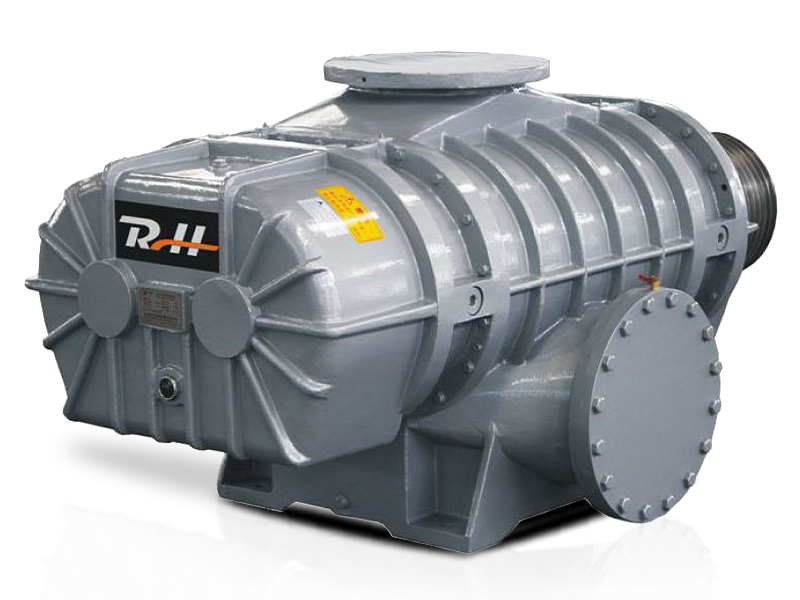
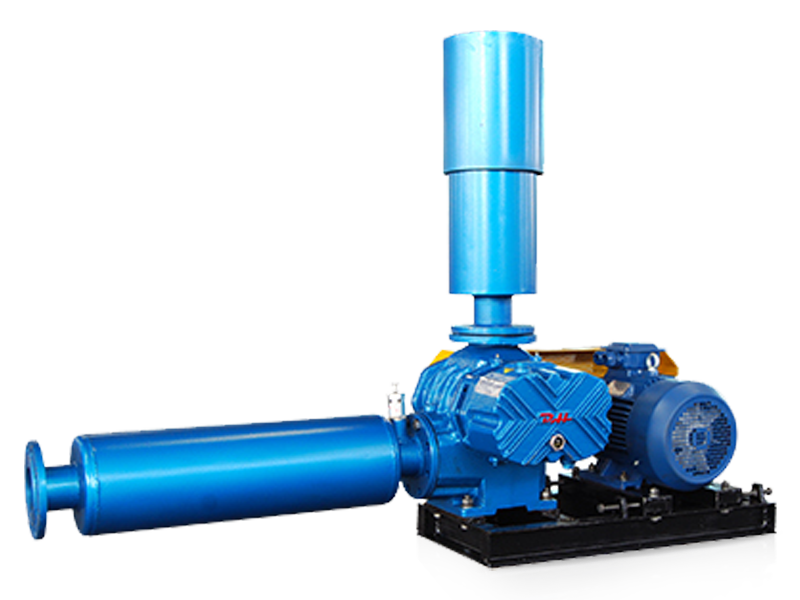
A single industrial Roots blower can displace over 100 cubic meters of air per minute—without internal compression. The machine traps gas between two counter-rotating lobed rotors and the casing, then forces the captured volume into the discharge line against system backpressure.
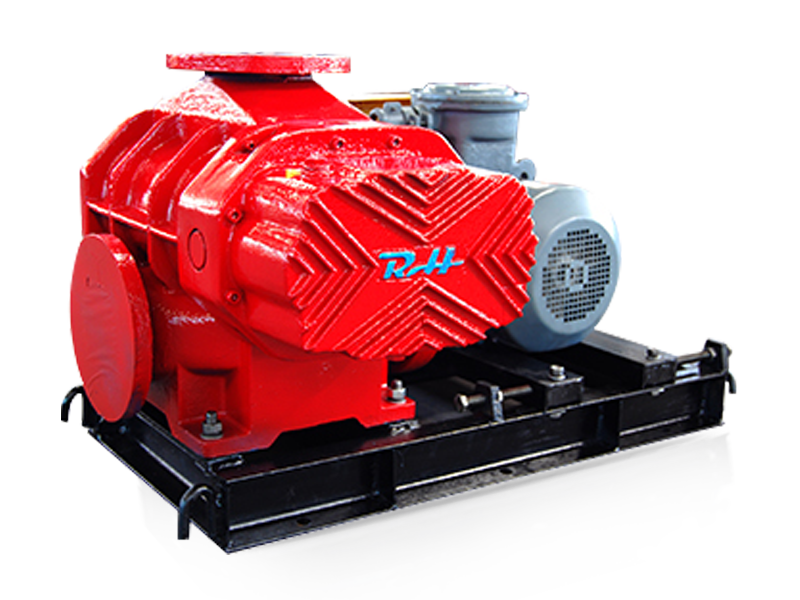
The rotors, shaped as figure-8 or three-lobed profiles, are synchronized by precision timing gears. They never touch each other or the casing; a running clearance of 0.1–0.5 mm eliminates the need for internal lubrication. Air enters the expanding inlet cavity, gets sealed as the lobe sweeps past the casing wall, and is pushed out when the cavity opens to the discharge port. Because there is no internal compression, the pressure rise happens only when the trapped gas meets the already higher-pressure air at the outlet. This isochoric process gives the Roots blower its defining characteristic: flow rate remains almost constant regardless of discharge pressure. Unlike centrifugal compressors that lose flow as backpressure builds, a Roots blower delivers steady volume even under fluctuating system loads—a trait that simplifies system design and control.
The consequence is that the blower moves a fixed geometric volume per revolution. System resistance determines how much pressure develops, up to the mechanical limit of the casing and drive. That is why correct sizing of downstream piping and pressure relief is critical: the machine will keep pushing air until something fails unless protected.
Key Performance Specifications
Roots blowers span a wide operating envelope. Small laboratory units deliver as little as 0.5 m³/min, while large wastewater or cement plant models exceed 300 m³/min. Pressure rise is moderate by compressor standards: single-stage units typically reach 1.0 bar(g), and two-stage serial arrangements push up to 2.0 bar(g). The adiabatic temperature increase follows the pressure ratio. For air, a 0.8 bar pressure rise heats the discharge stream by 50–70 °C; outlet temperatures above 120 °C are common and must be accounted for in pipe expansion joints and material selection.
The power draw of a Roots blower is directly tied to both differential pressure and flow. A useful rule of thumb is that power consumption rises linearly with pressure difference. Oversizing the pressure rating, even slightly, can add thousands of dollars to annual energy costs. Actual shaft power is calculated from adiabatic work divided by mechanical efficiency, which for well-maintained machines ranges from 55% to 75%. This sensitivity to pressure makes blower selection a true engineering decision—targeting the maximum required pressure point, not an arbitrary margin, pays back quickly.
Twin-Lobe vs. Trilobe Roots Blowers: Design Comparison
The number of lobes fundamentally shapes performance. Most traditional designs use two lobes per rotor; modern high-efficiency units often adopt three. The table below summarizes the practical differences.
| Feature | Twin-Lobe | Trilobe |
|---|---|---|
| Lobes per rotor | 2 | 3 |
| Pulsation amplitude | Higher | Lower (smoother flow) |
| Efficiency at high pressure | Slightly lower due to larger backflow gap | Better because sealing points increase |
| Typical noise level | Louder (up to 5 dBA more) | Quieter |
| Common application | Pneumatic conveying, simple aeration | Wastewater aeration, process air |
The shift toward trilobe rotors is driven by pulsation sensitivity. Trilobe blowers generate up to 40% less pressure pulsation than twin-lobe designs, which reduces pipe vibration and extends the life of downstream equipment. When equipped with a helical twist, the pulsing becomes nearly sinusoidal, further cutting noise. However, twin-lobe rotors remain competitive in cost-sensitive, non-critical applications where a simple discharge plenum can dampen the impulse.
Industrial Applications Where Roots Blowers Excel
Roots blowers turn up in nearly every sector that needs reliable, oil-free air movement against modest pressure. Their constant-volume character makes them especially valuable when flow stability matters more than high discharge pressure.
- Wastewater treatment: Aeration basins demand 24/7 continuous air supply. Wastewater treatment roots blowers handle variable water levels without major flow swings, keeping dissolved oxygen stable.

- Pneumatic conveying: Dense-phase systems move powders and granules through pipelines. Pneumatic conveying roots blowers are engineered to deliver steady pressure against line resistance, preventing plugging.
- Chemical and petrochemical processing: Vapor recovery, reactor air supply, and flue gas desulfurization often involve corrosive or acid-laden gases. In these environments, anticorrosion roots blowers withstand attack with wetted parts in stainless steel, PTFE, or higher alloys.
- Cement and mining: Fluidization of raw meal and fly ash handling rely on blowers that can push against dense material columns.
- Power plants: Boosting combustion air for FGD units or transporting ash requires machines that tolerate particulate carryover and moderate heat.
- Vacuum service: Operating as an exhauster, the same positive-displacement mechanism pulls down suction lines to partial vacuum levels needed for central cleaning systems and pneumatic collection.
5 Critical Factors for Roots Blower Selection
Choosing the right blower goes far beyond matching nameplate ratings. The real operating point, the gas itself, and the operating environment dictate every component from lobe profile to bearing arrangement.
1. Flow and Pressure at the True Operating Point
System curve analysis is non-negotiable. The blower must deliver the required flow at the actual discharge pressure, including all pipe friction and static head. Selecting a machine based on the maximum possible pressure, with a generous safety factor, leads to constant blow-off through the relief valve – and that directly wastes energy. Oversizing a Roots blower wastes energy and increases maintenance costs because the machine runs hot while doing no useful work.
2. Gas Composition and Temperature
Beyond clean air, gases may contain moisture, dust, or aggressive chemicals. Inlet filtration becomes mandatory when handling cement dust or fly ash. For explosive atmospheres, ATEX-certified or explosion-proof designs are required. Corrosive streams demand wetted parts in Hastelloy or PTFE-lined internals. High inlet temperatures reduce density and mass flow, so performance curves must be corrected to actual inlet conditions.
3. Noise Regulations
Workplace noise limits often cap exposure at 85 dBA. A bare blower can reach 95–110 dBA. Acoustic enclosures, intake silencers, and discharge pulsation dampeners are the primary mitigation tools. Mapping the dominant frequency (lobe-passing frequency) helps design targeted attenuation.
4. Duty Cycle
Intermittent duty gives bearings and oil time to cool; continuous 24/7 operation heats the gearbox and reduces oil life. Water-cooled or fan-cooled casings extend service intervals. For variable loads, a VFD becomes a strategic investment.
5. Serviceability
Easy access to lobes, timing gears, and seals slashes downtime during overhauls. Modular designs that allow rotor cartridge swaps without realigning the entire unit are worth the initial premium in high-availability plants.
Installation and Maintenance Best Practices
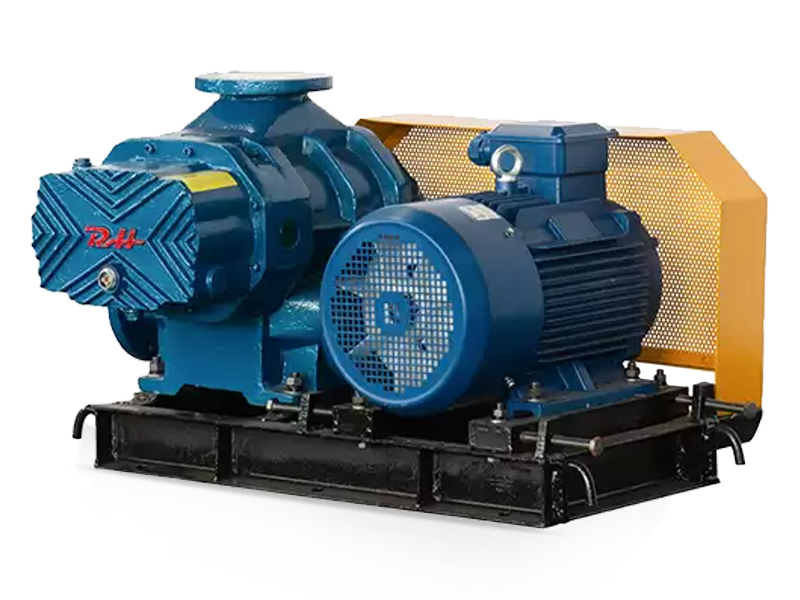
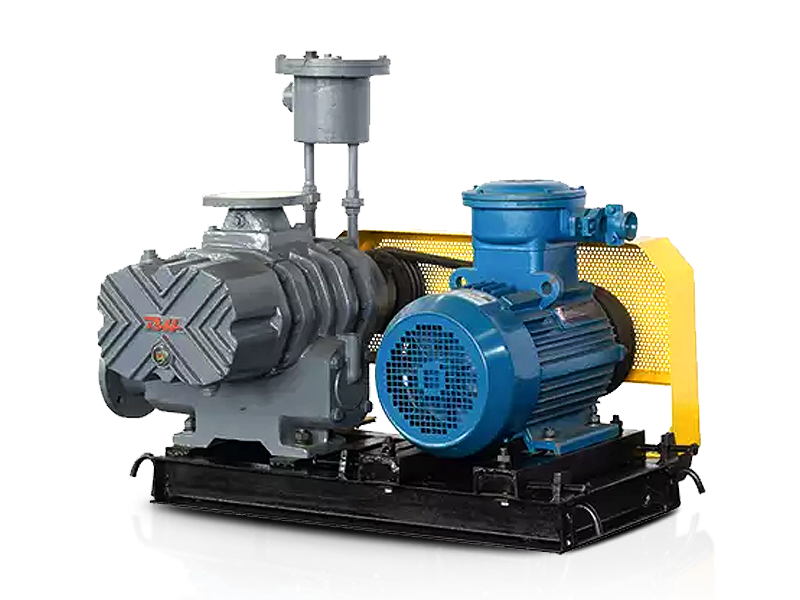
A well-installed blower package starts with a rigid foundation and vibration isolators. The discharge line should include a check valve, a pressure relief valve set just above maximum operating pressure, and a flexible connector to absorb pulsations and thermal growth. Inlet piping deserves a cleanable filter and a silencer—both reduce wear from ingested debris and cut intake noise.
Regular maintenance centers on oil levels in the timing gear housing, bearing lubrication, and V-belt tension. Proper discharge piping diameter can cut power consumption by up to 5% by minimizing frictional backpressure. Monitoring vibration trends and bearing temperatures provides early warning of misalignment or deteriorating lobes. A pressure gauge on the discharge and a thermometer at the outlet give operators an immediate health check: rising pressure or temperature at the same flow rate signals a downstream blockage or a slipping relief valve.
Boosting Efficiency and Reducing Noise
The constant-volume nature of Roots blowers makes them perfect candidates for variable speed control. When process demand varies—as in wastewater aeration reacting to diurnal oxygen uptake—a variable frequency drive (VFD) can adjust motor speed to match airflow precisely. A VFD retrofit often pays back in under two years through energy savings alone, easily cutting electricity consumption by 20–40% compared to on/off or throttle control. Soft starters built into the drive also reduce mechanical stress on couplings and belts.
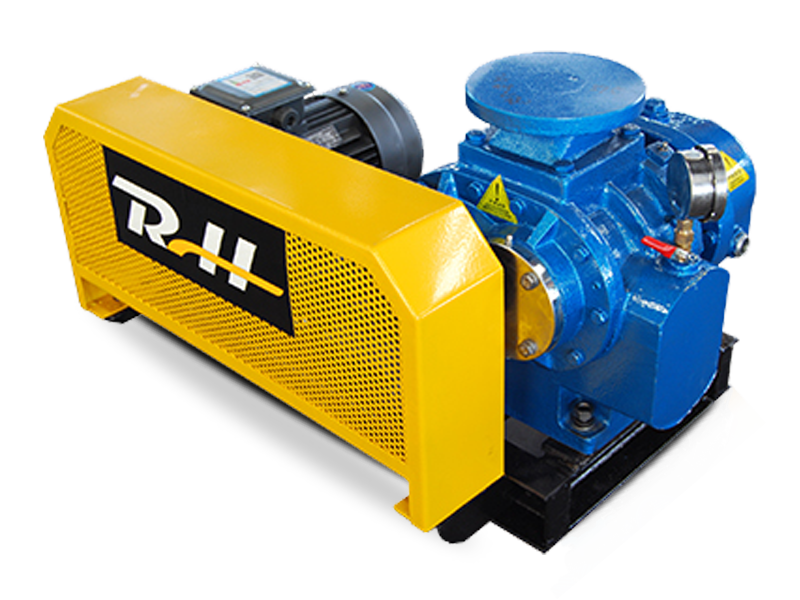
Noise reduction follows a systematic path: inlet silencers target intake roar, discharge pulsation dampeners flatten pressure spikes, and full acoustic enclosures shave overall sound levels by 15–20 dBA. In urban wastewater plants, this is often the difference between a permit violation and quiet compliance. Complementing the mechanical upgrades, online monitoring systems now track lobe timing, vibration spectra, and temperature drift—turning preventive maintenance into predictive, condition-based servicing that avoids unplanned outages.