 86-0513-68903288
 13906298796@139.com
 русский
 Español
 عربى
عربىContent
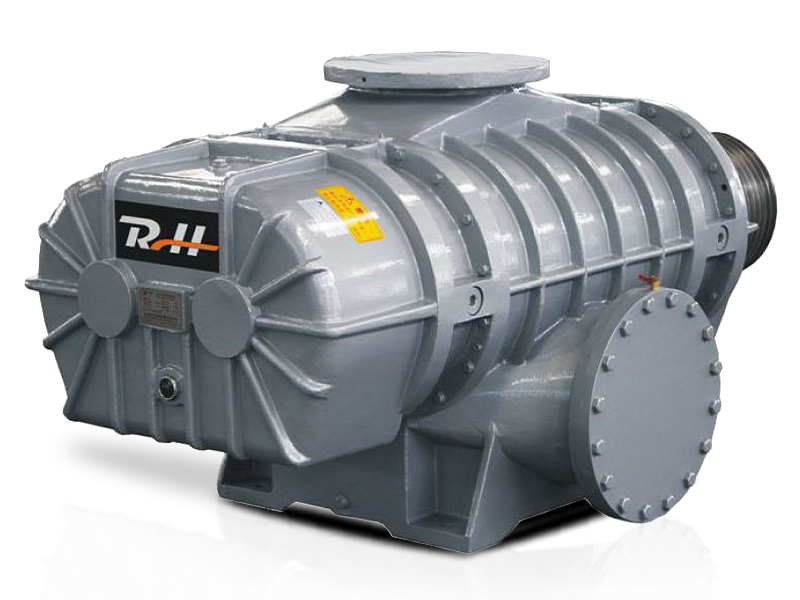
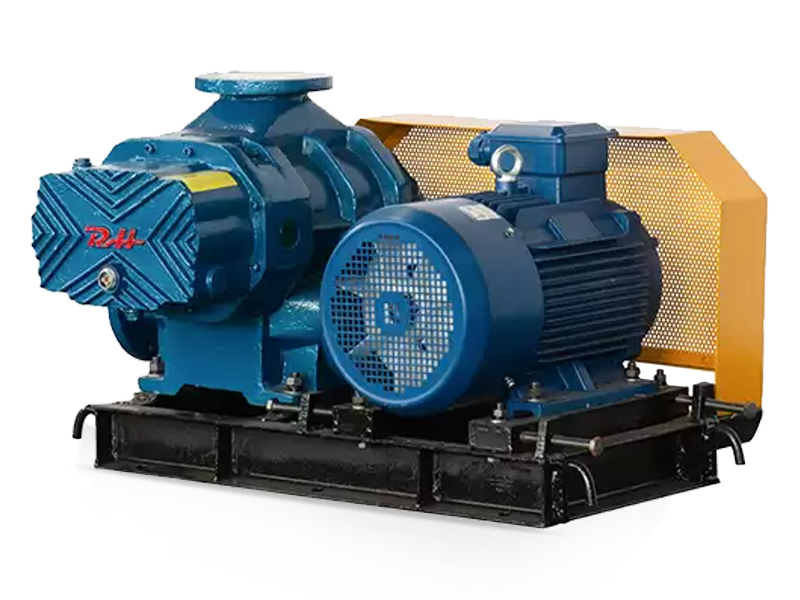
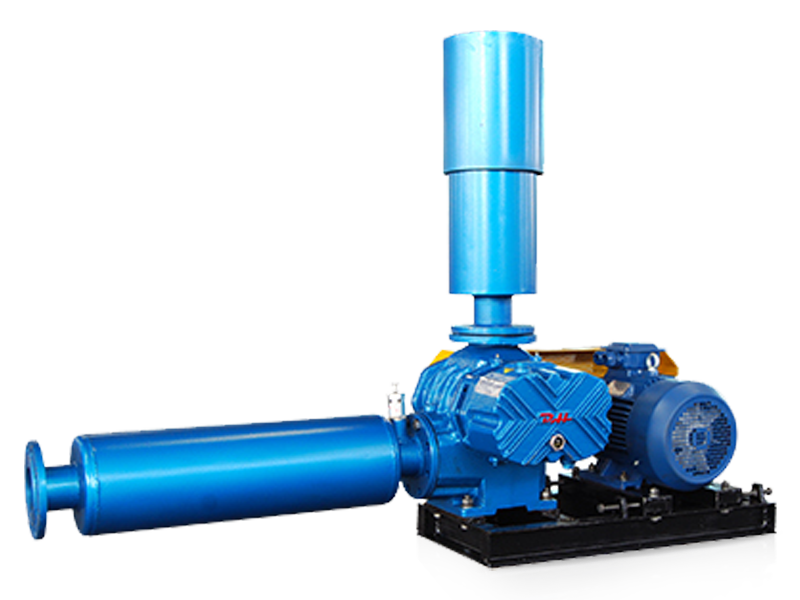
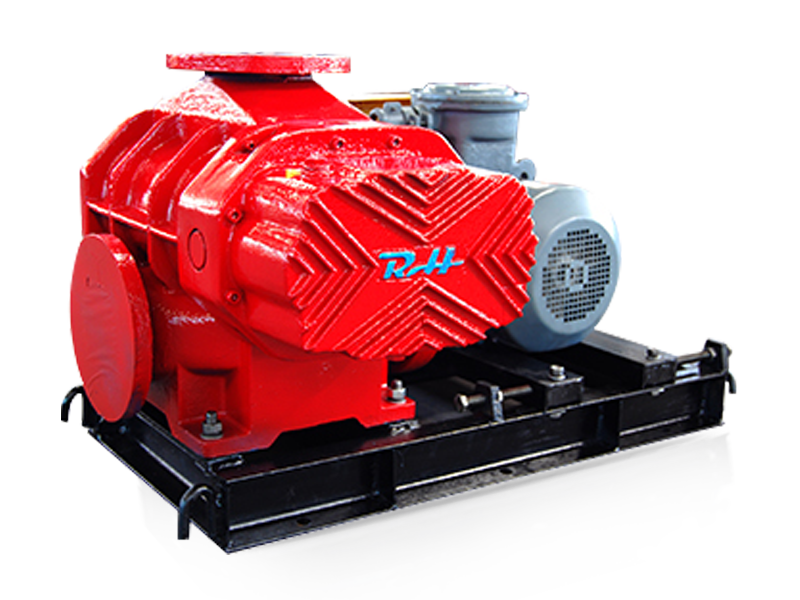
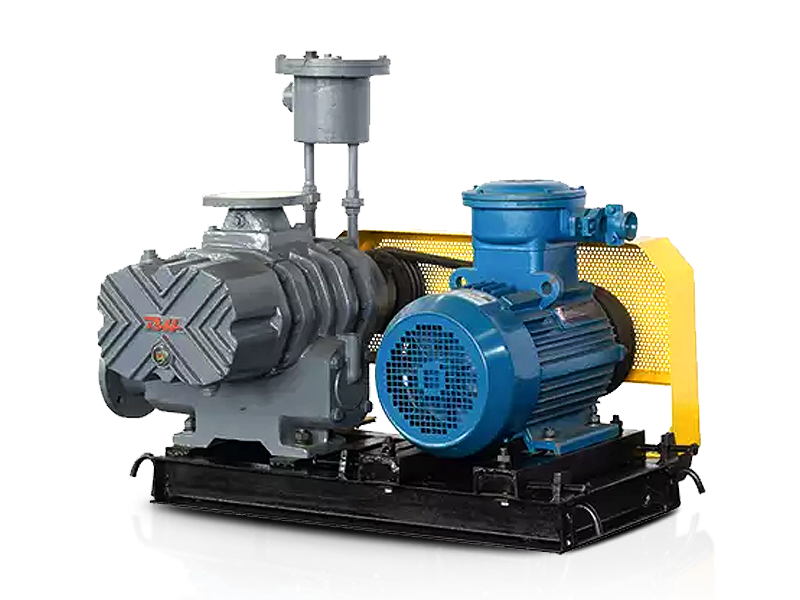
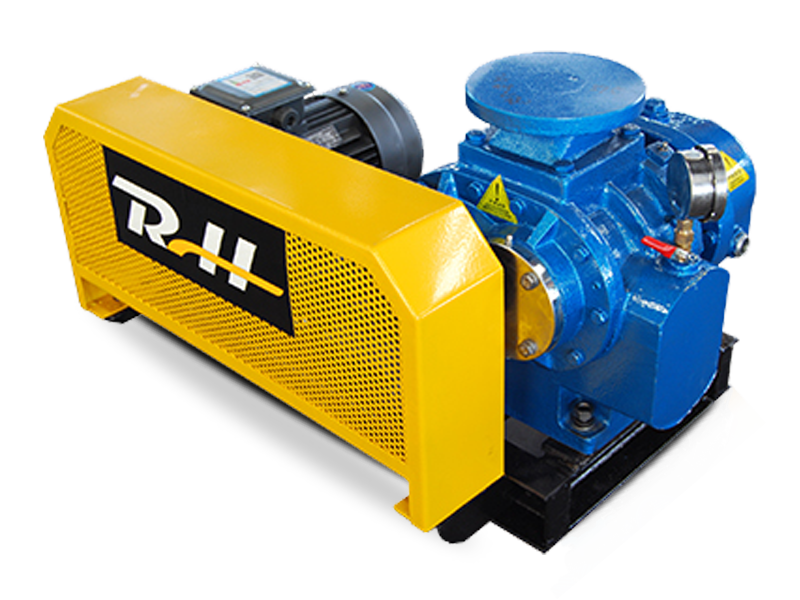
Roots blowers are positive displacement machines that trap a fixed volume of gas and force it from intake to discharge, delivering a nearly constant flow regardless of pressure variations. They excel in applications requiring oil-free air at pressures typically below 1 bar(g) and flow rates from 0.5 to over 1,000 m³/min. This stable output makes them the preferred air source for wastewater aeration, pneumatic conveying, aquaculture oxygenation, and flue gas desulfurization.
Operating Principle of Positive Displacement Blowers
Inside the casing, two figure‑eight impellers rotate in opposite directions without touching each other or the housing. As each lobe passes the inlet, a gas pocket is formed and trapped between the lobe, the casing wall, and the end plates. The rotation carries this pocket unchanged in volume to the discharge side, where the sudden exposure to higher system pressure causes a rapid compression—often called isochoric or external compression. No internal compression occurs; the blower simply moves the gas against the discharge pressure, which limits thermodynamic efficiency but guarantees oil-free operation and simple construction.
This working principle explains two critical characteristics: flow is proportional to speed, and discharge pressure is determined by the downstream system resistance. A Roots blower will deliver its rated volume even against a partially closed valve, but the absorbed power rises almost linearly with pressure difference. Over‑pressurization can quickly overload the drive motor, so a pressure relief valve is a mandatory safety component.
Bi‑Lobe and Tri‑Lobe Impeller Configurations
The impeller profile directly influences pulsation, noise, and volumetric efficiency. Two‑lobe rotors create two discharge pulses per revolution, causing a characteristic low‑frequency pressure ripple. Three‑lobe rotors generate three smaller pulses per revolution, significantly smoothing flow and reducing noise. The table below compares typical values.
| Parameter | Bi‑Lobe | Tri‑Lobe |
|---|---|---|
| Discharge pulses per rev | 2 | 3 |
| Typical noise level (without enclosure) | 85–95 dB(A) | 75–85 dB(A) |
| Pressure pulsation amplitude | Higher | 30–50% lower |
| Volumetric efficiency at 0.6 bar(g) | ~88–92% | ~90–93% |
In practice, tri‑lobe blowers dominate new installations because they meet stricter workplace noise regulations and reduce vibration‑induced fatigue on connected ducting. Bi‑lobe designs remain an economical choice for large, low‑pressure applications where a silencer can adequately attenuate pulsations, such as pond aeration in remote aquaculture farms.
Performance Boundaries and Efficiency Considerations
Roots blowers are not high‑pressure machines. The practical maximum single‑stage pressure rise is around 1.0 bar(g), and two‑stage units can reach approximately 1.5 bar(g). Beyond these limits, internal leakage across the clearance gaps grows excessively, and discharge temperatures can exceed 140 °C, risking thermal expansion that may cause rotor contact.
Adiabatic efficiency typically ranges from 55% to 65% at the best efficiency point, lower than screw compressors. This is a direct result of external compression: the energy used to force a constant volume of gas against a higher pressure is not fully recovered. However, the efficiency plateau is very flat over a wide flow range, and the total cost of ownership often favors Roots blowers where pressures remain below 0.8 bar(g) and the process demands 8,000+ operating hours per year at stable conditions.
Core Industrial Applications
- Wastewater treatment: supplying air to aeration basins. A typical 10,000 m³/day municipal plant uses two 75 kW blowers delivering 2,500 m³/h each at 0.5 bar(g) to fine‑bubble diffusers.
- Pneumatic conveying: transporting cement, flour, or plastic pellets in dilute‑phase systems requiring continuous, oil‑free air at 0.4–0.8 bar(g).
- Aquaculture: oxygenating shrimp ponds and fish raceways, often with tri‑lobe units running 24/7 at low pressure.
- Flue gas desulfurization: providing oxidation air to convert sulfite to gypsum in wet scrubbers, a demanding environment that benefits from the blower’s simple, robust design.
- Vacuum service: when the inlet is connected to a closed system, the same machine operates as a dry vacuum pump, achieving rough vacuum levels down to 200 mbar(abs).
Selection Criteria for a Roots Blower Package
Choosing the right blower requires matching the system curve and evaluating site conditions. Consider these factors in order:
- Required volumetric flow rate at actual inlet conditions, not standard conditions. At higher altitudes, a physically larger blower may be needed to compensate for the lower air density.
- Maximum allowable discharge pressure. If the process pressure exceeds 1.0 bar(g), a two‑stage unit or an alternative technology should be evaluated.
- Gas composition and contaminants. Roots blowers handle air, biogas, and inert gases, but corrosive constituents require stainless steel internals or special coatings.
- Noise constraints. Tri‑lobe packages with inlet/outlet silencers and acoustic enclosures can meet 70 dB(A) at one meter, critical for indoor or urban installations.
- Duty cycle and ambient temperature. Continuous operation in high ambient heat may require external oil coolers or water‑cooled casings to keep discharge temperatures below 120 °C.
- Total cost of ownership. The blower’s simple construction keeps spare parts and maintenance costs low, but energy consumption over a 10‑year period usually dominates; therefore, efficiency at the actual operating point, not just the best efficiency point, should be carefully checked.
Maintenance Practices That Extend Service Life
Roots blowers are valued for their minimal maintenance, yet a few focused actions prevent unplanned downtime. The timing gears and bearings are splash‑lubricated or grease‑packed; changing oil every 2,000 operating hours or according to the oil analysis is standard. Air filters must be inspected monthly in dusty environments—clogged filters increase pressure drop, reducing flow and raising motor load. The labyrinth or lip seals that separate the oil chamber from the compression chamber are wear items; when seal leakage is detected during quarterly inspections, they should be replaced immediately to avoid oil contamination of the process air.
Rotor clearances are factory‑set with cold‑running tolerances of 0.1–0.5 mm, depending on rotor size. These should never be adjusted in the field without manufacturer guidance. Instead, trending the discharge temperature and listening for any rhythmic contact sound provides early warning of bearing wear or excessive thermal growth. With proper care, a Roots blower routinely achieves 40,000–60,000 operating hours between major overhauls.