 86-0513-68903288
 13906298796@139.com
 русский
 Español
 عربى
عربىContent
- 1 Blowers Account for More Than Half of Your Plant's Energy Bill
- 2 How Roots Blowers Work — and Why It Matters for Selection
- 3 Key Specifications at a Glance
- 4 Matching Blower Type to Application
- 5 Specialized Variants Worth Knowing
- 6 Five Selection Criteria That Prevent Costly Mistakes
- 7 Energy Efficiency: Where the Real Savings Come From
- 8 Maintenance Basics That Extend Service Life
Blowers Account for More Than Half of Your Plant's Energy Bill
Aeration blowers alone consume over 50% of the electricity at a typical wastewater treatment plant. That single fact explains why choosing the wrong blower — or running the right one incorrectly — can quietly drain tens of thousands of dollars per year. The good news: matching your process requirements to the correct blower type is straightforward once you understand the options.
This guide focuses on two categories that dominate industrial air-handling: general industrial blowers and Roots (rotary lobe) blowers. Both move air in high volumes; they differ in pressure range, efficiency curve, and where each one shines.
How Roots Blowers Work — and Why It Matters for Selection
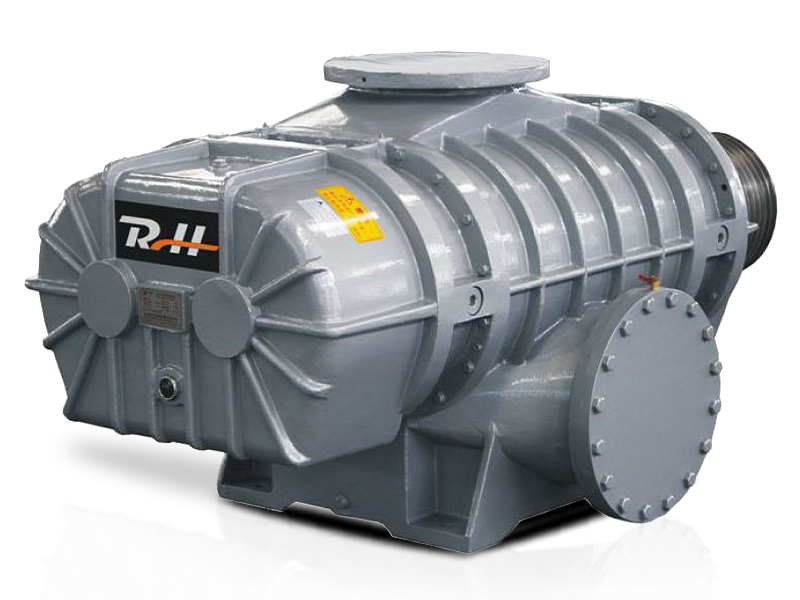
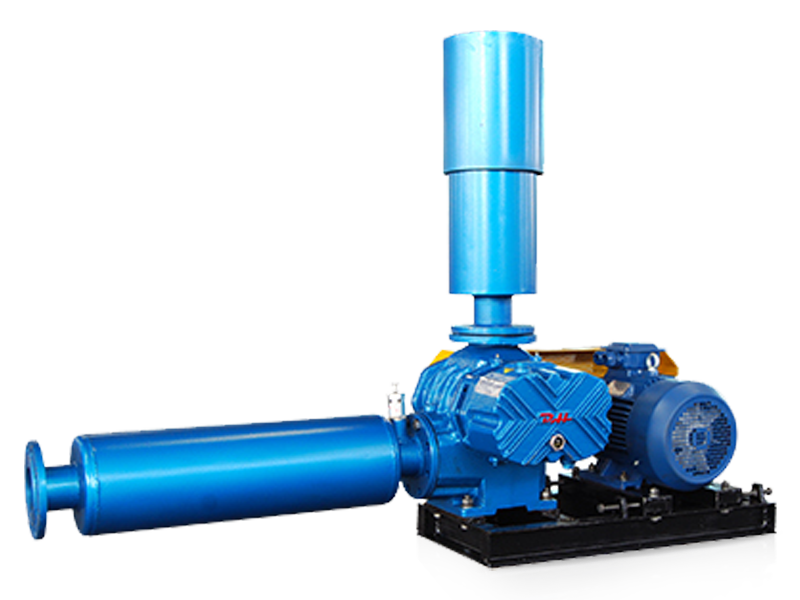
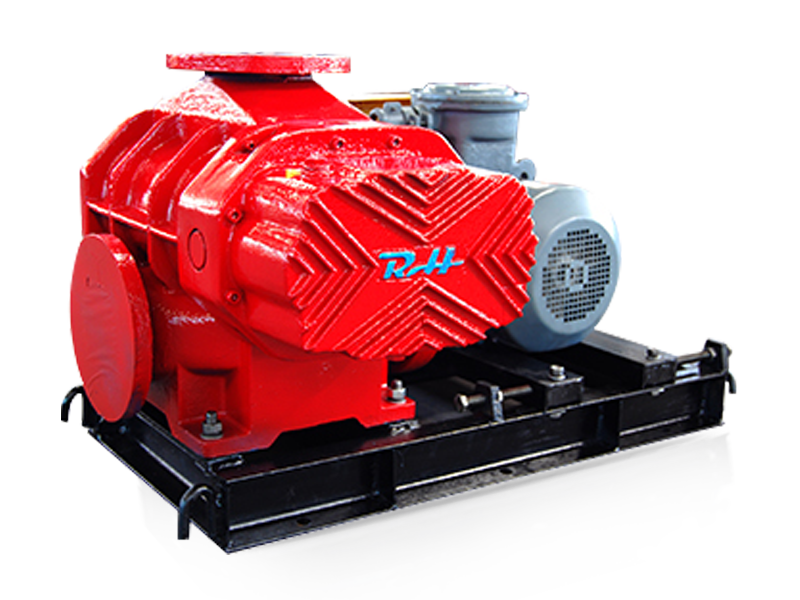
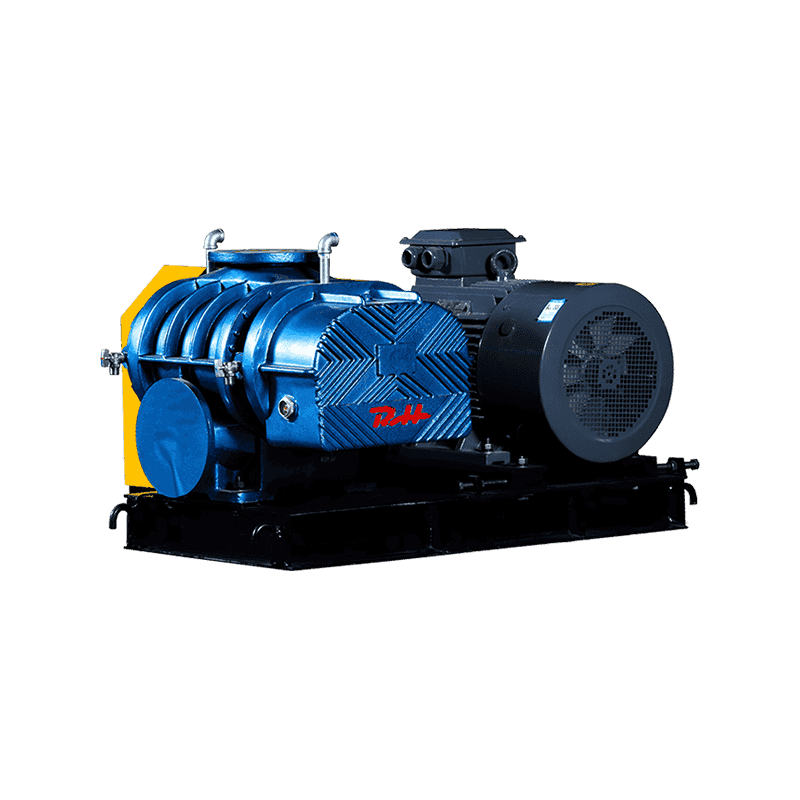
A Roots blower is a positive displacement machine. Two counter-rotating lobes trap a fixed pocket of air between the rotor profile and the casing wall, then push it from the inlet to the discharge without internal compression. Because the volume per revolution is constant, flow tracks closely with shaft speed — a predictable, controllable characteristic that makes these units well-suited to process-critical applications.
Two common rotor profiles exist. The twin-lobe design is simpler and handles higher flow rates; the tri-lobe variant produces lower pulsation and quieter operation, making it the preferred choice where noise or downstream pressure stability matters. Most modern Roots blower product lines default to tri-lobe geometry for general industrial use.
Key Specifications at a Glance
The table below summarizes the performance envelope of typical Roots blower models, using published specifications as a reference point:
| Model Variant | Flow Rate | Pressure Rise | Speed Range | Typical Use |
|---|---|---|---|---|
| Standard / Wastewater | 0.6 – 713.8 m³/min | 9.8 – 98 kPa | 500 – 2,000 RPM | Aeration, aquaculture |
| Two-Stage Series | 0.6 – 120 m³/min | 58.8 – 200 kPa | 500 – 1,600 RPM | High-pressure conveying |
| High-Temp / High-Pressure | 0.6 – 713.8 m³/min | Up to 1.2 MPa | 490 – 1,450 RPM | Kiln, furnace processes |
| Roots Vacuum Pump | 0.6 – 713.8 m³/min | Vacuum to –68 kPa (wet) | 500 – 2,000 RPM | Vacuum systems, packaging |
| Package with Control Cabinet | 4.5 – 7 m³/min | Up to 78 kPa | — | Compact water treatment |
One practical note: water-cooling automatically switches in at 90 °C discharge temperature (corresponding to approximately 58.8 kPa pressure rise). If your system routinely operates near that threshold, factor cooling-system plumbing into your installation budget.
Matching Blower Type to Application
Not every industrial blower is a Roots blower, and not every process needs one. Here is how the main types divide up in practice:
- Roots / Rotary Lobe Blowers — Best for moderate-pressure, high-volume applications where constant flow at varying back-pressure is required. Core uses: wastewater aeration, pneumatic conveying of powders and granules, aquaculture oxygenation, and industrial vacuum systems.
- Multistage Centrifugal Blowers — Higher flow rates at lower pressure ratios. Particularly effective in large-scale aeration basins where flow variability is managed by inlet guide vanes rather than speed changes. Less efficient at partial load than a VFD-driven Roots unit.
- Oil-Free Screw Blowers — Suited to food, pharmaceutical, and semiconductor environments where air purity is non-negotiable. Higher capital cost, but eliminates oil-contamination risk entirely.
- Air Suspension (Turbo) Blowers — Magnetic or air-bearing units with no mechanical contact and virtually no maintenance intervals. Best justified on continuous-duty high-flow aeration where lifecycle energy savings offset the premium purchase price.
The decision tree is straightforward: if your pressure requirement sits between 9.8 and 98 kPa and you need reliable, oil-tolerant, repairable equipment, a Roots blower almost always wins on total cost of ownership.
Specialized Variants Worth Knowing
Standard Roots blowers cover most applications, but several process environments demand more specific designs:
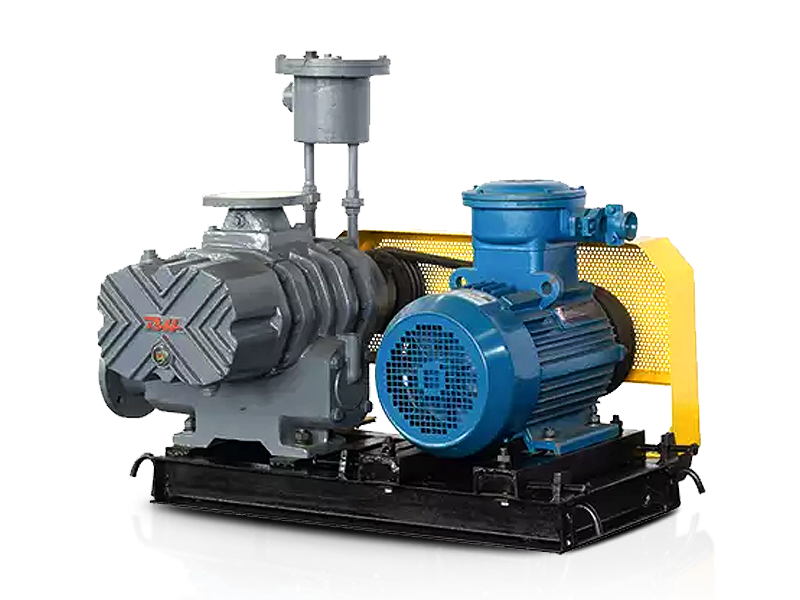
- Explosion-Proof (EX DⅡ BT4 / CT4) — Required in petrochemical, solvent-handling, and coal-processing facilities. The motor and enclosure meet rated explosion-proof grades; the blower internals remain the same tri-lobe design. See the full spec on the explosion-proof Roots blower page.
- Anti-Corrosion — For flue-gas desulfurization, chemical fume handling, and coastal or humid environments where standard cast iron would degrade rapidly. Internal surfaces and seals use corrosion-resistant materials.
- Submersible — Installed directly below the waterline in aeration tanks, eliminating above-ground pipework and reducing noise to effectively zero. Flow range is 0.6 – 120 m³/min.
- High-Temperature — Rated to 500 °C inlet temperature, with a maximum discharge pressure of 1.2 MPa. Used in kiln preheating, hot-gas recirculation, and MVR (Mechanical Vapor Recompression) evaporation, where the stainless-steel MVR variant handles 0.2 – 3.5 T/h evaporation capacity.
Five Selection Criteria That Prevent Costly Mistakes
Procurement teams often over-specify flow and under-specify pressure, or vice versa. Before issuing an RFQ, confirm these five parameters:
- Actual flow rate (m³/min or CFM) at inlet conditions — specify temperature and altitude, not just nominal volume. A blower rated at sea level delivers measurably less mass flow at 1,500 m elevation.
- System resistance / pressure rise (kPa or PSI) — include pipe friction, diffuser submergence depth, and any downstream equipment pressure drop.
- Duty cycle — continuous 24/7 operation demands a higher service factor and better bearing specification than intermittent duty.
- Media characteristics — corrosive gas, humid air, or entrained particulate each rule out certain materials or seal types.
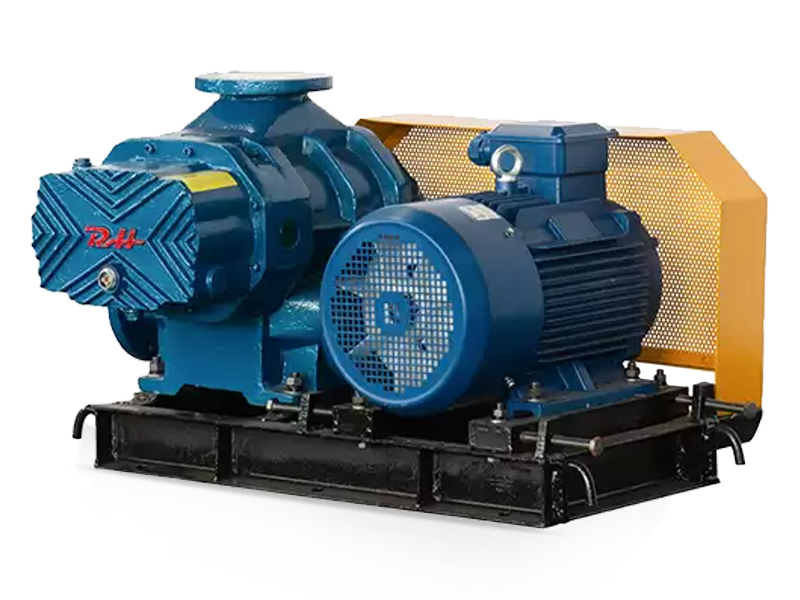
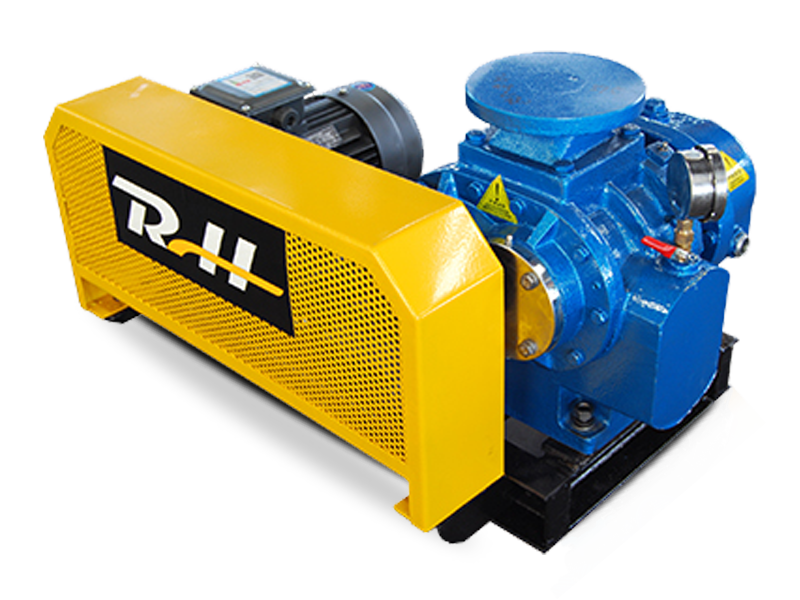
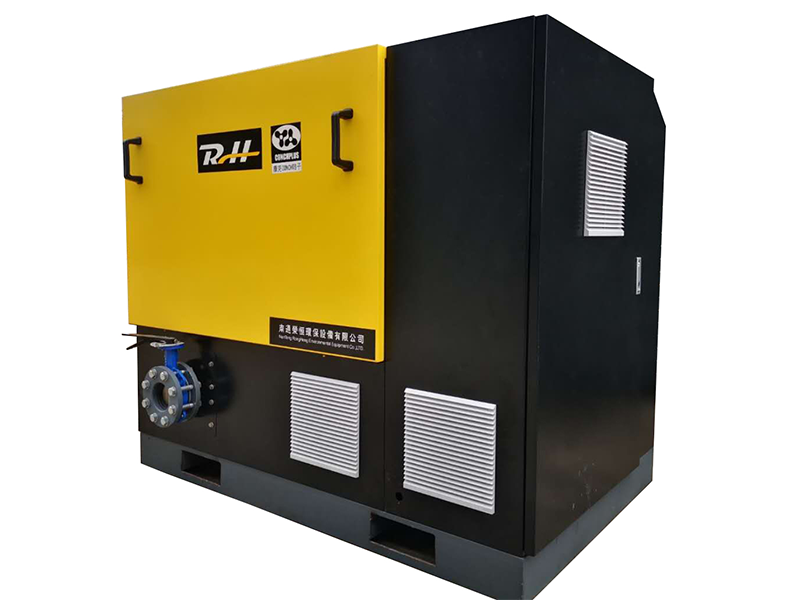
- Noise constraints — the packaged Roots blower with acoustic enclosure achieves under 77 dB at 1 m; open-frame units will require separate silencing. A sound enclosure for Roots blowers is a straightforward retrofit if site conditions change.
Energy Efficiency: Where the Real Savings Come From
According to the U.S. EPA, municipalities can cut energy costs in water and wastewater operations by 15 to 30% through operational improvements alone — no capital replacement required. For blowers specifically, the highest-return actions are VFD retrofits on variable-load systems, correcting oversized impeller selections, and tightening DO (dissolved oxygen) control deadbands to prevent unnecessary run time.
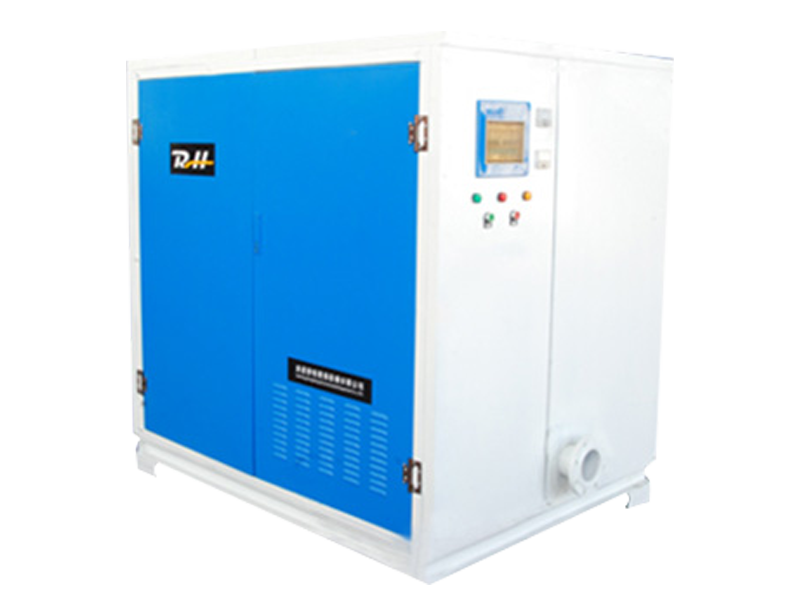
Adding a frequency conversion starting cabinet (VFD) to an existing Roots blower is often the fastest payback upgrade available — typically under two years in continuous-duty aeration service. A PLC-based control cabinet takes this further by staging multiple blowers automatically in response to real-time process demand, eliminating the waste of running full-speed machines against partially closed discharge valves.
For a broader framework on evaluating energy conservation measures at wastewater treatment facilities, the EPA's published guidance provides plant-level benchmarks and blower selection models that are directly applicable to industrial aeration projects.
Maintenance Basics That Extend Service Life
Roots blowers are mechanically simple — two lobes, timing gears, and bearings — but they punish neglect. The three most common failure modes are bearing failure from inadequate lubrication, rotor-to-casing contact from thermal expansion during high-pressure operation, and check-valve failure that allows reverse flow and pressure surge on shutdown. Addressing all three comes down to:
- Using the correct lubricant grade for your operating temperature and changing it on schedule (every 2,000 – 4,000 hours depending on load).
- Verifying that discharge temperature stays below the 90 °C threshold before water-cooling activation, and that the cooling circuit is functional.
- Inspecting the discharge check valve annually — a failed check valve causes hydraulic shock that damages impellers and housing bores on restart.
Many facilities extend blower life significantly by pairing the unit with a circulating water cooling system kit, particularly in warm climates or high-pressure-duty applications where ambient air cooling alone is marginal.