 86-0513-68903288
 13906298796@139.com
 русский
 Español
 عربى
عربىContent
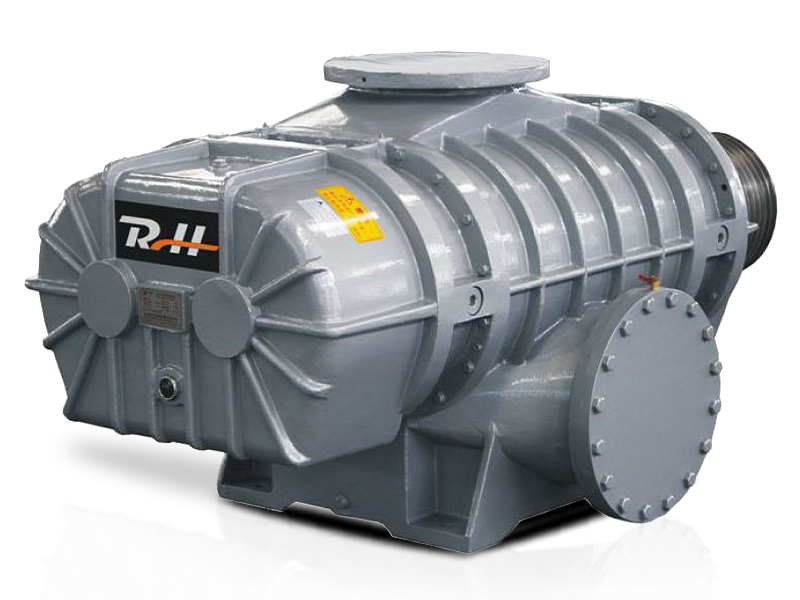
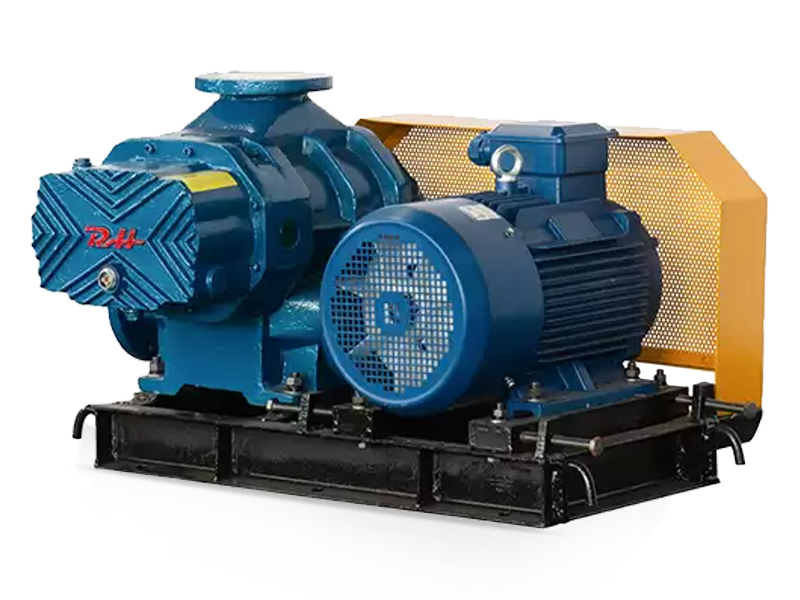
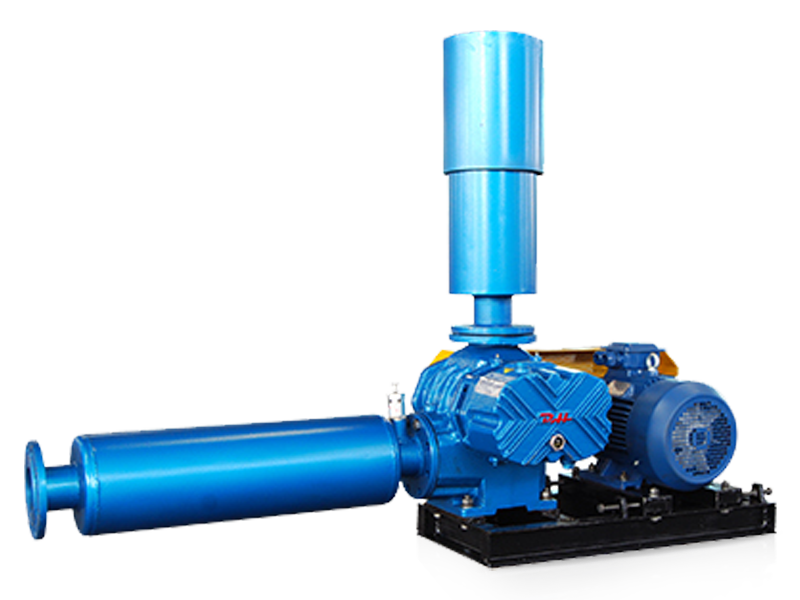
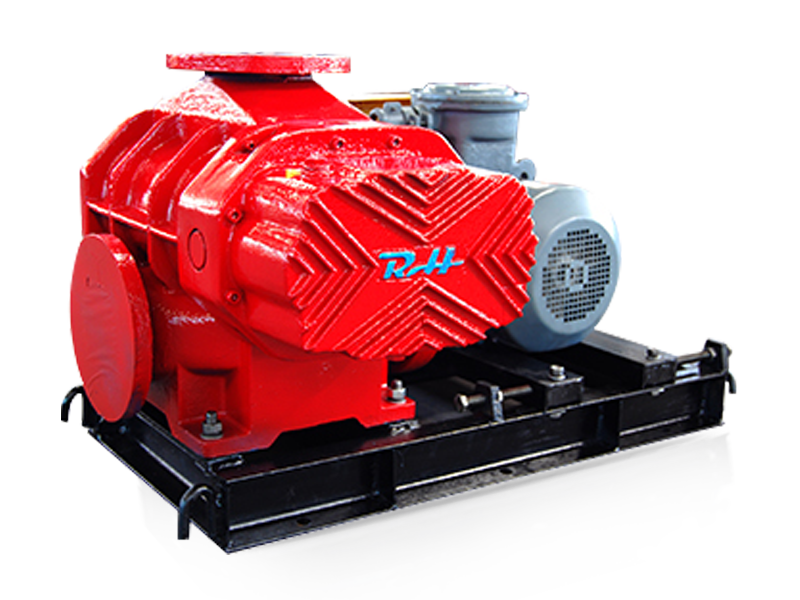
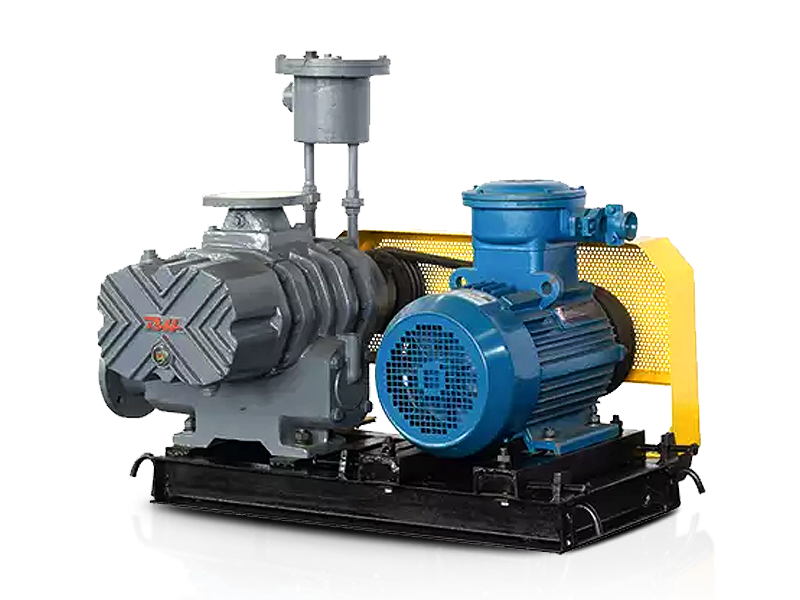
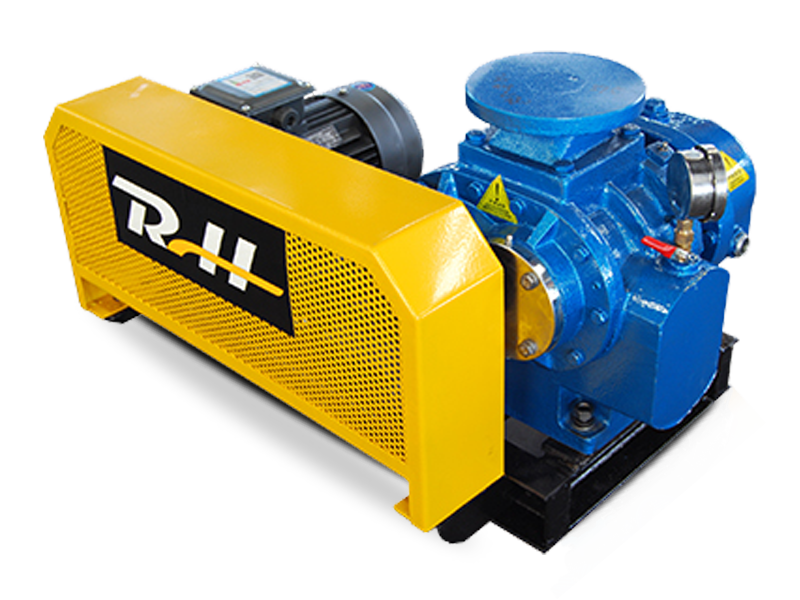
A Roots rotary lobe blower is a positive displacement machine that moves a constant volume of gas per revolution, making it fundamentally a flow device rather than a pressure device. Its defining characteristic is isochoric compression, meaning the pressure increase happens externally in the discharge piping, not inside the blower casing. This core principle dictates its efficiency curve, operational limits, and why it excels in applications requiring oil-free, high-volume, moderate-pressure air.
The Isochoric Compression Principle
Unlike screw or piston compressors that reduce volume internally to raise pressure, the Roots blower traps a fixed pocket of gas between its figure-eight lobes and the casing wall, then pushes this volume directly into the discharge line. Pressure builds only when this transported gas encounters resistance from the downstream system. This results in a direct, linear relationship between speed and flow, but also explains why operating against excessive backpressure causes rapid power consumption spikes and heating if not managed.
Because the lobes never contact each other or the casing, the process remains completely oil-free in the compression chamber. This design eliminates the need for internal lubrication, making these blowers the standard choice for pneumatic conveying of powders, wastewater aeration, and any process where air purity is critical. The physical gap between the rotors, typically maintained by precision timing gears, ranges from 0.1 mm to 0.5 mm depending on the blower size.
Flow and Pressure Operating Limits
Understanding the functional envelope of a Roots blower prevents misapplication. These machines are not designed for high-pressure compression. The standard pressure differential for a single-stage unit typically caps at 1 bar (14.5 psi), with two-stage units reaching approximately 2 bar (29 psi). Attempting to operate beyond these limits forces excessive thermal expansion, which risks lobe-to-casing contact and catastrophic failure.
On the flow side, modern units scale from small laboratory models moving a few cubic meters per hour up to large industrial blowers handling over 90,000 m³/h. The key operating parameter is volumetric efficiency, which decreases as the pressure differential rises due to internal leakage through the lobe clearances, a phenomenon known as slip.
| Operating Parameter | Typical Single-Stage Range | Critical Limiting Factor |
|---|---|---|
| Pressure Rise | 0.1 to 1.0 bar | Thermal expansion of rotors |
| Flow Volume | 10 to 90,000 m³/h | Rotor diameter and speed |
| Volumetric Efficiency | 65% to 85% | Slip at higher delta-p |
Efficiency and Power Consumption Characteristics
Roots blowers exhibit a distinct efficiency profile. The isochoric compression process is inherently less energy-efficient than isothermal compression at higher pressures because the sudden backflow of hot gas into the trapped cold gas pocket creates a thermodynamic mixing loss. Adiabatic efficiencies typically range from 55% to 70%. This makes them most competitive below a pressure ratio of 2.5.
Power consumption is approximately linear with speed, but is highly sensitive to the discharge pressure. A field study in wastewater treatment plants showed that a 10% reduction in system backpressure can yield energy savings of up to 8% on a fixed-speed Roots blower. For this reason, variable frequency drives have become a nearly universal pairing, allowing operators to match flow precisely to demand and avoid bleeding excess air through relief valves, a practice that wastes significant energy.
Noise and Pulsation Management
The discrete transport of gas pockets creates pressure pulsations at the discharge, which generate the characteristic low-frequency noise signature of a Roots blower. The primary noise source is the discharge pulse frequency, calculated as the number of lobes multiplied by the rotational speed. A three-lobe rotor design operating at 3,000 rpm produces a fundamental pulse frequency of 150 Hz, creating a tonal noise that often exceeds 90 dB(A) in untreated installations.
Practical measures to address this include discharge silencers with expansion chambers tuned to the pulse frequency, and tri-lobe or twisted-lobe rotor profiles that reduce the amplitude of the pressure fluctuation compared to straight two-lobe designs. In-duct attenuation of 15 to 25 dB is achievable with a properly sized reactive silencer placed immediately at the discharge flange.
Construction Variants and Material Selection
The standard construction uses grey cast iron for the casing and ductile iron for the rotors, providing good wear resistance for general air and neutral gases. However, for specific process gases, material choice becomes critical and defines the application envelope:
- Stainless steel rotors and internals for corrosive gas streams containing trace H₂S or moisture.
- Ni-resist cast iron for handling low-concentration biogas with high CO₂ content.
- Specialty coatings like PTFE-impregnated anodizing for oxygen service to eliminate combustion risk from particle impingement.
The mechanical seal arrangement on the drive shaft must be selected to match the gas type, with double mechanical seals and a barrier fluid system being mandatory for flammable or toxic gas service to prevent atmospheric leakage.
Direct Comparison with Screw Compressors
A frequent decision point in system design is choosing between a Roots blower and an oil-free screw compressor for flows above 500 m³/h. The operational distinction rests entirely on the required pressure. Below 1.0 bar(g), a Roots blower typically has a lower capital cost and simpler maintenance due to the absence of complex oil cooling and separation systems. Above 1.5 bar(g), a screw compressor's internal compression provides significantly better energy efficiency, often consuming 20% to 30% less power at the same flow and pressure.
| Criterion | Roots Rotary Lobe Blower | Oil-Free Screw Compressor |
|---|---|---|
| Optimal Pressure (bar·g) | 0.2 – 0.8 | 0.7 – 2.5 |
| Compression Type | Isochoric (external) | Isentropic (internal) |
| Specific Power at 0.8 bar(g) | ~6.5 kW/(m³/min) | ~5.8 kW/(m³/min) |
| Maintenance Interval | 12,000 – 15,000 hrs | 8,000 – 12,000 hrs |
Key Installation and Maintenance Factors
Operational reliability for a Roots blower package depends heavily on installation specifics that go beyond the bare machine. Three factors dominate field failure statistics:
- Inlet filtration quality directly affects lobe clearance life. Ingested particulates larger than the nominal clearance embed in the rotor surface and erode the casing. A 5-micron absolute filter is the standard recommendation for continuous industrial duty.
- Oil level and timing gear condition must be checked at the manufacturer-specified interval. Gear tooth wear introduces backlash that allows lobe contact, a failure mode that typically destroys both rotors within seconds.
- Flexible connections at both the inlet and discharge flanges are required to isolate the blower from pipe strain. Misalignment exceeding 0.15 mm at the coupling can transmit vibration that damages the timing gear bearings.
Monitoring the absorbed power trend over time provides the earliest indication of developing mechanical problems, often more reliably than vibration analysis for slow-speed units. A 5% increase in baseline power consumption at constant operating conditions typically warrants an internal inspection.