 86-0513-68903288
 13906298796@139.com
 русский
 Español
 عربى
عربىContent
How a Roots Blower Works: The Core Principle
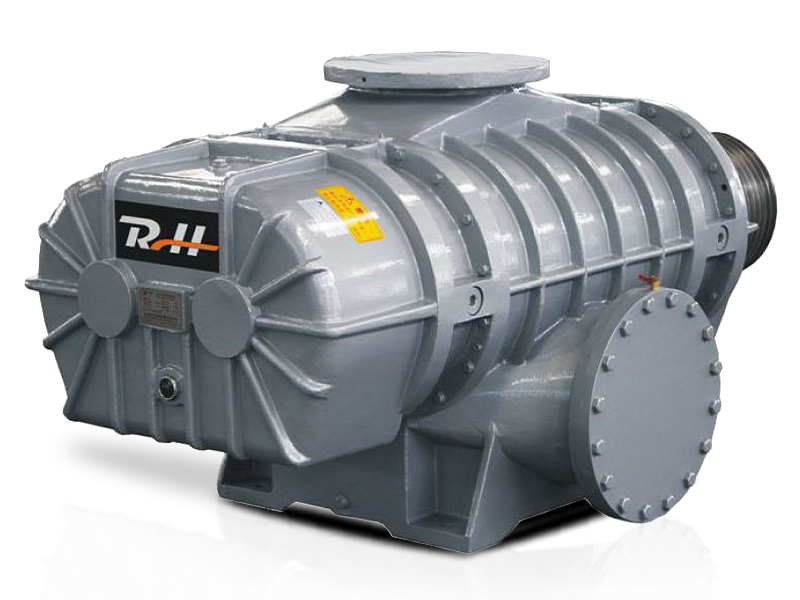
A Roots blower is a positive displacement machine. Two three-lobed rotors spin in opposite directions inside a precisely machined casing — they never touch each other or the housing wall. This non-contact design is what sets it apart: there is no internal compression. Instead, air is trapped between the lobe faces and the casing wall, then carried from the inlet to the discharge port. When the leading lobe tip uncovers the discharge port, the trapped air meets the higher-pressure gas already in the outlet header — and compression happens instantaneously at the port, not inside the chamber.
This external compression mechanism, also called isochoric compression, produces a defining operating characteristic: flow rate stays nearly constant regardless of discharge pressure, as long as conditions remain within design limits. For applications like wastewater aeration or pneumatic conveying, where stable airflow despite fluctuating back pressure is critical, this is a decisive advantage.
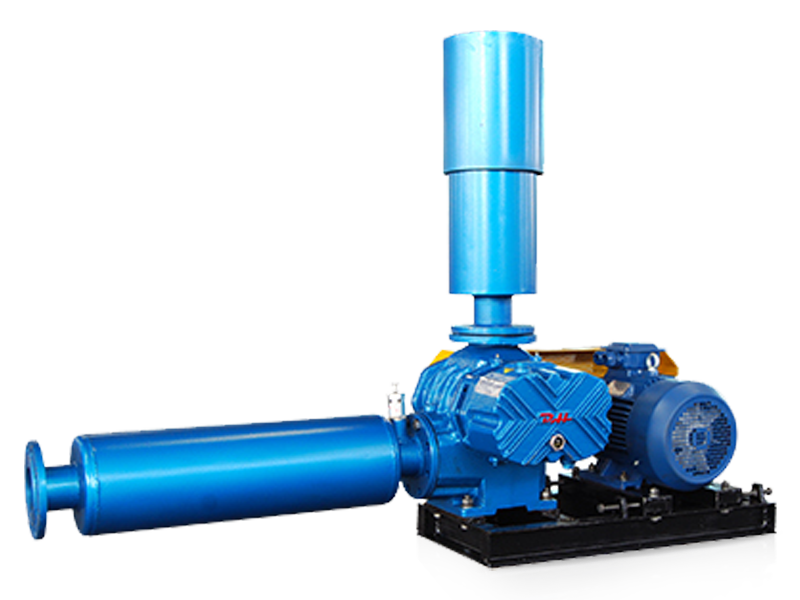
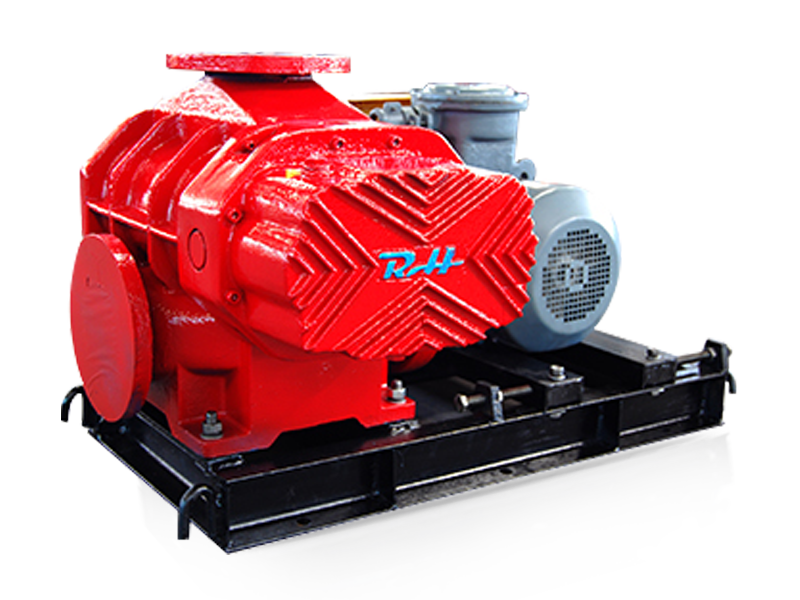
The three-lobed rotor geometry — a key specialty of our Roots blower line — delivers smoother pulsation and reduced noise compared to two-lobe designs, making it the preferred choice across sewage treatment, aquaculture, and industrial aeration systems.
Four Operating Phases at a Glance
| Phase | What Happens | Pressure State |
|---|---|---|
| Intake | Lobes separate at inlet; air drawn into expanding pocket | Near atmospheric |
| Transfer | Inlet sealed; trapped volume carried toward discharge | Unchanged (inlet pressure) |
| Discharge Exposure | Leading lobe tip uncovers outlet; high-pressure backflow enters | Rapid pressure equalization |
| Expulsion | Air pushed out by continuing rotation | Discharge pressure |
Because compression is adiabatic and occurs suddenly, discharge air temperature rises significantly. In high-load continuous operation, proper thermal management — including efficient cooling fins and, where required, external aftercoolers — is essential.
Maintenance: What Matters Most
The simplicity of the Roots blower design means a small set of maintenance tasks, done consistently, accounts for the vast majority of service life outcomes. Neglecting any one of them creates cascading failures.
- Air intake filters — Inspect and replace on a fixed schedule. Particulate ingestion erodes the precision clearances between rotors and casing; once those gaps widen, volumetric efficiency drops and cannot be recovered without reconditioning.
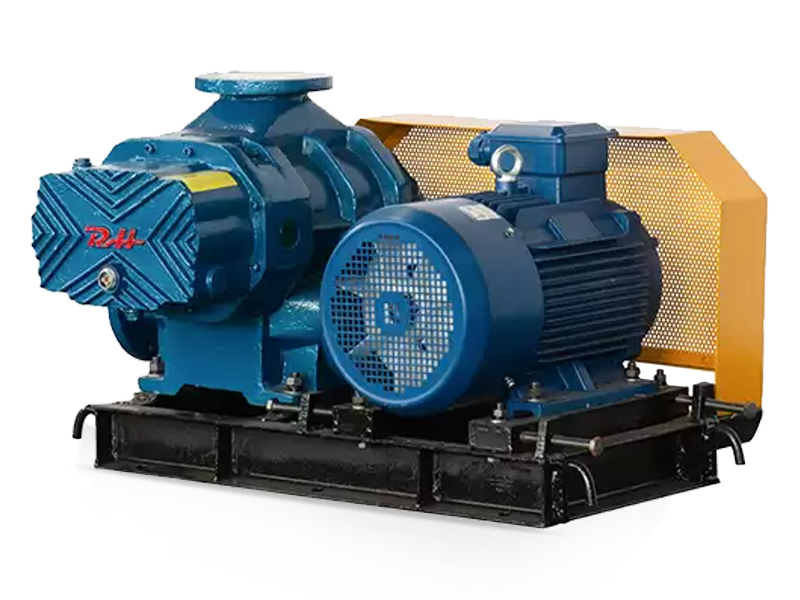
- Timing gear lubrication — The synchronizing gears keep the two rotors in phase without contact. Use the oil grade specified by the manufacturer; mixing synthetic and mineral-base lubricants destroys lubricity and accelerates bearing failure.
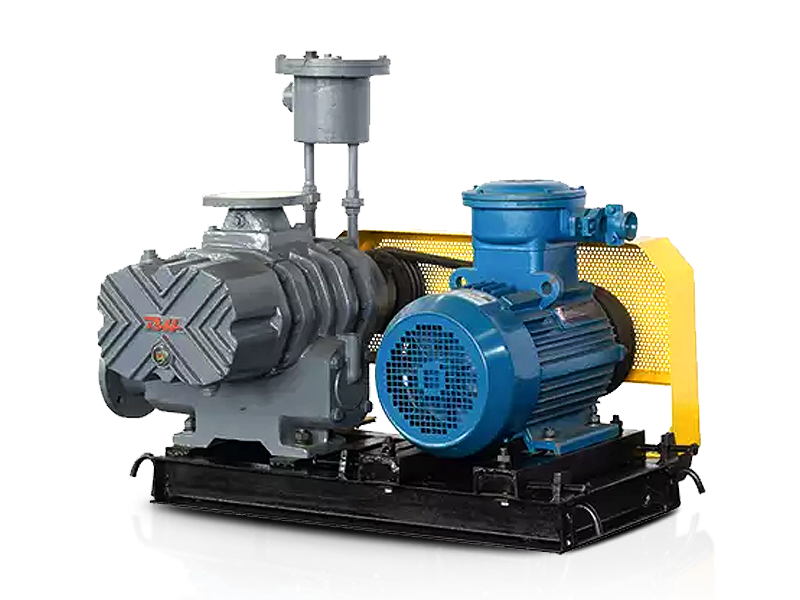
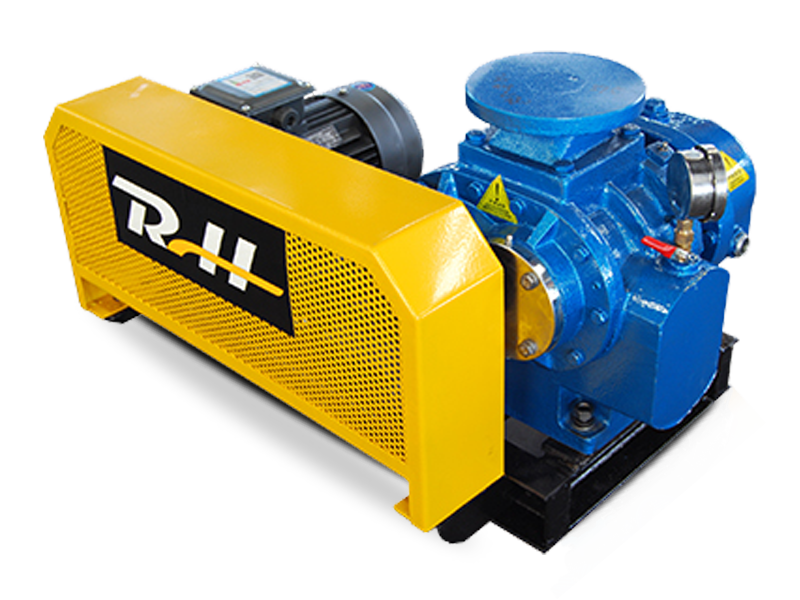
- Belt tension and alignment — On belt-driven units, loose or misaligned belts introduce radial load on the shaft, leading to premature bearing wear and vibration spikes.
- Operating parameter monitoring — Track discharge pressure, current draw, and outlet temperature at every inspection. Abnormal pressure rise, overheating, or unusual noise are early indicators of blocked pipework, bearing deterioration, or valve failure.
- Safety valve condition — The relief valve is the last line of defense against overpressure. Verify its set point periodically; a valve that opens too early starves the system, while one that opens too late allows dangerous pressure to build.
Well-maintained Roots blowers running in clean-air applications routinely deliver decades of service. The blower accessories — filters, safety valves, muffler devices — are as critical to that longevity as the blower body itself.
The Critical Role of Check Valves in System Reliability
A check valve is a one-way gate installed on the discharge line. Its job is deceptively simple: when the blower runs, gas pressure holds the valve disc open and flow passes freely. The moment the blower stops, gas inertia would normally push flow back toward the machine — the valve disc snaps shut and blocks that reverse path.
Without a check valve, backflow hits the impeller like a hammer blow. The sudden reverse impulse causes impact wear on rotors and timing gears, and can drive reverse rotation in the moment before the motor fully stops — stressing shaft seals and bearings. In multi-blower parallel configurations, a tripped unit without a check valve becomes a flow-resistance path that forces gas backward through it from the other running blowers, compounding the damage.
Check valve maintenance is straightforward but non-negotiable:
- Clean the valve body and disc regularly to prevent dust and oil deposits from impeding full closure.
- Inspect the disc-to-seat interface for wear or deformation; a worn seat allows seepage that defeats the protective function.
- Lubricate moving pivot components as specified; a stiff disc delays closure and reduces protection during fast shutdowns.
Modern check valve designs integrate intelligent monitoring — pressure sensors that log closure response time and alert operators when closure speed degrades below threshold, enabling predictive maintenance before failure occurs.
For parallel aeration systems in wastewater treatment, or any installation where multiple rotary blowers share a common header, properly rated check valves are not optional — they are a fundamental system reliability component.
Putting It Together: Reliability by Design
The working principle of a Roots blower is elegant in its simplicity: constant-flow positive displacement through non-contact rotation. That simplicity is both its strength and its contract with the operator. Maintain the clearances (clean filters), protect the gears (correct lubrication), and guard the discharge line (functioning check valve) — and the machine will deliver stable, predictable performance across demanding duty cycles.
Skipping any part of that contract shortens service life rapidly and unpredictably. The engineering investment in a quality blower is only realized when the supporting system — accessories, valves, monitoring — is given equal attention.