 86-0513-68903288
 13906298796@139.com
 русский
 Español
 عربى
عربىContent
Blowers account for 57% of total energy use at a typical wastewater treatment plant — yet most engineers spend less than an hour choosing one. That mismatch is where projects go wrong. Roots blowers are the dominant choice across aeration, pneumatic conveying, and vacuum applications for good reason: they deliver a constant volume of air per revolution, regardless of downstream pressure changes. But "constant volume" covers a wide spectrum of designs, and picking the wrong variant costs you efficiency, reliability, or both.
How a Roots Blower Actually Works
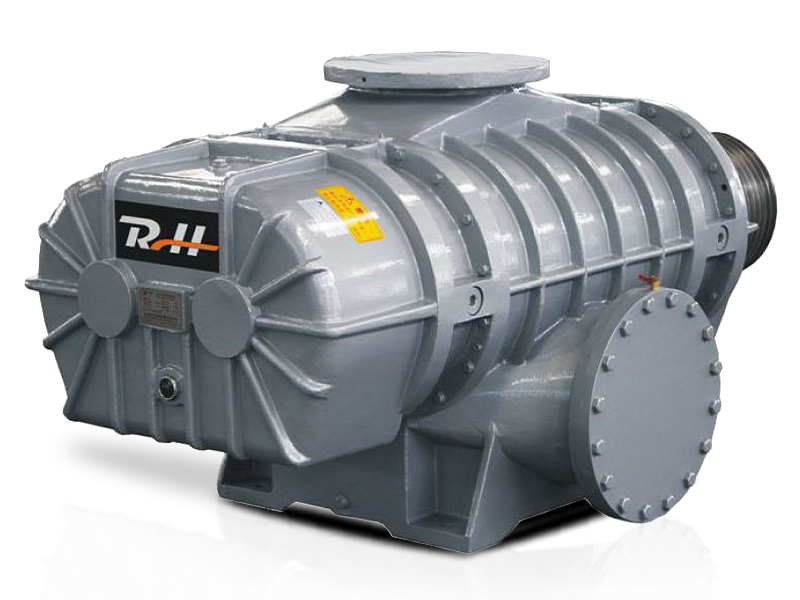
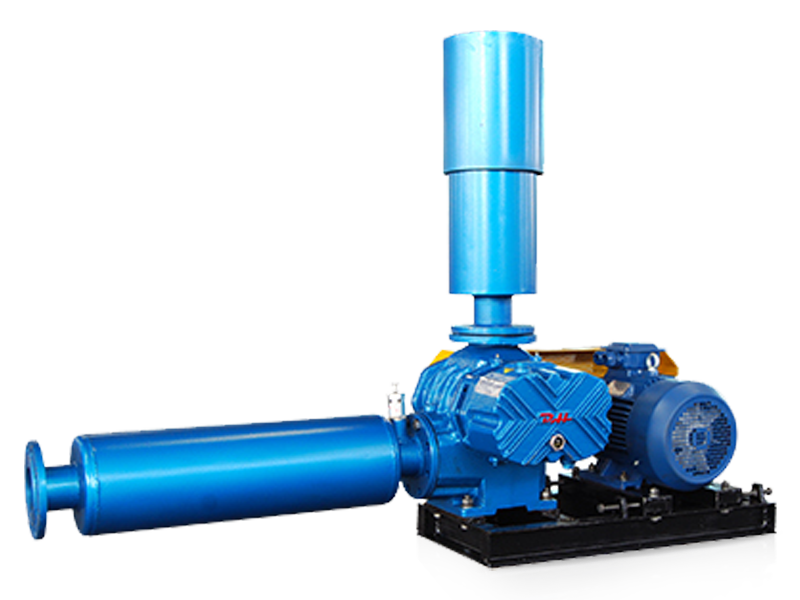
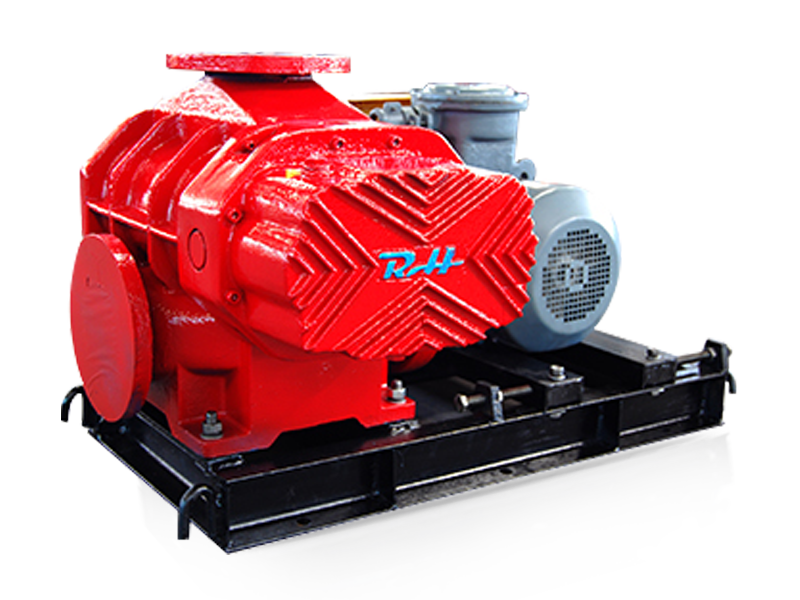
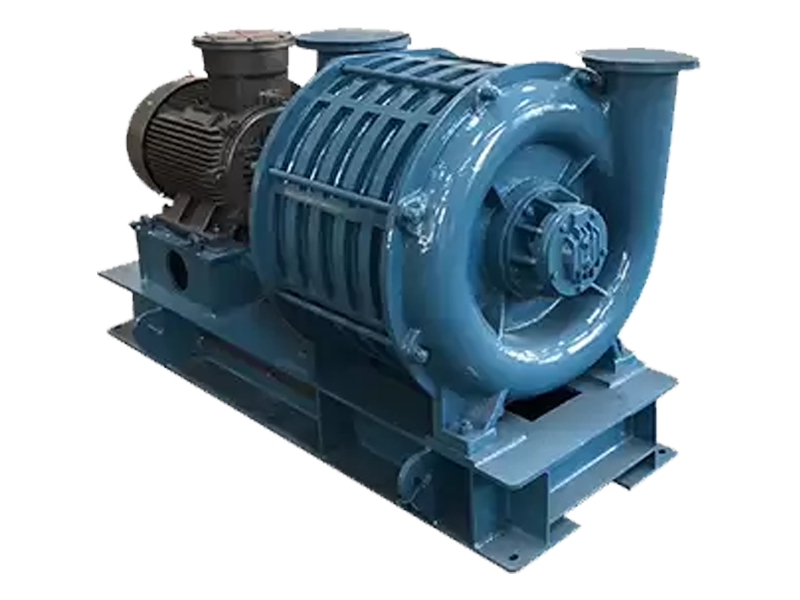
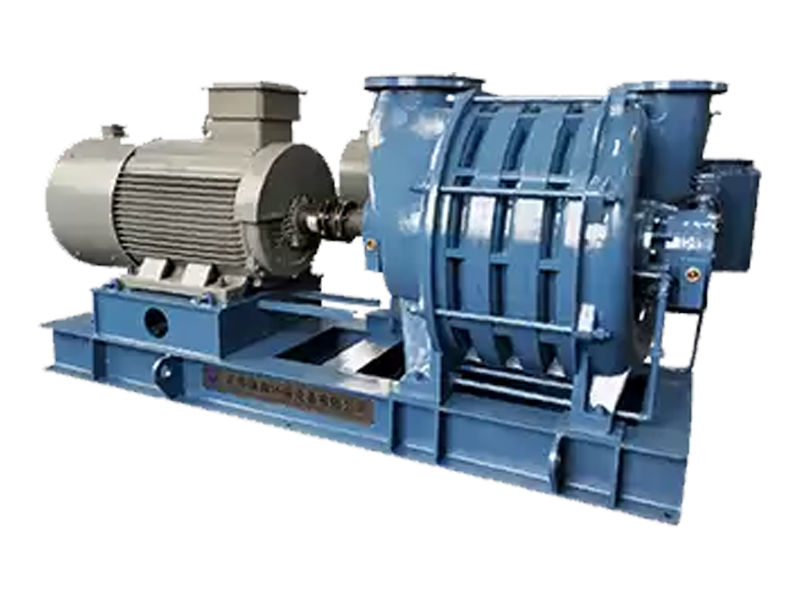
A Roots blower is a positive displacement machine. Two lobed rotors — either two-lobe or three-lobe — spin in opposite directions inside a casing without touching each other or the housing wall. Air is trapped between the lobes and the casing wall, then pushed toward the discharge port against system pressure. No internal compression occurs; pressure builds only at the outlet. This makes the machine mechanically simple, oil-free in the airstream, and highly tolerant of load fluctuations.
Three-lobe rotors are now the industry standard. Compared to two-lobe designs, they reduce pressure pulsation and lower noise output — a meaningful advantage in noise-sensitive installations or facilities running multiple units in parallel.
The Main Variants and What Separates Them
Standard Roots blowers cover a wide operating envelope, but specialized applications call for specific designs. The table below maps the key variants to their defining specs:
| Variant | Flow Rate | Pressure Range | Best For |
|---|---|---|---|
| Wastewater Treatment Roots Blower | 0.6 – 713.8 m³/min | 9.8 – 98 kPa | Aeration basins, activated sludge |
| Pneumatic Conveying Roots Blower | 0.6 – 713.8 m³/min | 9.8 – 98 kPa | Powder, granule & bulk transport |
| Two-Stage Series Roots Blower | 0.6 – 120 m³/min | 58.8 – 200 kPa | High-pressure processes, deep aeration |
| High-Temp & High-Pressure Roots Blower | 0.6 – 713.8 m³/min | Up to 1.2 MPa | Chemical plants, kilns up to 500 °C |
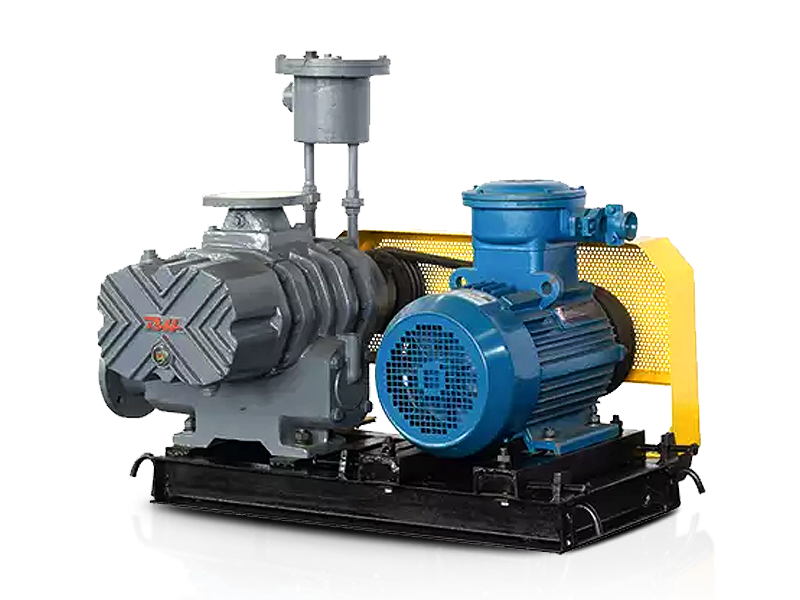
| Explosion-Proof Roots Blower | 0.6 – 713.8 m³/min | 9.8 – 98 kPa | Flammable gas environments (EX DⅡ BT4/CT4) |
| Submersible Roots Blower | 0.6 – 120 m³/min | 9.8 – 98 kPa | Aquaculture, submerged aeration, zero surface noise |
The operating speed range across most models is 500–2,000 RPM, giving system designers considerable flexibility when matching a blower to motor options or VFD control strategies.
Where Roots Blowers Deliver the Most Value
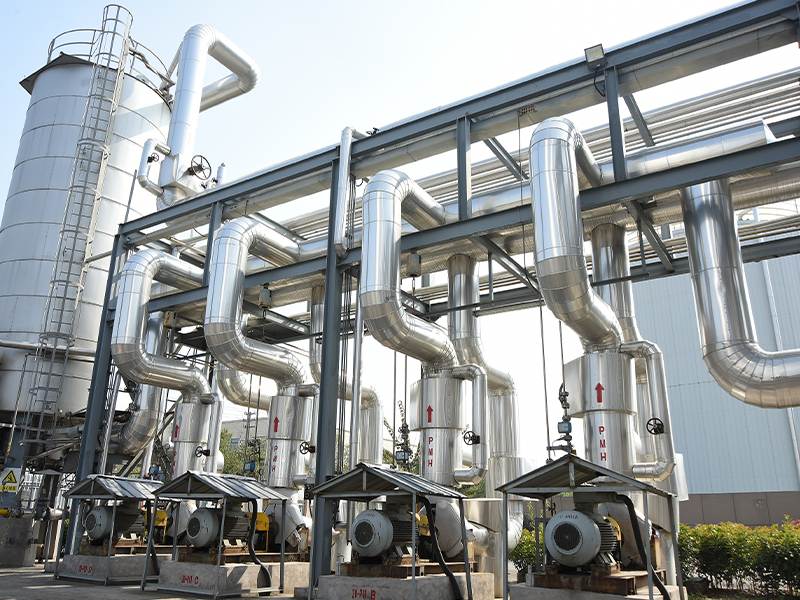
Wastewater treatment is the largest application by volume. Aeration blowers supply oxygen to aerobic bacteria in activated sludge tanks — a continuous, 24/7 load. According to U.S. EPA energy efficiency research for water and wastewater facilities, one facility that upgraded to energy-efficient blowers cut electricity consumption by 50%, saving over 2.1 million kWh per year. Proper blower selection is rarely just a procurement decision — it's an energy strategy.
Pneumatic conveying is the second major application. Cement plants, flour mills, plastics manufacturers, and chemical processors all rely on Roots blowers to push bulk materials through pipelines. The constant-volume characteristic keeps material flowing steadily even when pipeline resistance changes — a property centrifugal blowers cannot guarantee at low flow.
Aquaculture has seen strong growth in submersible Roots blower adoption. Installing the unit below the waterline eliminates surface noise entirely, which matters in residential-adjacent pond farms and indoor recirculating systems. Dissolved oxygen delivery is also more uniform compared to surface aerators.
Other major sectors include paper and pulp (vacuum suction on paper machines), chemical processing (vapor recovery, gas boosting), and mining (underground ventilation and flotation aeration).
Four Parameters That Drive the Right Selection
Selecting a Roots blower starts with four hard numbers — everything else is secondary:
- Required flow rate (m³/min or CFM): Always specify at actual inlet conditions — temperature and altitude affect density. For aeration, calculate based on biological oxygen demand, not pipe size.
- Required pressure rise (kPa): This is total system resistance, including submersion depth, pipe losses, and diffuser back-pressure. Standard models handle 9.8–98 kPa; two-stage units extend to 200 kPa.
- Gas composition: Corrosive gases need anti-corrosion materials; flammable gases require explosion-proof motor ratings (EX DⅡ BT4 or CT4); steam-laden environments point toward the stainless steel MVR variant.
- Temperature: Standard units handle up to 90 °C before water-cooling is required. If process temperatures exceed that threshold, specify the high-temperature model rated to 500 °C.
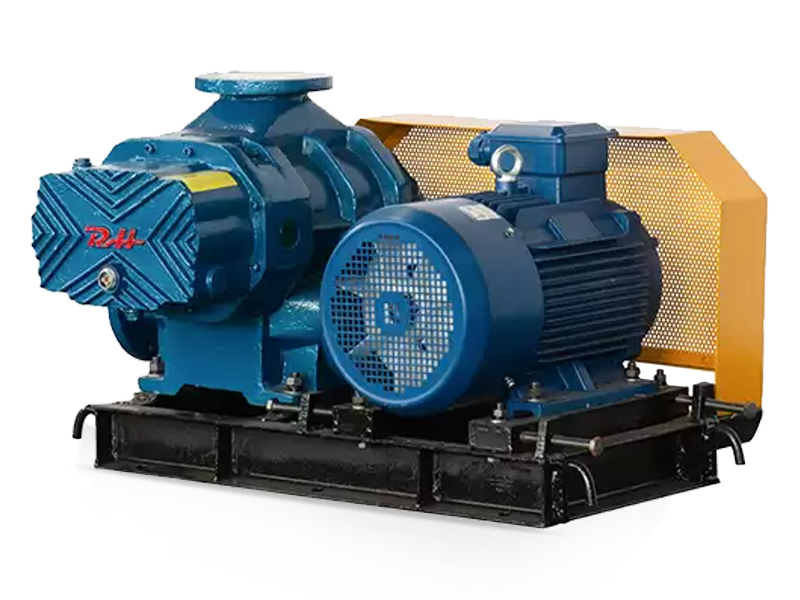
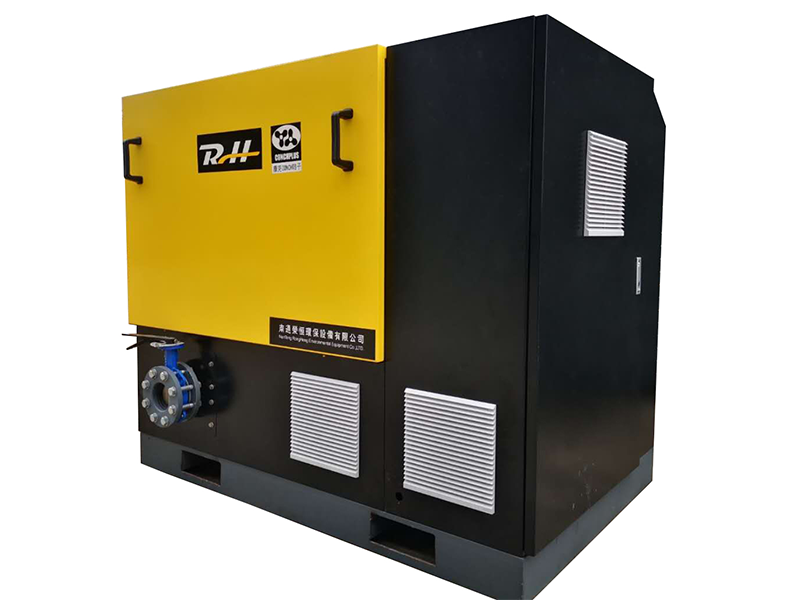
A packaged Roots blower unit with integrated control cabinet simplifies procurement for standard applications — these come pre-wired at 380V with noise levels under 77 dB at 1 m, making them deployable without additional acoustic enclosures in most industrial settings.
Keeping a Roots Blower Running for 15–20 Years
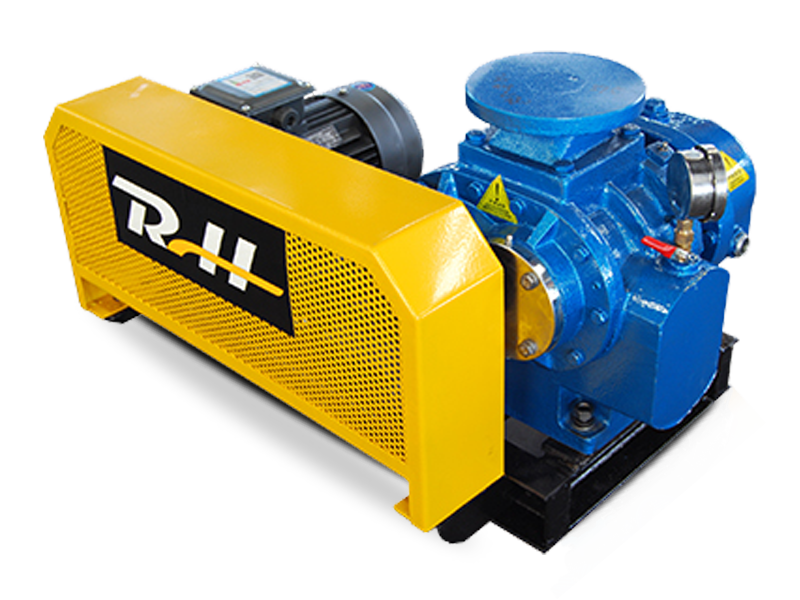
A well-maintained Roots blower has a realistic service life of 15–20 years. The maintenance workload is low by industrial standards, but a few practices are non-negotiable. Change the gear oil every 2,000–4,000 operating hours depending on duty cycle and ambient conditions. Inspect inlet filters monthly — a partially blocked filter raises inlet vacuum, increases slip across the lobes, and cuts volumetric efficiency faster than most operators realize. Check belt tension (on belt-driven units) every 500 hours. And never start a Roots blower against a closed discharge valve; the instantaneous pressure spike can crack the casing or strip the timing gears.
For facilities running multiple units, a control cabinet and monitoring system for blower packages enables automatic duty/standby switching and alarm-based shutdowns — the single most effective way to extend equipment life in continuous-operation environments.
Roots blowers are not the newest technology, but they remain one of the most practical. The combination of oil-free airflow, predictable output, and low maintenance overhead is hard to replicate at the same price point — which is why they are still specified for the most demanding continuous-duty applications in industrial processing.