 86-0513-68903288
 13906298796@139.com
 русский
 Español
 عربى
عربىContent
Roots rotary lobe blowers have been moving air and industrial gases for well over a century, and they still form the backbone of many wastewater treatment plants, pneumatic conveying lines, and vacuum systems. Their staying power comes from a straightforward design: two synchronized rotors trap a fixed volume of air and push it from inlet to discharge without relying on internal compression. For engineers who need predictable airflow at low to moderate pressure, few machines are simpler to specify, operate, and maintain.
This guide covers how Roots rotary lobe blowers work, where they are used, and the practical points to check before buying one.
How a Roots Rotary Lobe Blower Works
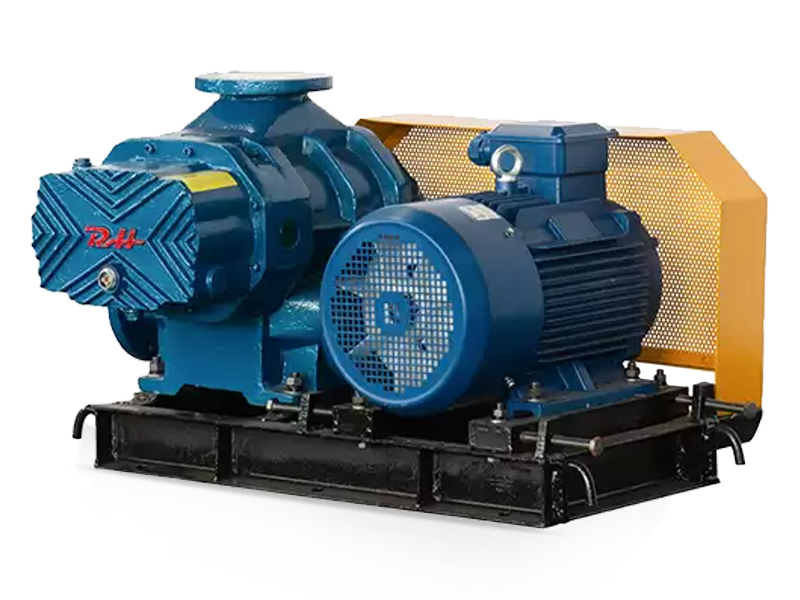
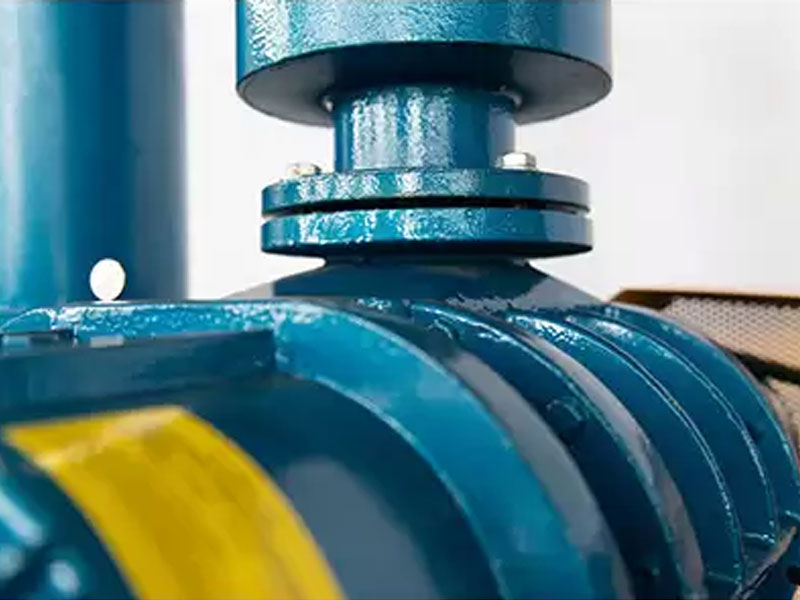
Inside the blower casing, two rotors with a three-lobe profile rotate in opposite directions. Timing gears at one end keep the rotors synchronized so they never contact each other or the housing. The clearance between the rotor tips and the casing is measured in tenths of a millimetre, which is what gives the blower its sealing ability while keeping the rotating parts free of wear.
As each rotor lobe uncovers the inlet port, it traps a pocket of air. The pocket travels around the casing wall and reaches the discharge port, where it is pushed out against the system backpressure. Because every revolution displaces the same volume, a lobe blower delivers near-constant flow over a wide pressure range. That flat flow characteristic is the main reason engineers choose it over centrifugal alternatives when the process needs stable air volume regardless of pressure fluctuation.
Three features explain the machine's reputation for reliability:
- No metal-to-metal contact inside the compression chamber; the only wearing parts are bearings, timing gears, and shaft seals.
- Moderate operating speeds, typically below 3,600 rpm, keep vibration low and extend component life.
- Air cooling is standard on most models, so no cooling water piping is needed for normal duties.
If you want a deeper look at rotor timing, clearances, and performance curves, see our technical article on how Roots rotary lobe blowers achieve their performance characteristics.
Where Roots Rotary Lobe Blowers Are Used
Roots blowers earn their operating cost in applications that need a steady supply of low-pressure air or vacuum. Four industries account for most installations.
Wastewater Treatment and Aeration
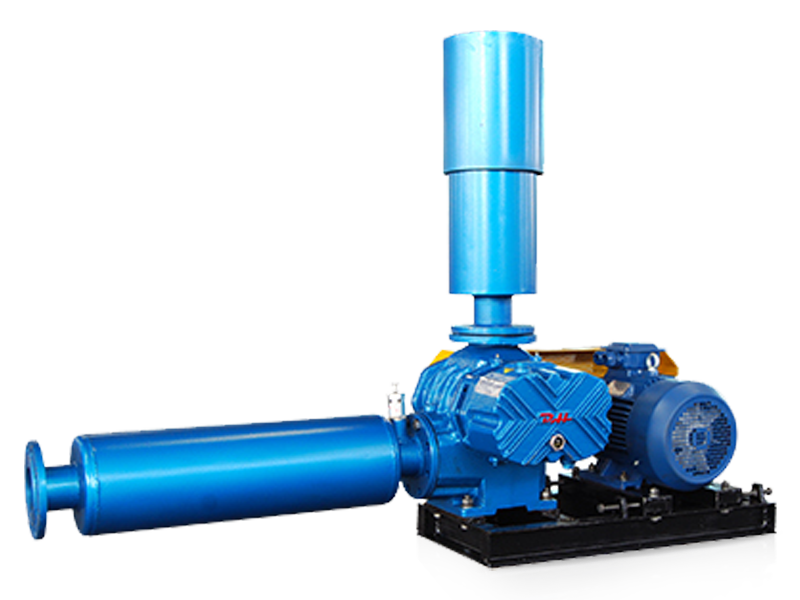
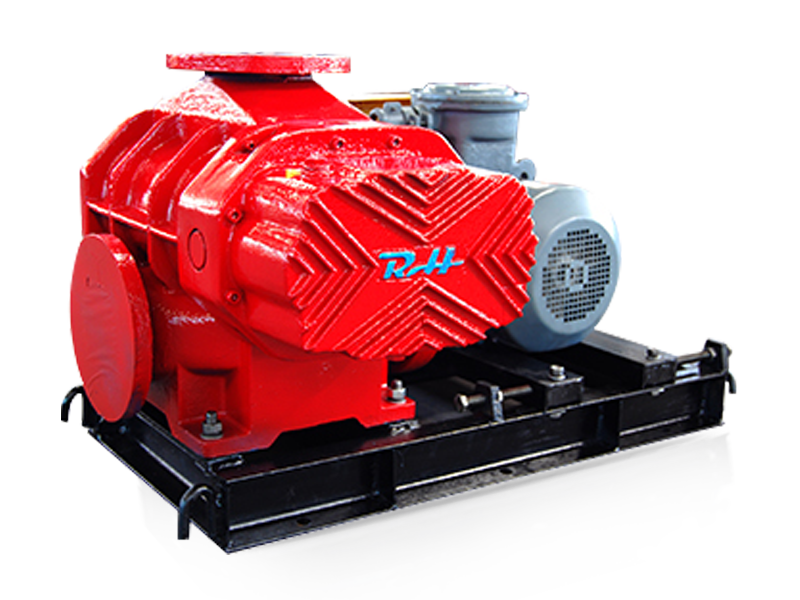
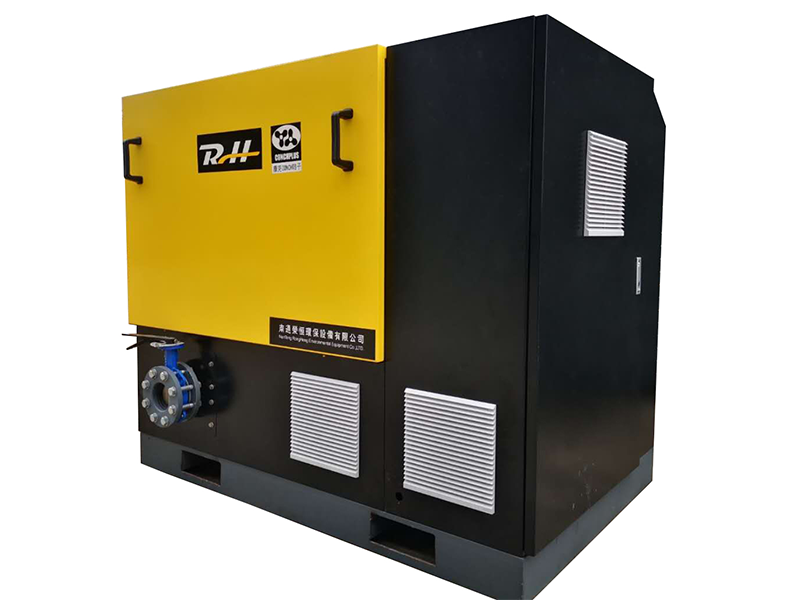
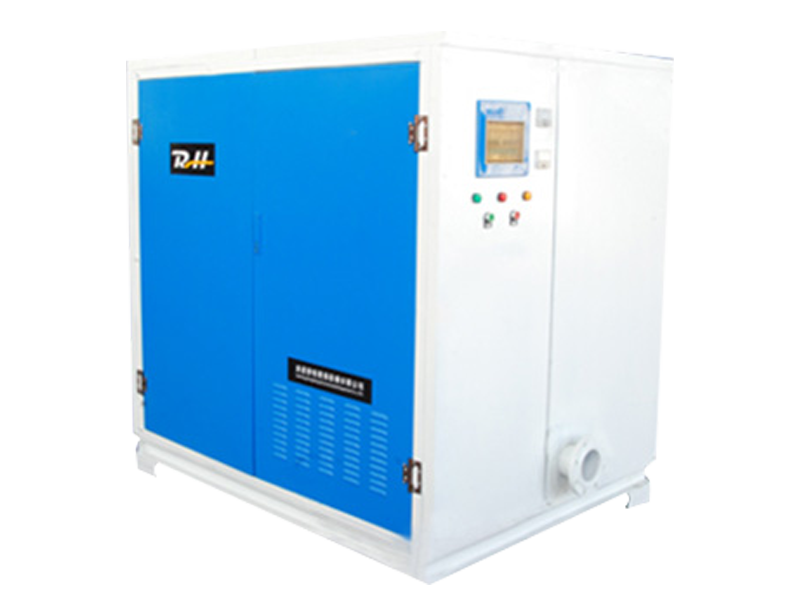
Biological treatment depends on a continuous oxygen supply. Aeration basins need reliable low-pressure air at 30 to 80 kPa, and lobe blowers deliver that without surging or stalling when basin levels fluctuate. Many municipal and industrial plants run three-lobe blowers 24 hours a day, often in duty-and-standby arrangements. For sites that prefer a ready-to-run package, a wastewater treatment roots blower with integrated silencers and a control cabinet shortens installation time.
 Waste Water Treatment Roots Blower Suppliers, Company - Nantong Rongheng EnvironNantong Rongheng - China Wholesale Waste Water Treatment Roots Blowers Suppliers and Company,Waste Water Treatment Roots Blower Design An...View Product →
Pneumatic Conveying
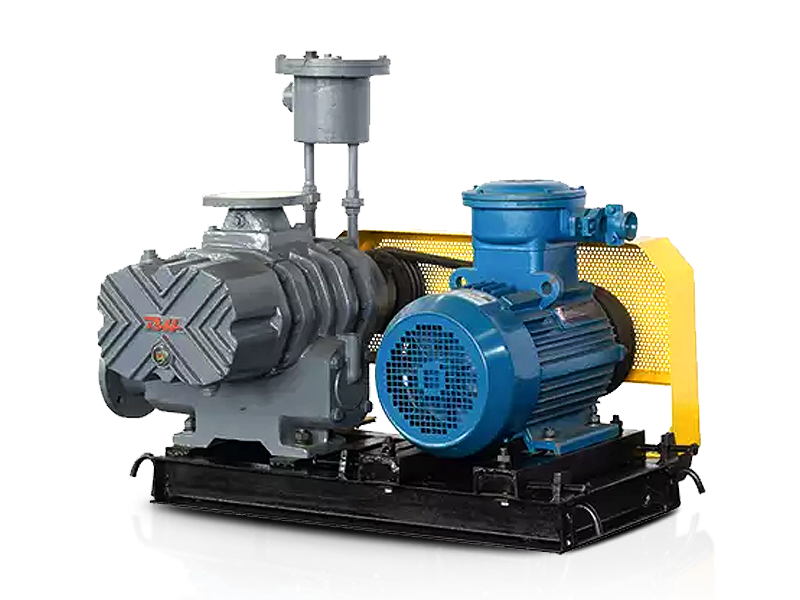
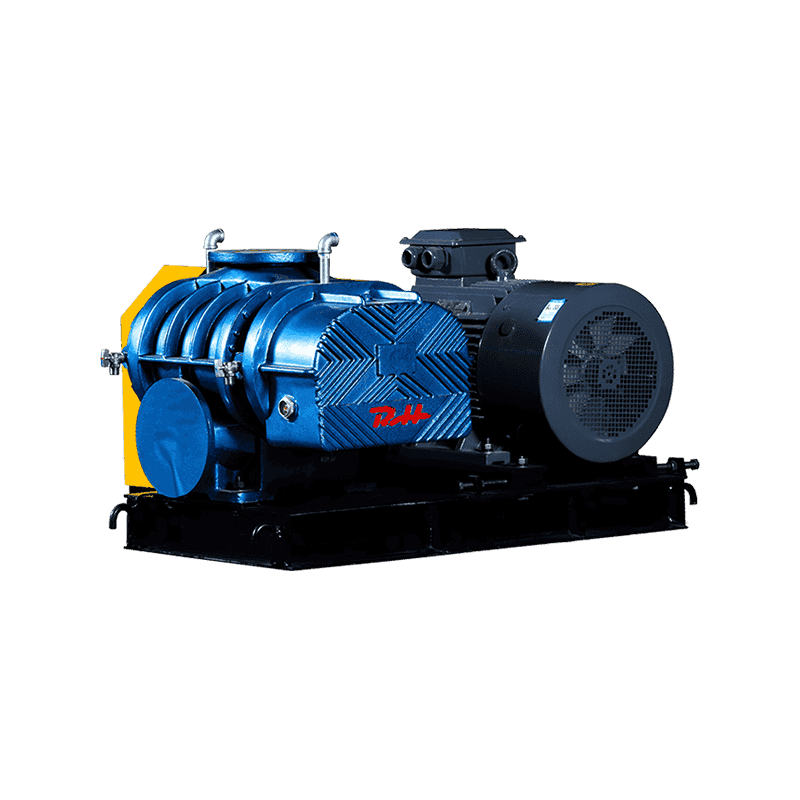
In cement, flour, plastics, and chemical processing, bulk materials move through pipelines using low-pressure air. A lobe blower provides the conveying air at 40 to 100 kPa, with a flow rate matched to line diameter and material density. The constant-volume characteristic prevents the pressure swings that can block lean-phase conveying lines. A purpose-built pneumatic conveying roots blower is usually specified with a relief valve and inlet filter to protect the line from overpressure and dust ingress.
 Pneumatic Conveying Roots Blower Suppliers, Company - Nantong Rongheng EnvironmeNantong Rongheng - China Wholesale Pneumatic Conveying Roots Blowers Suppliers and Company,Pneumatic Conveying Roots Blower Design And Ma...View Product →
Vacuum Applications
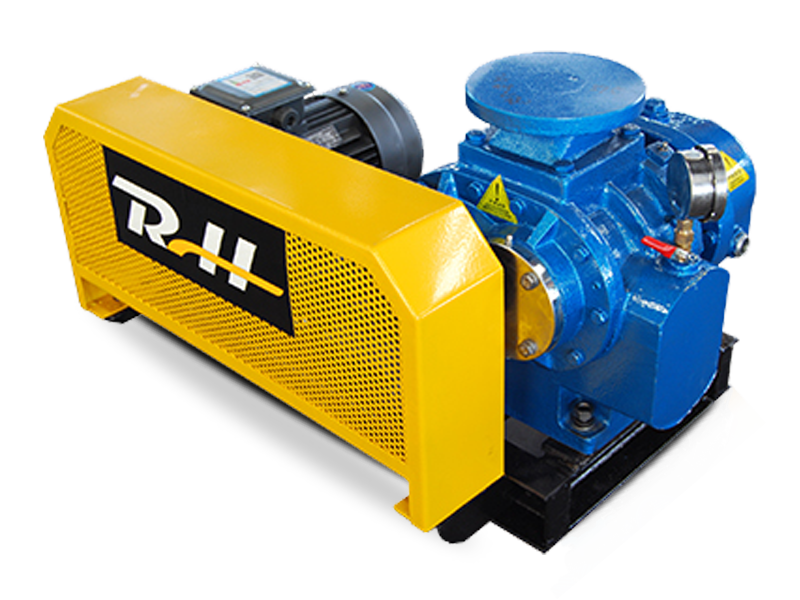
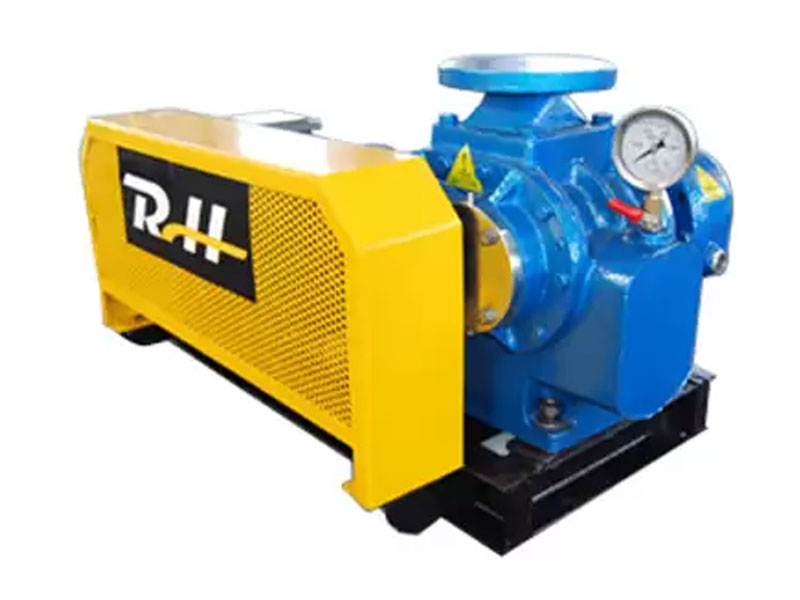
The same rotating lobe principle works in reverse. When the discharge is throttled and the inlet is connected to a process chamber, the blower acts as a vacuum pump capable of reaching 20 to 60 kPa absolute pressure. Common duty points include paper machine dewatering, filter cake drying, and central vacuum systems. A three-lobe Roots vacuum pump unit can be paired with a water ring pump to extend the working vacuum range for more demanding processes.
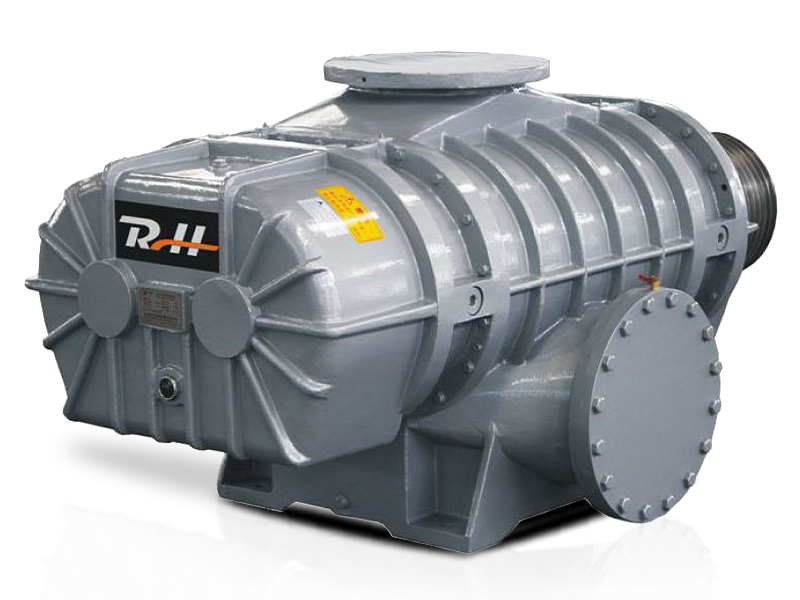 Roots Vacuum Pump Suppliers, Company - Nantong Rongheng Environmental Equipment Nantong Rongheng - China Wholesale Roots Vacuum Pump Suppliers and Company,Roots Vacuum Pump Design And Manufacturing, Flow Rate 0.6 ~ 71...View Product →
Other Common Duties
Aquaculture pond aeration, cement tanker unloading, glass bottle drying, and soil vapour extraction all use lobe blowers in similar ways. The common thread is that the process needs steady air volume at modest pressure, with minimal attention between service intervals.
How to Select a Roots Rotary Lobe Blower
Selection starts with defining the operating point, not with picking a model. Before requesting a quotation, collect the numbers below.
| Parameter | What to verify |
|---|---|
| Required flow | Normal volume in cubic metres per minute at inlet temperature and pressure |
| Discharge pressure | Absolute or gauge pressure including all piping, filter, and valve losses |
| Suction conditions | Air temperature, humidity, altitude, and any corrosive or explosive gas content |
| Installation site | Indoor or outdoor, ambient temperature range, cooling air availability |
| Power supply | Voltage, frequency, motor rating, and starting method |
| Noise budget | Maximum allowable sound level at 1 metre, and whether an acoustic enclosure is required |
Sizing errors usually come from underestimating pressure loss. Intake filters, silencers, pipe bends, and check valves each add resistance, and a blower selected on theoretical pressure alone will underdeliver once the system is running. Add a 5 to 10 percent margin on pressure, and confirm the required flow at the actual site altitude.
Material and Environmental Compatibility
Standard cast-iron blowers handle clean, dry air well. But if the site is coastal, the gas contains hydrogen sulfide, or the process involves intermittent moisture, upgrade to a corrosion-resistant rotor coating and stainless steel shafts. Explosion-proof motors and certified seals become mandatory in hazardous areas. In hot climates, high ambient temperature reduces air density and therefore mass flow, so the volumetric flow rating must be corrected accordingly.
Drive and Control Options
Direct-coupled units are common above 30 kW, while belt-driven units offer easier speed adjustment. Variable frequency drives allow flow turndown, but the blower's minimum speed is limited by lubrication and rotor dynamics, so confirm the speed range with the manufacturer before specifying VFD control.
Specialized Configurations for Difficult Duties
Standard blowers serve most applications, but several operating environments call for dedicated variants. An explosion-proof blower uses a flameproof motor, reinforced casing, and spark-resistant internals for use near flammable gases or dust. An anti-corrosion blower applies protective coatings and stainless steel components for chemical plants and coastal sites. High-temperature and high-pressure units handle discharge temperatures above 150 °C, while submersible blowers are designed for flooded installations. If you need more pressure than a single stage can deliver, two-stage series blowers can roughly double the achievable differential pressure.
Each variant changes the bill of materials but follows the same three-lobe operating principle, so maintenance knowledge transfers across models.
Keeping Roots Rotary Lobe Blowers Reliable
Lobe blowers are forgiving machines, but they are not maintenance-free. Most unplanned downtime traces back to a few avoidable causes:
- Clogged inlet filters, which reduce flow and increase vacuum on the inlet side.
- Worn or loose drive belts, which change rotor speed and reduce delivered volume.
- Incorrect gear oil level or the wrong oil grade, which accelerates timing gear wear.
- Over-tensioned belts causing lateral loads on the bearing housing.
A simple monthly checklist covers the essentials: inspect and clean the inlet filter, check belt tension and alignment, verify oil level and colour, and listen for abnormal noise. An annual service should include:
- Changing the gear oil and inspecting oil seals.
- Inspecting bearings and checking timing gear backlash.
- Measuring rotor tip clearance and evaluating housing wear.
- Checking shaft seal condition and drive alignment.
Roots rotary lobe blowers continue to be the first choice for steady, low-pressure air and vacuum duties because they combine simple mechanics with predictable performance. The selection process becomes manageable when you define the actual flow, pressure, and site conditions, then choose a blower with the right materials and accessories for the environment. Manufacturers with decades of application experience, like Rongheng's engineering and service team, can help you translate those conditions into a reliable blower package that keeps process downtime to a minimum.