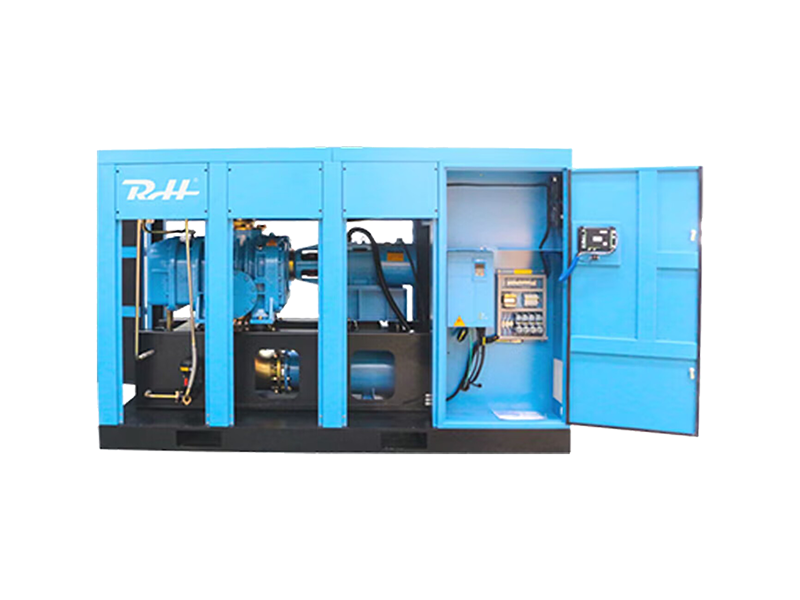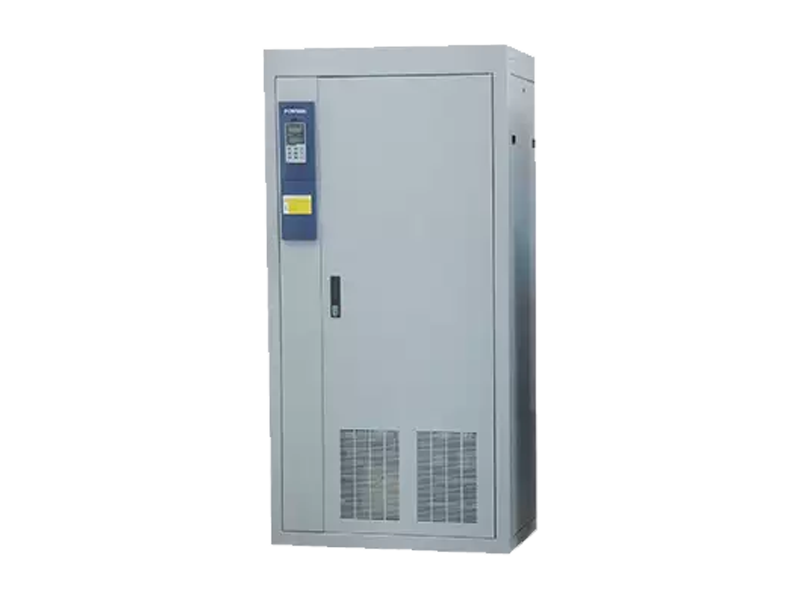
 86-0513-68903288
 13906298796@139.com

 русский
 Español
 عربى
Content
- 1 What an Industrial Air Knife Blower Actually Does
- 2 Pressure and Flow: The Two Numbers That Set the Blower
- 3 Matching the Blower to How the Slot Behaves
- 4 Sound, Heat, and the Details That Bite at Commissioning
- 5 From Slot Gap to Motor kW: A Practical Sizing Sequence
- 6 When the Air Has to Be Oil-Free
- 7 Questions Buyers Ask Before Signing
On a bottling line running 12,000 bottles an hour, a 1.2 m air knife gets roughly 40 milliseconds to strip water from each bottle shoulder. The blower behind it never gets that pause: it has to hold a stable sheet of air at the slot for the whole shift, and a 3 kPa drop when a second knife cuts in is often enough to send wet cartons to the palletiser.
Blow-off systems are usually bought as a nozzle, with the blower treated as an accessory bolted on at the end. It works the other way round. The nozzle decides where the air goes; the blower decides how much of it arrives, how loud the line runs, and what the drying step costs in electricity over ten years.
On a continuous blow-off line, the blower usually carries 60 to 80 percent of the running cost. The nozzle only decides how that air is spent.
What an Industrial Air Knife Blower Actually Does
An industrial air knife blower is a high-volume, low-to-medium pressure air source that pressurises the plenum behind a slotted nozzle and forces a thin sheet of air through a narrow gap at high velocity.
Only part of that sheet comes from the blower. A properly formed knife entrains room air into the jet, which is why 300 to 400 m3/h of primary air can dry a web more than a metre wide. What the blower has to guarantee is stability: the same pressure at the plenum from the first product of the shift to the last.
Below roughly 10 kPa the sheet starts behaving like a curtain and deflects under cross-drafts from conveyor fans, open doors, or adjacent lines. Above 60 to 70 kPa, noise and power climb faster than drying performance, and the jet begins to bend light film instead of drying it.
Pressure tells you whether the sheet will survive the plant. Flow tells you whether it is wide and fast enough. Both come from the blower, not from the nozzle profile.
Pressure and Flow: The Two Numbers That Set the Blower
Sizing always starts from two figures: the volumetric flow the slot needs, and the static pressure required at the plenum to push that flow through the knife, the ducting, and the filter.
Q = gap (m) x length (m) x target velocity (m/s) x 3600 x 0.6, where 0.6 is a reasonable discharge coefficient for a machined slot.
Take a 1.2 m knife with a 1.5 mm gap targeting 70 m/s. The formula gives about 270 m3/h. Add 25 percent for filter loading and duct losses and the blower duty becomes roughly 340 m3/h at 30 to 35 kPa. At about 65 percent overall efficiency that is close to 5 kW at the shaft, which makes a 5.5 kW motor marginal and a 7.5 kW motor the safer build.
| Blower type | Pressure band | Air path | Outlet noise | Best fit |
| Rotary lobe (roots) | 20 - 100 kPa | Oil-free | 85 - 110 dB(A) | Dirty plant air, fouling slots, drifting pressure |
| Multistage centrifugal | 10 - 60 kPa | Oil-free | 80 - 95 dB(A) | High flow, clean air, medium pressure |
| Oil-free screw | 50 - 150 kPa | Oil-free | 75 - 90 dB(A) | Continuous duty at higher pressure |
| Air suspension turbo | 30 - 100 kPa | Oil-free | 70 - 85 dB(A) | Wide turndown, small footprint, stable duty point |
| Regenerative (side channel) | 5 - 30 kPa | Oil-free | 70 - 85 dB(A) | Single small knives, intermittent shifts |
Flow is never free. Every extra 5 kPa of plenum pressure is paid for at the motor, and most plants only notice it on the second electricity bill.
Matching the Blower to How the Slot Behaves
Choose the machine by how the nozzle behaves over a shift rather than by the best efficiency point in a brochure; a slot that slowly plugs with lint or starch raises back pressure, and only a positive displacement design holds flow as that pressure climbs.
- Flow stays close to constant as pressure rises
- Tolerates a partly blocked slot without losing velocity
- Needs a discharge silencer and usually an acoustic enclosure
- Flow tracks speed, so VFD control is simple and predictable
- Flow falls as system pressure rises
- Quieter and smaller at the same duty
- Very efficient when the duty point stays fixed
- Less forgiving of filter loading and slot wear
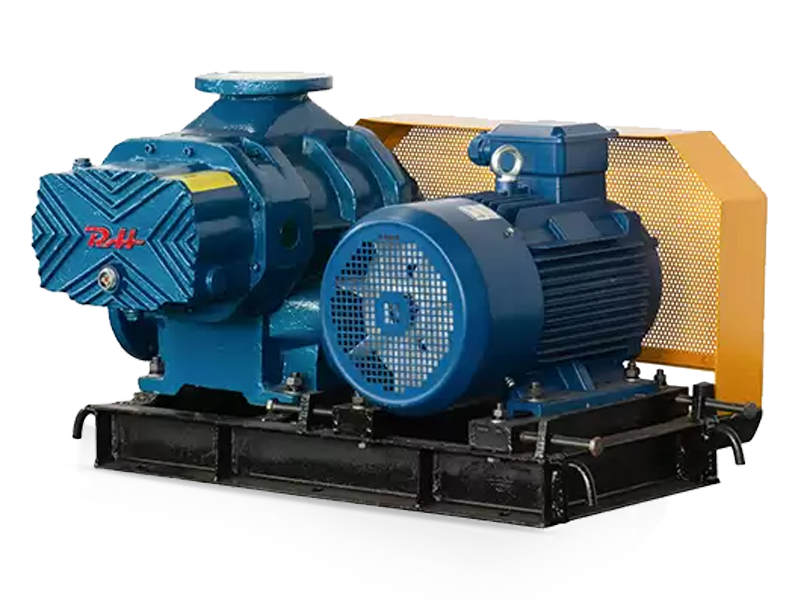
For multi-knife lines, where operators want one skid, one control cabinet, and one point of responsibility at handover, a packaged rotary lobe unit is usually the fastest build to commission and the easiest to keep on duty.
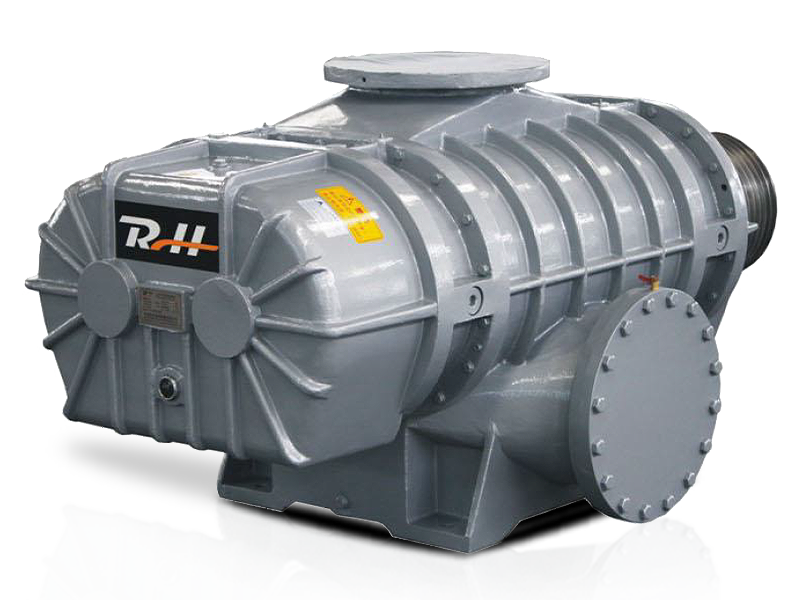
 R-BOX Packaged Roots Blower With Remote Control CabinetPackaged rotary lobe blower with detachable control cabinet for monitoring pressure rise, vibration, flow and temperature; suits multi-knife lines needing one skid and control point.View Product →
If the slot condition drifts, buy pressure stability. If the duty point is fixed and the air is clean, buy efficiency.
Sound, Heat, and the Details That Bite at Commissioning
Most first-month complaints on air knife systems are not sizing errors but installation details: an undersized silencer, a starved inlet filter, or a slot set 0.3 mm wider than the blower was sized for.
- Measure the real slot gap with a feeler gauge after the first production shift, not before it.
- Check inlet filter differential pressure; anything above roughly 500 Pa means the blower is pulling against a restriction it was never sized for.
- Confirm the relief valve setting and pipe the discharge away from operator areas.
- Take a sound reading at one metre and at the operator position, with silencer fitted, before signing the handover sheet.
- Log discharge temperature at steady state; a rotary lobe unit at a high pressure ratio runs hot, and food lines often need the duct routed away from product.
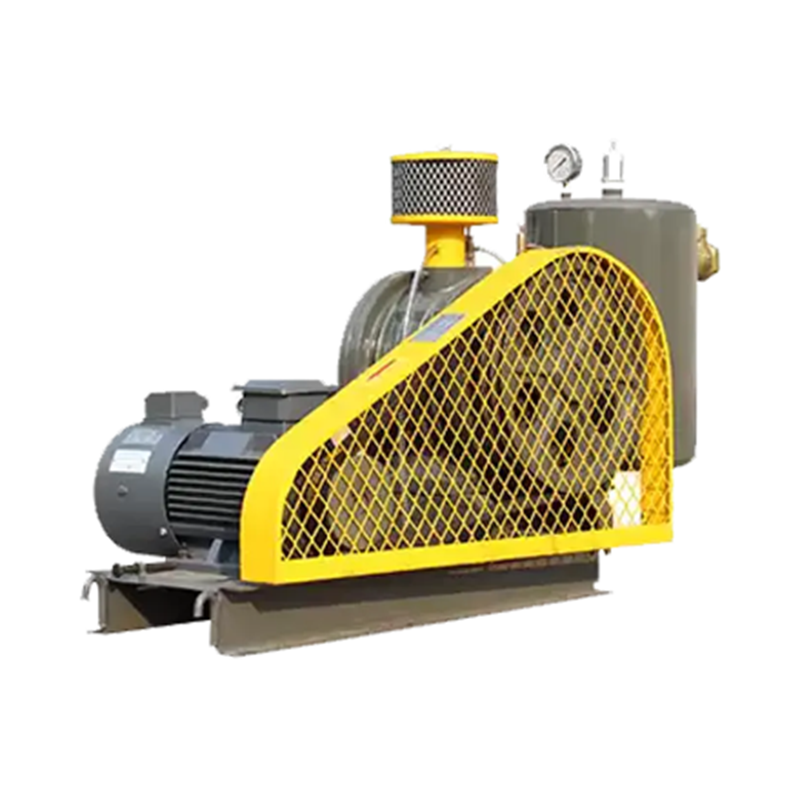 Sound Enclosure For Roots BlowersAcoustic enclosure for positive displacement blowers, reducing audible noise by 60–80% to about 85 dBA, with two-side access doors and stainless-steel construction.View Product →
A rotary lobe blower at 70 kPa can reach 100 dB(A) at one metre without treatment. A matched enclosure and discharge silencer usually removes 15 to 25 dB(A) of that.
From Slot Gap to Motor kW: A Practical Sizing Sequence
Work in one direction only: nozzle, then flow, then pressure, then motor, then control. Reversing the order is how plants end up with a blower that is too large and a knife that whistles.
- Fix the gap and the knife length first, and check both against the material rather than the drawing.
- Set a target velocity for the substrate: around 25 to 35 m/s for light film, 60 to 80 m/s for glass and metal, higher for cans and strip.
- Calculate flow with the slot formula and add 20 to 30 percent for real-world losses.
- Add 3 to 5 kPa for ducting, filter, and nozzle losses before choosing the blower rated pressure.
- Size the motor with at least 15 percent margin, then add a VFD so velocity can be trimmed per product.
The longer version of this method, with worked examples for different materials, sits in the site guide to sizing and powering a blower for an air knife.
Oversizing the blower rarely dries better. It usually just moves the noise problem from the nozzle to the machine room.
When the Air Has to Be Oil-Free
Food, pharmaceutical, and medical packaging lines normally require blow-off air that is free of oil, which rules out any design where lubricant can migrate into the air path.
Rotary lobe machines keep oil in a separate gearbox and deliver oil-free air, provided the shaft seals are maintained and the inlet filter is doing its job. Screw and turbo blowers go further, with no oil in the compression chamber at all, which is why they are common where hygiene audits are strict and the duty point is steady.
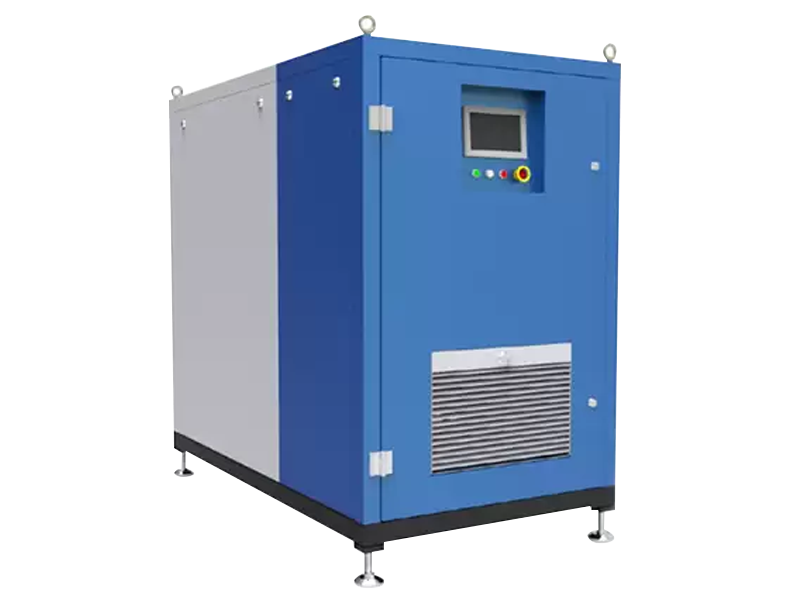 Air Suspension Turbo Blower PackageOil-free air suspension turbo blower package with permanent-magnet direct drive, PLC/MICOM touchscreen control and flow range 42–51 m³/min for steady aeration duties.View Product →
Oil-free is a property of the machine plus a maintenance commitment from the plant. Neither one on its own is enough.
Questions Buyers Ask Before Signing
Four questions come up in almost every air knife project, and the answers usually settle the machine type before the price sheet is opened.
Can an air knife run on the plant compressed air line?
Yes, for intermittent or low-volume blow-off. On continuous duty the compressed air route usually costs several times more per cubic metre of delivered air than a dedicated blower, and it also loads the compressor room during peak production.
How much flow margin should I add?
Add 20 to 30 percent above the calculated slot flow. That margin covers filter loading, duct losses, and the small gap increase that appears after months of abrasive dust.
Roots or turbo for a line that runs 24 hours?
Turbo units win on energy and noise when the duty point is clean and steady. Rotary lobe units win where pressure drifts, the air is dirty, or the slot is expected to foul between cleaning shifts.
How often should the slot be checked?
Clean the slot at every product change and check the gap with a feeler gauge monthly. A 0.3 mm growth in gap can cut exit velocity by more than 15 percent and quietly undo the drying result.
A blower that is 10 percent too small shows up as wet product. A blower that is 30 percent too large shows up as noise, power draw, and a throttle valve nobody wanted.
Air knife duty rewards a short, boring approach: fix the slot, calculate the flow, add a sensible margin, choose the machine that tolerates the plant real conditions, and treat silencing as part of the design rather than an afterthought.
If you are still at the drawing stage, send the nozzle sketch, the target velocity, and the line speed, and ask for a selection review against the actual duty point before the purchase order goes out. It is a far cheaper conversation than a reweld.
The right industrial air knife blower is the one that holds its duty point on the dirtiest shift of the year, not the one with the best number on a clean test bench.